
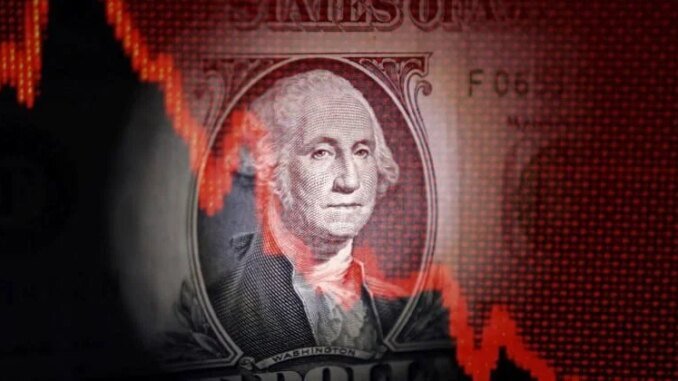

The global bond market is having a very bad week, and it’s dragging everything else along for the ride. Government debt prices are falling sharply across the US, Europe, Japan, and the UK as the war in the Middle East sends energy prices surging and forces investors to confront a reality they’d rather not: inflation isn’t done with us yet.
Ten-year US Treasury yields jumped more than 20 basis points last week, reaching their highest level since February 2025. Two-year yields, the market’s most direct bet on where the Federal Reserve heads next, climbed to a 14-month high near 4.1%.
Oil is the accelerant
The something, in this case, is crude oil. Brent is trading around $111 per barrel, driven higher by the Iran-linked conflict in the Middle East and a recent drone strike in the UAE that rattled energy markets. For context, oil at $111 is the kind of price that doesn’t just show up on your gas station receipt. It filters into shipping costs, manufacturing inputs, food production, and ultimately, the inflation data that central bankers obsess over.
The sell-off isn’t confined to Treasuries. Japan’s government is expected to issue additional debt, and that expectation alone has pushed 30-year Japanese government bond yields to record highs.

In Europe, the European Central Bank is now anticipated to resume rate hikes as early as next month, reversing what many investors had assumed would be a prolonged pause. UK gilt yields have hit their highest levels in decades under similar pressures.
The return of the bond vigilantes
There’s a term making the rounds again in fixed income circles: bond vigilantes. The phrase, coined by economist Ed Yardeni in the 1980s, describes investors who punish governments for loose fiscal policy by selling their bonds and driving up borrowing costs.
The vigilante narrative fits the current moment. Fiscal deficits are expanding in most major economies. Governments are spending more on defense, energy subsidies, and in some cases, direct economic stimulus. All of that spending requires issuing more bonds.
Rising yields mean higher borrowing costs for governments, corporations, and consumers. Mortgage rates climb. Corporate bond issuance gets more expensive. The cost of servicing existing debt balloons. For countries already running large deficits, this creates a feedback loop where higher rates lead to larger deficits, which lead to more bond issuance, which leads to even higher rates.
What this means for crypto and risk assets
Here’s the thing about bond yields: they set the floor for every other asset class. When you can earn 4.1% on a 2-year Treasury, essentially a risk-free return, the bar for owning anything riskier goes up considerably.
The current environment is being described in macro circles as a stagflation scare, which is historically one of the worst backdrops for risk-sensitive investments.
Crypto sits in an interesting position within this framework. The broader digital asset market tends to trade like a leveraged bet on liquidity. The correlation between Bitcoin and risk-on assets like tech stocks has been well documented over the past several years, and nothing about this bond sell-off changes that dynamic in the near term.
But there’s a counter-narrative worth watching. Bitcoin’s original thesis, the one carved into its genesis block, was about sovereign fiscal irresponsibility. Some institutional investors are already framing Bitcoin as a macro hedge against exactly this kind of fiscal stress.



Be the first to comment