

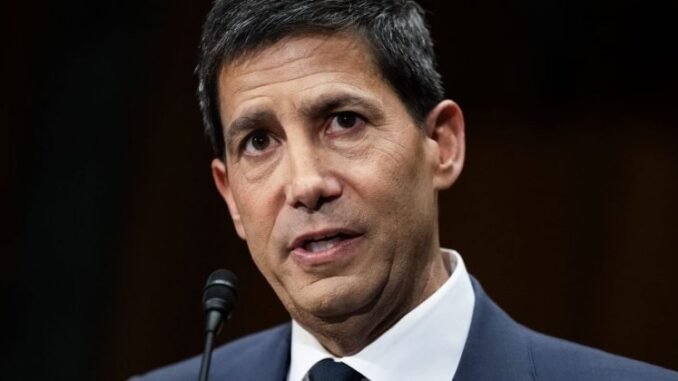

Kevin Warsh officially took the reins at the Federal Reserve on May 15, 2026, after Senate confirmation on May 13. For anyone wondering what kind of central bank chief he’ll be, his confirmation hearing offered a fairly direct answer: the hawkish kind.
“Inflation is a choice, and the Fed must take responsibility for it,” Warsh told lawmakers on April 21, 2026.
The return of a familiar face
Warsh isn’t new to the Eccles Building. He served as a Federal Reserve governor from February 24, 2006, through March 31, 2011, a tenure that spanned the worst financial crisis since the Great Depression. When he first joined the board, he was just 35 years old, making him the youngest Fed governor in history.
Inflation hawk with a balance sheet agenda
Warsh has consistently favored reducing the Fed’s balance sheet, meaning he wants the central bank to hold fewer bonds and mortgage-backed securities, which means less money sloshing around in the financial system.

His framing of inflation as “a choice” implies he views price instability not as some external force that happens to the economy, but as a consequence of policy decisions. A chair who believes inflation is the Fed’s fault is a chair who will keep rates elevated longer than markets might prefer, because cutting too early would mean admitting the institution chose poorly.
Persistent energy price volatility and broader economic uncertainties have kept inflation discussions front and center throughout 2026.
Why the person matters more than the percentage
The Competitive Enterprise Institute has emphasized a point worth internalizing: who makes rate decisions matters more than the exact level of rates at any given moment.
What this means for investors
For bond investors, Warsh’s balance sheet stance is the variable to monitor. If the Fed accelerates its runoff of Treasury and mortgage-backed security holdings, that increases the supply of bonds the private market must absorb. More supply without a corresponding increase in demand means yields could stay elevated or drift higher, even without additional rate hikes.



Be the first to comment