


The Turkish lira has fallen to a new all-time low against the U.S. dollar, with USD/TRY trading near 45.58 on May 18. The move extends one of the longest-running currency declines in major emerging markets and keeps Turkey’s inflation, dollar demand and stablecoin activity in focus for global crypto traders.
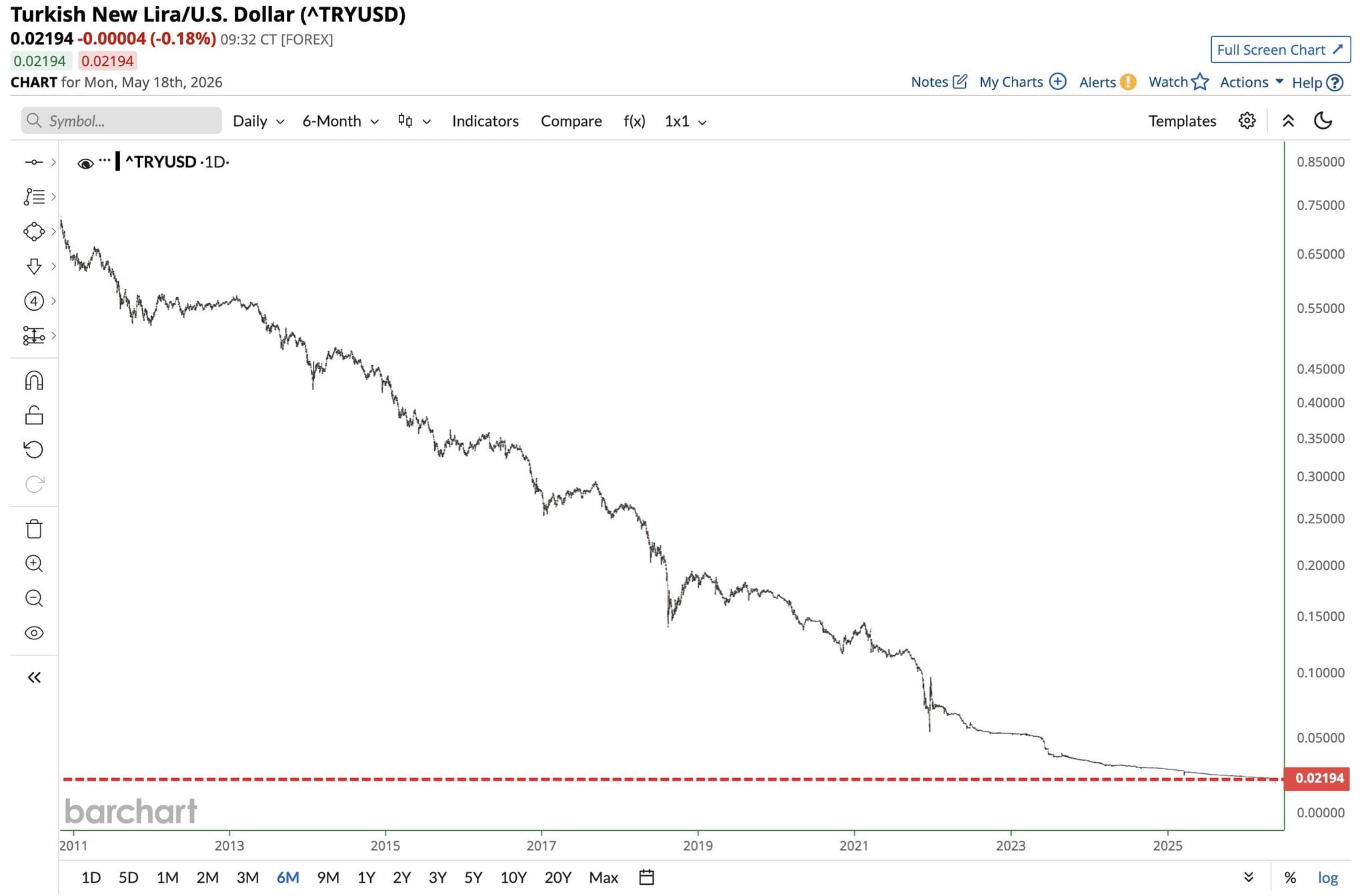
The viral 98% framing captures the scale of the collapse, although annual exchange-rate data puts the decline closer to 97% from 2010. The 2010 average exchange rate was about 1.50 lira per dollar, meaning one lira was worth roughly $0.66 at the time. At today’s rate near 45.58 per dollar, one lira is worth close to $0.022. That is a dramatic loss of purchasing power against the world’s reserve currency even without rounding the move to the most extreme headline number.

The latest break continues a steady slide rather than a single crash. Trading Economics data shows the lira down about 17.5% against the dollar over the past 12 months, with USD/TRY now sitting at its highest level on record. The pressure remains tied to high inflation, hard-currency demand, energy import costs, foreign-reserve management and investor doubts over how durable Turkey’s disinflation path can be.
Inflation Still Pressures The Currency
Turkey’s inflation problem has eased from its worst levels, but it remains severe enough to keep real purchasing power under pressure. Consumer prices rose 4.18% month over month in April, pushing annual inflation to 32.37%, while the Central Bank of the Republic of Türkiye has kept its one-week repo rate at 37%.
That creates a difficult policy balance. Keeping rates high can support the lira and slow domestic demand, but it can also weigh on credit, banks and growth. Letting the currency weaken too quickly can make imported goods, fuel, food inputs and dollar-priced liabilities more expensive, feeding back into inflation expectations. Turkey’s central bank has been trying to manage that pressure while keeping a degree of real lira appreciation against inflation, but the new record low shows how fragile the currency remains.
The lira’s decline also affects ordinary savers more directly than headline FX charts suggest. A weaker currency raises the local-currency price of imported goods and makes dollar-linked assets more attractive. For households and businesses that think in rent, food, electronics, fuel or cross-border payments, the exchange rate becomes a daily cost-of-living issue, not just a macro number.
Stablecoins Stay Part Of The Dollar Hedge
The crypto connection is not that lira weakness automatically pushes everyone into Bitcoin. Turkey has already shown a more specific pattern: local users often look for dollar-linked crypto exposure when the domestic currency loses value. Previous lira weakness has pushed attention toward stablecoins, especially USDT and USDC, because they offer dollar exposure that can move across exchanges and wallets outside normal banking hours.
Stablecoins can help users access dollar pricing, but they are not the same as holding insured bank deposits. They depend on issuer reserves, redemption access, exchange liquidity, blockchain fees, wallet security and local regulatory treatment. In a country where the currency has lost nearly all of its dollar value since 2010, that trade-off still attracts demand because users are trying to protect purchasing power, not only speculate on crypto prices.
The latest USD/TRY record gives that trade fresh urgency. A lira near 45.58 per dollar turns every new exchange-rate high into another test of household confidence, policy credibility and dollar access. For crypto markets, Turkey remains a live example of why stablecoin demand often grows fastest where local currencies are under the most pressure: users want a liquid dollar rail when the domestic unit keeps making new lows.



Be the first to comment