

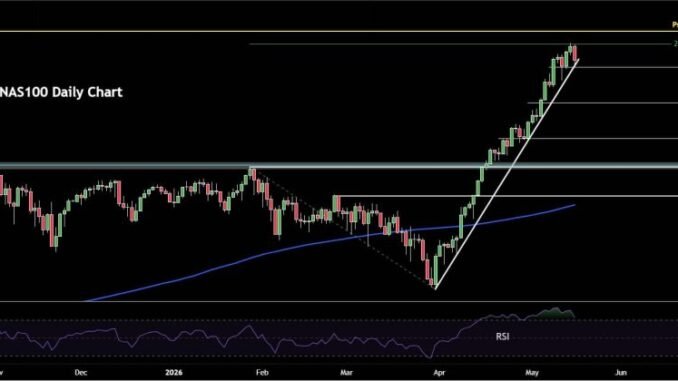

The Nasdaq closed as the weakest major US index after investors decided a tech rally was a good time to cash out. The catalyst wasn’t a single catastrophic earnings miss or regulatory bombshell. It was something far more mundane and, arguably, far more consequential: rising Treasury yields.
The 10-year Treasury yield climbed to 4.18%, a level that functions like a slow-acting sedative for high-growth tech stocks. When risk-free government bonds start paying more, the relative appeal of holding volatile equities, particularly richly valued ones, starts to dim.
What happened and why it matters
The selloff was broad but had a clear epicenter. Large-cap tech names, the very stocks that powered the Nasdaq’s recent rally, bore the brunt of the profit-taking. This is textbook behavior when yields rise: investors reassess whether the future earnings baked into tech valuations are worth the wait when Treasuries are offering a decent return today.
Broadcom added fuel to the fire. The chipmaker’s stock fell after its sales outlook failed to meet investor expectations, serving as a company-specific drag on an already jittery tech sector.

The macro picture made things worse. Stronger-than-expected producer-price data landed right in the middle of the selloff, heightening fears that inflation isn’t cooling as quickly as the market had hoped. Higher producer prices tend to flow downstream into consumer prices, which makes the Federal Reserve’s job harder and rate cuts less likely.
The rotation trade is alive
Market analysts characterized the move as a classic rate-sensitive pullback rather than a panic-driven rout. The distinction matters. A panic selloff suggests something is fundamentally broken. A rate-sensitive pullback suggests investors are rationally reallocating capital based on changing macro conditions.
Traders appeared to be rotating out of duration-sensitive equities, stocks whose valuations depend heavily on future cash flows, and into hard assets. This kind of rotation is a natural response when borrowing costs rise and inflation expectations firm up.
The widening selloff was driven more by macroeconomic factors than by any single company’s stumble. The 10-year yield at 4.18% acted as the primary headwind, and everything else was downstream from that number.
What this means for crypto investors
No cryptocurrency or crypto-specific entity was directly implicated in the day’s trading action. But the macro forces at play are deeply relevant to anyone holding digital assets.
Higher yields mean investors demand a greater premium for holding anything volatile. A 10-year Treasury paying 4.18% is real competition for capital that might otherwise flow into Bitcoin, Ethereum, or smaller altcoins.
The inflation angle adds another layer. If producer-price data continues to come in hot, the Federal Reserve will have less room to cut rates. And rate cuts have been one of the most anticipated catalysts for the next leg up in both equities and crypto. Every data point that pushes rate cuts further into the future is a data point that delays the macro tailwind crypto bulls have been counting on.



Be the first to comment