


Long-Bond Yield Breaks To 2007 Levels
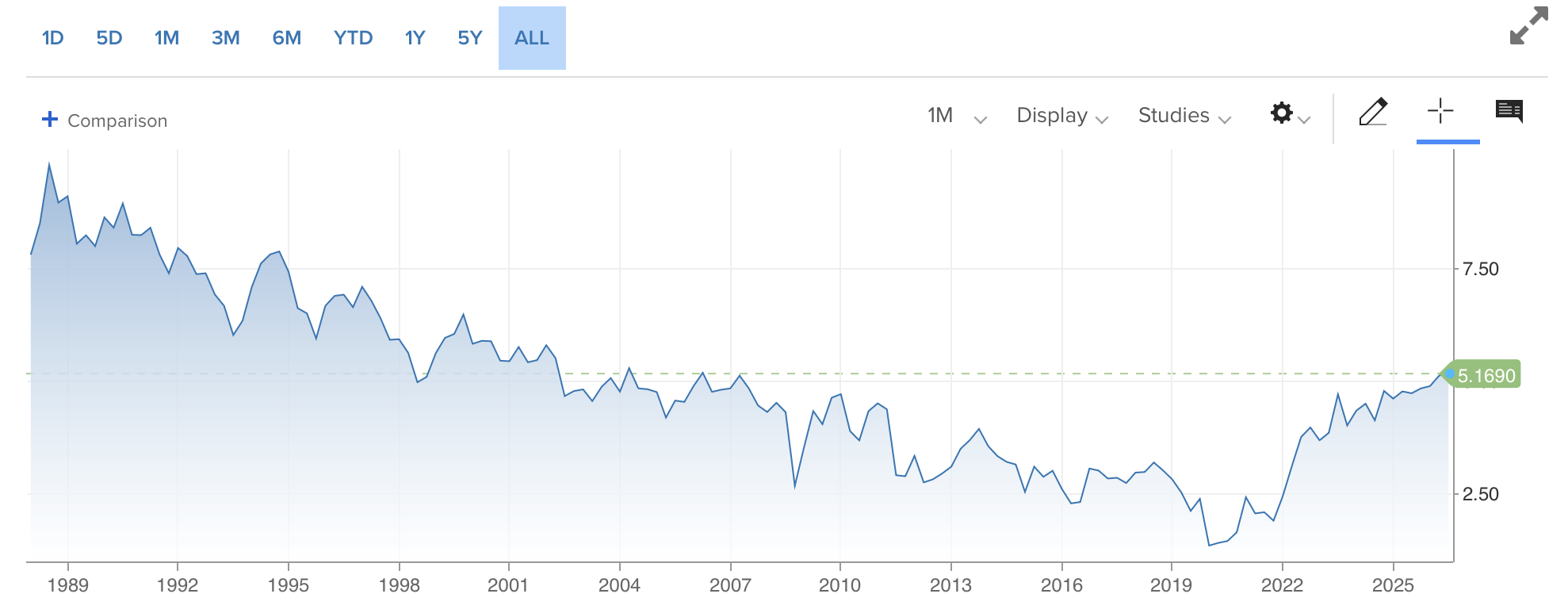
The U.S. 30-year Treasury bond yield climbed to 5.18% on May 19, its highest area since 2007, adding another macro shock to an already fragile crypto market. The move pushed long-dated borrowing costs deeper into territory last seen before the global financial crisis and strengthened the pressure on Bitcoin, Ethereum and high-beta altcoins.
The 30-year yield rose by about 5 basis points from the previous session and has gained roughly 30 basis points over the past month, based on live U.S. long-bond pricing. Earlier in the bond rout, the yield had already moved above 5.12%, a level that marked the highest 3 p.m. Eastern reading since July 19, 2007. The latest push to 5.18% keeps the long end of the Treasury curve in breakout territory rather than a one-day spike.

The move followed stronger high-frequency labor data, with the latest ADP Research NER Pulse placing private-sector job growth at 42,250 for the week ending May 2. Stronger employment readings reduce the market’s room to price fast Federal Reserve relief, especially while inflation anxiety remains elevated and oil-linked geopolitical risk keeps pressuring long-term rates.
Why Higher Yields Hit Crypto First
Higher Treasury yields raise the hurdle rate for every risk asset. When investors can earn more from U.S. government debt, speculative liquidity has to compete harder for capital. That pressure often reaches crypto quickly because Bitcoin trades around global liquidity, real yields, ETF demand, derivatives positioning and dollar conditions.
Bitcoin was already weak before the latest long-bond breakout. The global crypto market cap near $2.64 trillion, with Bitcoin dominance above 58% and total daily volume around $89 billion. BTC traded near the $76,000 to $77,000 area after a sharp slide from recent recovery levels, leaving traders focused on whether the market can defend support without fresh macro relief.
The bond shock lands after a major leverage flush. Recent crypto liquidations hit $817.29 million, with long positions taking most of the damage. That matters for short-term price action because rising yields can keep buyers cautious just as liquidated traders are trying to rebuild exposure. A weak rebound in that setup can turn into another forced-risk reduction if BTC loses the mid-$76,000 area.
Bitcoin, Altcoins And Liquidity Face A Tougher Tape
The long end of the Treasury market is now sending a direct warning to crypto traders: liquidity is becoming more expensive, and policy-rate relief is harder to price while labor data and inflation risk remain firm. Reuters’ latest long-bond coverage placed the 30-year yield above 5.15% for the first time since before the financial crisis, tying the surge to inflation pressure, heavy debt supply and reduced confidence in a central-bank backstop.
That leaves Bitcoin with a tighter market map. A recovery above $77,000 would ease the immediate damage, but the stronger test sits closer to $78,000 to $80,000, where buyers need volume instead of a thin bounce. Failure near $76,000 would expose recent lows and put faster pressure on Ethereum, Solana, XRP and smaller tokens that depend on risk appetite returning quickly.
Capital flows are already less supportive than they were earlier in the cycle. Recent crypto liquidity data showed net inflows slowing sharply, while Bitcoin fund redemptions have added another layer of pressure. The 5.18% long-bond yield gives macro traders a clear reason to stay defensive, leaving crypto exposed to the next moves in Treasury yields, oil prices, ETF flows and liquidation levels around Bitcoin’s $76,000 support zone.


Be the first to comment