

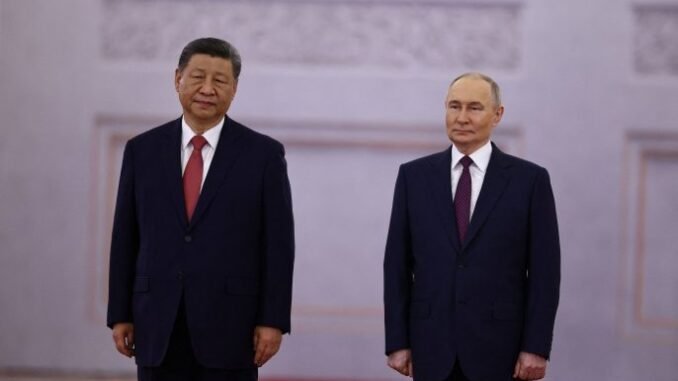

Russian President Vladimir Putin landed in Beijing on May 19 for a two-day summit with Chinese President Xi Jinping. The summit runs through May 20 and coincides with the 25th anniversary of the Treaty of Good-Neighborliness and Friendly Cooperation, the foundational agreement governing relations between Moscow and Beijing. Both leaders have publicly referred to each other as “friends” and framed their partnership as a stabilizing force in global affairs.
Oil, trade, and the sanctions backdrop
Russia’s oil exports to China surged 35% in early 2026, cementing China’s position as Russia’s top trading partner, a status it has held since Western nations imposed sweeping sanctions following the Ukraine invasion.
Both governments have made it abundantly clear they’d prefer that settlement happen outside the traditional dollar-denominated system. Both nations are actively developing central bank digital currencies, and the prospect of interoperability between the two has moved from theoretical to operational priority.
CBDC interoperability: what it actually means
The digital yuan is already the most advanced major-economy CBDC in the world, with pilot programs running across dozens of Chinese cities. Russia’s digital ruble has progressed more slowly, hampered by the same economic pressures that make it necessary in the first place.

The diplomatic chess game
Putin’s arrival in Beijing comes shortly after US President Donald Trump held his own summit with Xi in the Chinese capital. Beijing is positioning itself as the indispensable diplomatic counterparty, capable of engaging Washington and Moscow on consecutive weekends.



Be the first to comment