



BIST 100 Slides After Opposition Ruling
Turkey’s stock market was hit by a sharp political-risk shock after a court ruling annulled the 2023 congress of the main opposition Republican People’s Party, or CHP, invalidating the leadership election that brought Özgür Özel to the top of the party.
The decision effectively opens the door for former CHP leader Kemal Kılıçdaroğlu to return, unsettling investors who had treated Özel’s leadership as part of a stronger opposition challenge to President Recep Tayyip Erdoğan. The BIST 100 fell about 6% and triggered a market-wide circuit breaker, while Turkish government bonds also dropped as political uncertainty moved quickly through local assets.

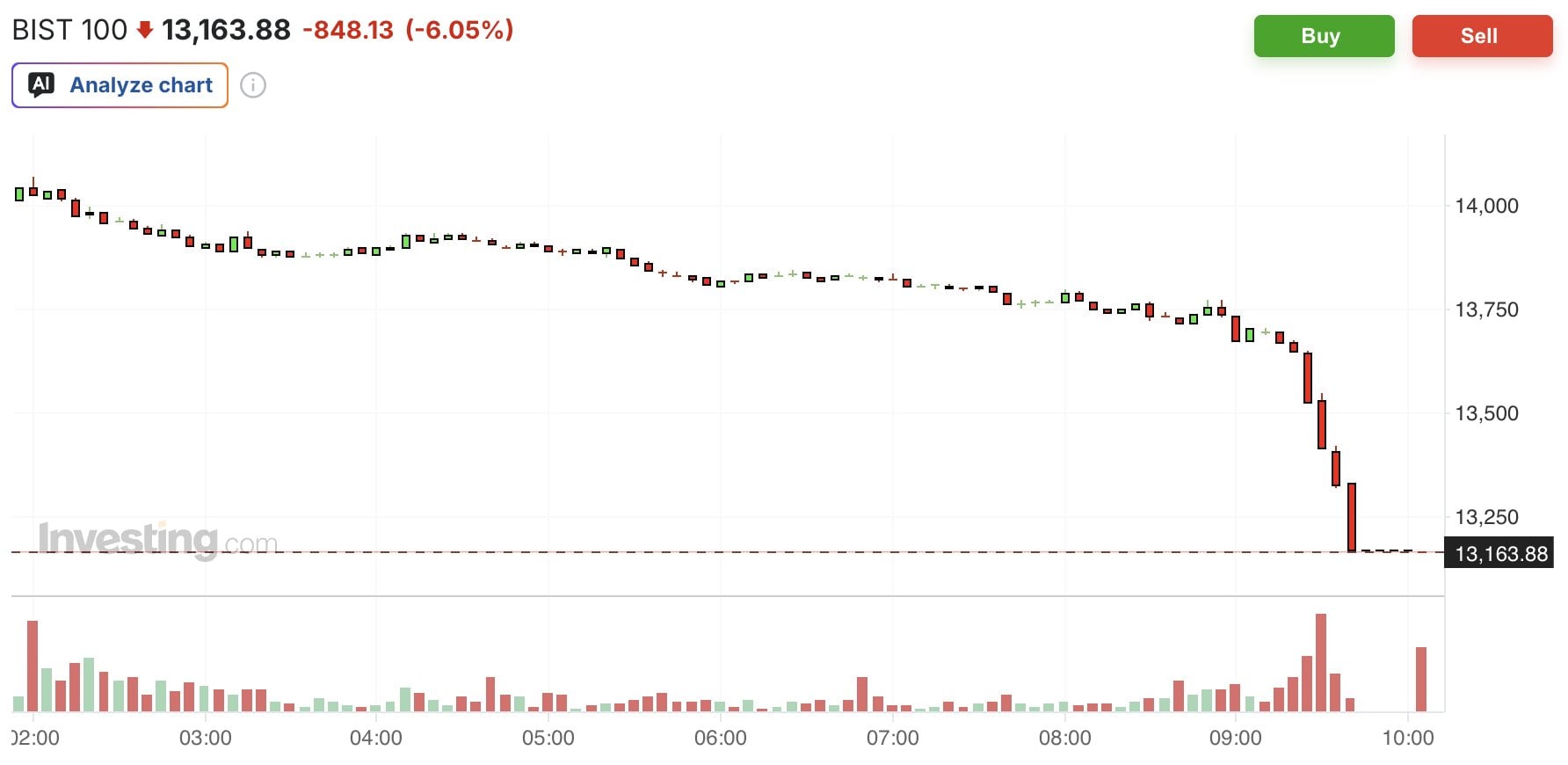
The reaction was not limited to Istanbul. The U.S.-listed iShares MSCI Turkey ETF fell nearly 10%, and the cost of insuring Turkish debt rose as investors repriced risk around the court decision. The Turkish lira was steadier than equities, but the wider signal was clear: markets saw the ruling as a destabilizing political event at a sensitive point for Turkey’s economy.
The CHP had gained momentum under Özel, especially after strong local election results and continued pressure around Istanbul Mayor Ekrem İmamoğlu, one of Erdoğan’s most prominent rivals. Removing Özel from the party leadership structure risks deepening internal opposition divisions while raising questions about early election pressure, legal uncertainty and the balance of power ahead of Turkey’s next national vote.
Political Risk Hits An Already Fragile Macro Setup
The market selloff comes while Turkey is still trying to hold together a difficult macro mix: high inflation, managed currency stability, reserve pressure and investor skepticism over whether orthodox economic policy can survive repeated political shocks.
Finance Minister Mehmet Şimşek and Central Bank Governor Fatih Karahan have been working to reassure global investors that Turkey remains committed to tighter, more conventional economic management. That effort is harder when court rulings create fresh uncertainty around the opposition, especially because political stability is central to foreign capital returning to Turkish equities, bonds and the lira.
Turkey’s reserve backdrop adds another layer. The country has already leaned heavily on official assets to stabilize markets. The central bank saw its largest weekly gold-reserve drop since 2018 earlier this year, while estimates pointed to gold sales, gold swaps and foreign-currency intervention to support the lira during regional stress. Separate market coverage also placed recent foreign-currency bond sales, including U.S. Treasuries, in the tens of billions of dollars as Ankara defended currency stability.
That matters because the latest equity shock did not arrive in isolation. Investors are now looking at a market where political risk, reserve use, inflation pressure and a controlled lira are all connected. A stable currency can calm the surface, but equity and bond markets often react first when confidence in the policy path weakens.
For crypto markets, Turkey’s selloff is not a direct Bitcoin catalyst, but it fits the same risk-asset environment that has kept attention on Bitcoin’s $77,000 range and exchange-linked selling pressure. Turkey is also one of the world’s most active crypto markets by retail interest, so local financial stress can quickly spill into dollar, stablecoin and exchange-flow behavior even when the original shock comes from equities and politics.
The immediate market focus is whether the BIST 100 stabilizes after the halt or whether the court ruling triggers a longer repricing of Turkish political risk. A deeper bond selloff, wider credit-default swaps or renewed pressure on reserves would show that investors are treating the CHP ruling as more than a one-day equity panic.



Be the first to comment