




In the past nine days, XRP’s whale activity has been on a nosedive since transactions above $1 million have fallen from 157 to 67, representing a 57.3% decline, according to market analyst Ali Martinez.
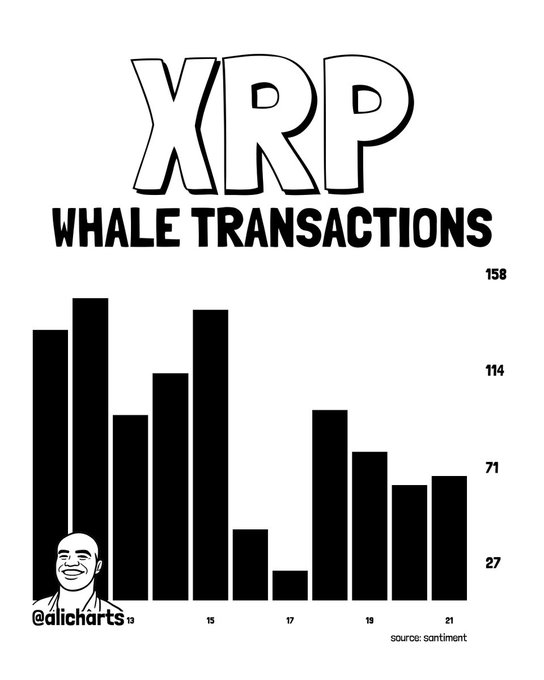
While this might look like fading demand at first glance, there is more to it than meets the eye, as it reflects positioning rather than an exit. This is because when large players pull back, liquidity at the top end tends to thin out, pushing prices into tighter ranges.

Realistically, this is how compression phases materialize: volatility cools off, order books rebuild, and the market coils before its next move.
As a result, Martinez believes that XRP’s present market activity fits into this picture due to a pause in aggressive whale positioning, which might be setting the stage for the next directional expansion.
Therefore, one key takeaway is that erratic spikes may be a thing of the past in the short term, even as pressure builds beneath the surface.

 
XRP Finds Itself in a Dilemma
On the technical side, analyst DavidTheBuilder highlights a key decision zone around $1.28–$1.30, which previously acted as support during the February correction. XRP is currently trading at $1.36, keeping it just above that critical band.
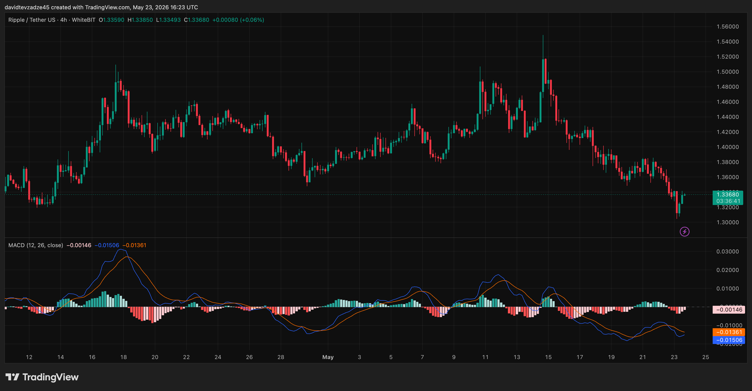
Nevertheless, the broader XRP structure remains undecided, as repeated rejections in the $1.40–$1.45 region have limited upside momentum, slowly shifting short-term control toward sellers without confirming a full breakdown.
From here, DavidTheBuilder outlines two clear paths. If XRP holds the $1.28–$1.30 zone, a recovery toward $1.40 is likely, with further strength potentially opening the door to $1.60–$1.68.
A break below this support, however, would expose the $1.15–$1.20 liquidity zone, where buyers may step back in more aggressively.
What’s next? Well, XRP finds itself gridlocked in an intense equilibrium, with whales deafeningly silent and price compressed between support and resistance. As a result, caution should not be thrown to the wind since the market is less about immediate direction and more about buildup.




Be the first to comment