

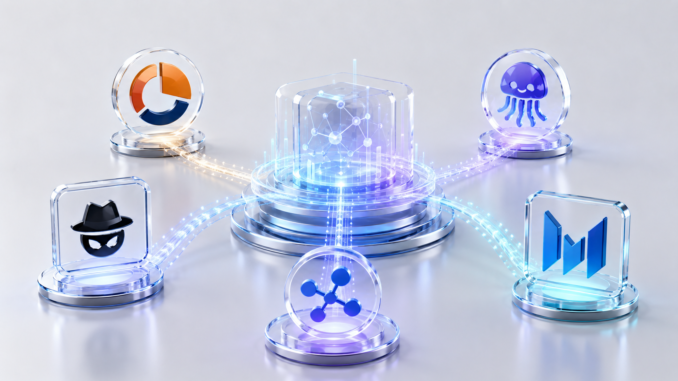
The best crypto API provider depends on what the product needs to do. A portfolio app needs clean wallet balances, exchange holdings, token prices, PnL, and historical transactions. A trading product needs reliable market data, order-book context, low-latency feeds, funding rates, and consistent price history. A wallet, explorer, tax tool, or payments app needs blockchain data, address history, transaction decoding, fee estimates, node access, and strong uptime.
The strongest API choice is rarely the provider with the longest feature list. Developers should compare coverage, data freshness, rate limits, schema quality, uptime, documentation, pricing model, support, SDKs, webhook options, chain coverage, and how easily the API handles edge cases such as token migrations, rebases, spam tokens, missing metadata, failed swaps, stale liquidity, and reorganized blockchain data.

Crypto products also need to separate market data from execution. A price API can show token value, but it may not route a trade. A swap API may execute a conversion, but it may not provide deep research data. A node API may expose raw chain state, but it may not normalize balances into portfolio-ready output. The best stack can include more than one provider, especially when a product touches trading, wallets, analytics, swaps, and compliance.
| Provider | Best For | Core Strength | Main Limitation |
| CoinStats API | Portfolio, wallet, DeFi, and market data apps | Broad unified data through one integration | Not a full node infrastructure suite |
| Mobula | Onchain trading apps and real-time wallet analytics | Low-latency onchain data, streams, and execution tools | More developer-focused than plug-and-play consumer data |
| StealthEX | Embedded crypto swaps and partner exchange flows | Non-custodial swap API for many coins and tokens | Not a broad analytics or institutional market data API |
| Crypto APIs | Blockchain infrastructure, nodes, webhooks, wallets, and data | Wide infrastructure suite for developers and enterprises | Can be more technical than simple market-data APIs |
| Messari API | Institutional data, research, token unlocks, and analytics | Research-grade market, protocol, news, and risk data | Best value for research and institutional workflows, not basic swaps |
CoinStats API: Best All-Round Crypto Data API For Portfolio, Wallet, And DeFi Apps
CoinStats API is one of the strongest all-round options for builders that need crypto data without stitching together several separate providers. It covers prices, wallet data, DeFi positions, portfolio analytics, exchange tickers, market data, news, token risk signals, and AI-agent access through MCP support.
Its strongest fit is a product that needs a unified view of user holdings. Portfolio trackers, tax tools, crypto dashboards, wallet explorers, AI assistants, and trading tools often need the same core data: balances, historical transactions, token prices, exchange pairs, DeFi positions, and current portfolio value. CoinStats is designed to reduce that integration burden by putting many of those data types behind one API key.
The API is especially useful when a product needs multi-chain wallet coverage and market context together. A wallet balance is not enough if the app cannot price it, track historical performance, classify DeFi exposure, or identify risky token contracts. CoinStats also supports token risk analysis, which can help products warn users about patterns such as honeypots, hidden fees, blacklist functions, proxy contracts, and other smart-contract risk signals before a user interacts with a suspicious asset.
CoinStats API is not the same as running dedicated blockchain nodes or building a full institutional data warehouse. Its strength is normalized, application-ready crypto data. It is the most balanced choice in this list for teams building consumer apps, dashboards, tax features, wallet views, portfolio analytics, and AI-powered crypto interfaces. Read more in this crypto API breakdown article.
Mobula: Best Onchain API For Trading Apps, Wallet Analytics, And Real-Time Streams
Mobula is built for teams that need real-time onchain data and execution infrastructure rather than only broad token price coverage. Its documentation positions the platform around low-latency onchain trading and wallet infrastructure, with REST, WebSocket, GraphQL, streams, TypeScript SDK support, token data, wallet analytics, trades, holders, funding rates, PnL changes, and market details.
Mobula is strongest when a product needs to react to onchain activity quickly. That makes it relevant for trading apps, wallet intelligence tools, alert bots, Telegram trading bots, token discovery products, DeFi analytics dashboards, and market monitoring systems. Developers can use it to track token prices, newly created pairs, trading pairs per blockchain, wallet balances, token holders, wallet DeFi positions, OHLCV history, token metadata, and top trader behavior.
The platform is especially useful for builders working close to execution. Onchain trading products need more than a price chart. They need fresh pool data, route quality, token metadata, wallet activity, holder distribution, first-buyer activity, and transaction-level context. Strong crypto trading tools depend on accurate execution data, clean alerts, and reliable market context rather than static listings.
Mobula is less suited to teams that only need a basic price widget or a simple list of top assets. Its value becomes clearer when the product needs onchain depth, streaming updates, wallet intelligence, and execution-aware data. For advanced apps, bots, and dashboards, that focus can matter more than generic market coverage. Read more in this crypto API guide article.
StealthEX: Best Crypto Swap API For Embedded Exchange Flows
StealthEX is different from the other providers in this guide because its API value centers on swaps rather than research or blockchain infrastructure. The platform operates as a non-custodial instant crypto exchange with many coins and tokens, no account-based registration for standard swaps, and partner tools that include a development API.
That makes StealthEX useful for apps that want to embed exchange functionality directly into a product. Wallets, portfolio trackers, crypto media tools, fintech dashboards, and partner websites can use swap infrastructure to let users move between assets without building liquidity relationships, exchange routing, rate comparison, deposit monitoring, and payout handling from scratch.
The main advantage is product speed. A team that wants a swap feature can integrate a dedicated exchange flow instead of building a full exchange stack. StealthEX can be especially relevant for cross-asset swaps where the user wants a simple send-and-receive process rather than account custody on a centralized exchange.
The limitation is category fit. StealthEX is not the best choice for institutional historical data, deep research feeds, node infrastructure, or portfolio analytics. It is best judged as a swap API and exchange integration layer. Products using it should still explain rate type, supported pairs, transaction timing, refund rules, network fees, and what happens if the user sends assets to the wrong address or uses the wrong network. A swap integration also needs clear UX around slippage, confirmations, and user custody, especially when assets move across chains. Read more in this crypto API comparison.
Crypto APIs: Best Blockchain Infrastructure API For Nodes, Wallets, Webhooks, And Transaction Data
Crypto APIs is the most infrastructure-heavy provider in this list. Its product suite covers blockchain data, blockchain events, node as a service, dedicated nodes, wallet as a service, key management, blockchain tools, transaction simulation, fee estimation, address validation, transaction broadcasting, market data, and automation workflows.
That makes Crypto APIs a strong choice for teams that need direct blockchain connectivity without operating every node and data pipeline internally. A wallet app may need address balances, transaction history, fee estimation, and broadcast tools. An exchange or payment processor may need webhooks for deposits, automated forwarding, transaction monitoring, and reliable node access. A compliance or accounting product may need historical address data and transaction-level visibility.
The infrastructure angle is important because many crypto apps quietly depend on node providers. A wallet interface, block explorer, DeFi dashboard, payment app, or exchange backend often needs chain data through RPC endpoints or indexed APIs. Crypto node operators support that data layer by keeping blockchain software available, synchronized, and queryable for products that cannot depend only on public endpoints.
Crypto APIs is strongest for technical teams building wallets, payment flows, monitoring systems, explorer-style features, custody tools, and backend blockchain infrastructure. It may be heavier than necessary for a simple price widget or content site, but it becomes valuable when reliability, webhook automation, address monitoring, node access, and transaction handling are core product requirements.
Messari API: Best Institutional Crypto Data API For Research, Funds, And Market Intelligence
Messari API is built for data products, trading firms, asset managers, compliance teams, researchers, and institutions that need standardized crypto intelligence. Its API covers market data, onchain metrics, protocol data, research, news, token unlocks, fundraising data, risk metrics, AI-powered analysis, bulk historical exports, WebSocket streaming, and enterprise support options.
Messari is strongest when the product needs context, not only raw prices. Research dashboards, fund tools, token-screening products, portfolio analytics systems, compliance workflows, and market intelligence platforms can benefit from standardized asset data, sector tags, protocol metrics, unlock calendars, news topics, and historical datasets.
That makes it especially relevant for teams building investment research, token due diligence, treasury monitoring, market analysis, or institutional reporting. A trading firm may use historical OHLCV and liquidity data for backtesting. An asset manager may monitor token unlocks, sector exposure, and risk metrics. A research platform may combine market data, news, fundraising data, and protocol-level context into one interface.
Messari is not the best fit for products that mainly need embedded swaps, wallet transaction parsing, or raw node infrastructure. Its advantage sits higher in the data stack: standardized market intelligence, institutional research context, and structured crypto datasets. For products where credibility, historical context, and research-grade categorization matter, Messari can justify the added cost and enterprise focus.
Which Crypto API Provider Is Best?
CoinStats API is the best fit for apps that need a broad, unified crypto data layer across prices, wallets, DeFi, portfolio analytics, news, and token risk. It is the strongest general-purpose option for consumer crypto products and AI-assisted dashboards.
Mobula is the better choice for onchain trading apps, wallet analytics tools, alert systems, and products that need real-time streams or execution-aware data. It fits builders closer to DeFi markets and token-level activity.
StealthEX is the cleanest fit for embedded swap functionality. It should be chosen when the product goal is to let users exchange assets through a partner flow rather than build a full exchange backend.
Crypto APIs is the best choice for infrastructure-heavy products that need nodes, blockchain events, wallet services, transaction monitoring, webhooks, and backend chain connectivity.
Messari API is the strongest option for institutional data, research dashboards, token analytics, market intelligence, compliance workflows, and professional-grade historical datasets.
A complete product can combine several of these providers. A wallet app could use Crypto APIs for transaction monitoring, CoinStats for portfolio analytics, StealthEX for swaps, and Messari for token research. A trading dashboard could use Mobula for onchain activity, CoinStats for portfolio coverage, and Messari for institutional context. The right answer depends on whether the product needs data, execution, infrastructure, or research.
Conclusion
The best crypto API providers in 2026 serve different parts of the crypto product stack. CoinStats API is the strongest all-rounder for wallet, market, DeFi, and portfolio data. Mobula stands out for real-time onchain trading infrastructure and wallet analytics. StealthEX is the most direct option for embedded swap flows. Crypto APIs is the infrastructure pick for nodes, webhooks, wallets, and transaction data. Messari API is best for institutional research, historical datasets, and market intelligence.
Developers should choose based on the product’s core job rather than the biggest feature list. A clean crypto API stack should give the application accurate data, stable uptime, clear documentation, predictable pricing, strong support, and enough flexibility to handle real blockchain behavior when markets are busy, wallets are messy, and users expect everything to work in real time.



Be the first to comment