



TLDR
- Trump said CFTC authority over prediction markets should be maintained.
- Several states argue prediction markets should fall under gambling rules.
- Minnesota, New York, Wisconsin and Illinois have moved against prediction markets.
- The CFTC has filed legal actions to defend federal oversight of event contracts.
- Trump linked prediction market regulation with his broader pro-crypto policy stance.
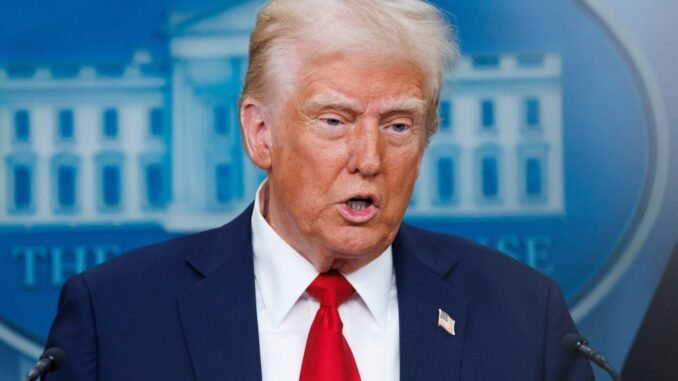
President Donald Trump said the Commodity Futures Trading Commission should retain exclusive authority over prediction markets, adding that his administration will protect the cryptocurrency industry as legal battles grow between federal regulators and several states.
In a Truth Social post on Tuesday, Trump said it was “critically important” that the CFTC’s authority over prediction markets be maintained. He said the United States is setting federal rules for event-contract platforms and argued that the country must stay ahead of foreign competitors in digital trading and crypto markets.
Trump also repeated his pledge to keep the United States as the “crypto capital of the world,” saying other countries are trying to replace the U.S. in that role.
CFTC and States Clash Over Prediction Markets
Prediction markets allow users to trade contracts based on the outcome of future events, including elections, sports, economic data, court decisions and policy actions. Platforms such as Kalshi and Polymarket have become central to the debate over whether these products are financial markets or gambling products.
🚨NEW: President Trump just praised the @CFTC and @ChairmanSelig’s fight for federal preemption over prediction markets while touting America as the Crypto/Bitcoin Capital of the World.
“It is a major industry and we must protect it.” https://t.co/0HSVyVspkv
— Eleanor Terrett (@EleanorTerrett) May 26, 2026
The Trump administration and CFTC Chair Michael Selig have argued that prediction markets offered by regulated designated contract markets fall under federal commodities law. Under that view, states should not be able to block or regulate the products separately.
Several states disagree. Officials in Minnesota, New York, Wisconsin, Illinois, Arizona and Connecticut have moved to restrict, sue or investigate prediction market firms. They argue that some event contracts operate like gambling products and should be handled by state gaming regulators.

Minnesota Governor Tim Walz recently signed a law that would make it a felony to operate or advertise prediction market platforms in the state. The Trump administration responded with legal action to defend federal authority.
New York Attorney General Letitia James also sued crypto firms Coinbase and Gemini, alleging their prediction market platforms were operating gambling products in the state. Wisconsin sued Coinbase, Kalshi, Robinhood, Polymarket and Crypto.com over alleged illegal sports betting activity.
Legal Fight May Reach Supreme Court
The dispute is now moving through federal courts and could eventually reach the U.S. Supreme Court. The central question is whether prediction market contracts are federally regulated financial products or gambling services that states can restrict.
Supporters of federal oversight argue that prediction markets provide useful forecasting tools and should be supervised under one national framework. State officials argue that local governments have authority to protect residents from unlicensed betting products, especially contracts tied to sports, deaths, elections or military actions.
House Oversight and Government Reform Committee Chair James Comer has also opened a probe into Kalshi and Polymarket. The investigation is examining whether users may have traded with classified information or other non-public material.
The scrutiny follows reports that the CFTC has taken a more favorable approach toward prediction markets and crypto firms under the Trump administration. Some reports also raised questions about staffing changes and approval processes inside the agency.
Donald Trump Links Prediction Markets to Crypto Policy
Trump’s statement connected prediction markets with his broader crypto agenda. He said the U.S. must protect both industries to remain competitive in global finance.
The president and his family have financial links to digital asset ventures. Trump is connected to World Liberty Financial, while Donald Trump Jr. has advisory roles tied to Kalshi and Polymarket. These connections have drawn criticism from political opponents who argue that federal policy could benefit businesses linked to the president’s family.
Illinois Governor J.B. Pritzker responded by saying states should retain the ability to regulate prediction markets, especially where insider trading or consumer protection concerns exist. Wisconsin Attorney General Josh Kaul described the administration’s lawsuit as a federal power grab.
Outside the United States, several countries have recently moved against prediction market platforms. Indonesia, Spain and India have taken steps to block or restrict access, adding another layer to the international debate over event-contract trading.





Be the first to comment