

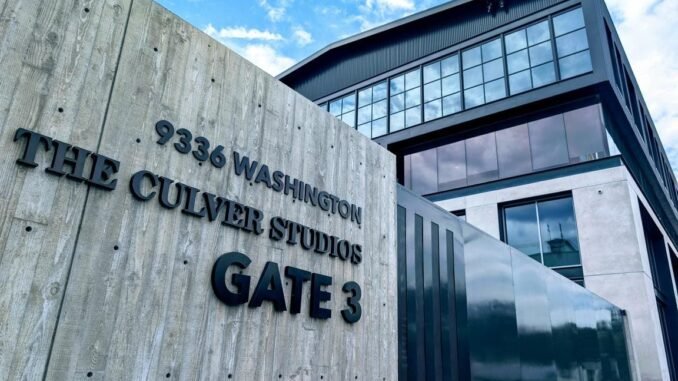


Culver City, California where Amazon MGM Studios hosted the AI on The Lot conference
getty
When Amazon MGM Studios took the stage at the AI on the Lot conference in Culver City on May 27, the news was not a chip or a model. It was a slate of cartoons.
Prime Video ordered three animated series under Amazon’s new GenAI Creators’ Fund: Cupcake & Friends from BuzzFeed Studios, Love, Diana Music Hunters from Albie Hecht, chief content officer of pocket.watch, and Punky Duck from animator Jorge R. Gutierrez, of The Book of Life and Maya and the Three. Built with AWS, the fund gives selected creators AI production tools and financing to make projects for Prime Video.
The framing was deliberate. Amazon is not selling AI as a replacement for animators. It is selling AI as a way for a small team to do work that used to take a full studio floor.
That distinction is the story. After two years of strikes, protests and splashy deals, the industry’s AI question has changed. It is no longer whether studios will work with AI companies. It is whether they can build AI they own, govern and defend.

Amazon’s Project Nara Shows Studios Want To Control AI Production
At the center sits Project Nara, an AWS-built production platform reserved for Amazon MGM and its fund creators. Amazon says it runs across animation and live action and plugs into the tools artists already use—Maya, Blender, Nuke, Unreal Engine, Adobe—mixing outside video models with proprietary ones trained on the studio’s own library.
It also tracks provenance for every asset: proof of where an image came from. That is not a footnote. It is how a studio convinces artists, unions and rights holders that AI work can be traced rather than laundered.
“Creative breakthroughs happen when visionary storytellers are given access to transformative tools,” said Albert Cheng, head of AI Studios at Amazon MGM. The line studios keep repeating: humans lead, AI supports.
Disney’s OpenAI Deal Shows The Risk Of Renting AI
The caution comes from the messy first wave of studio-AI deals. Disney’s landmark agreement with OpenAI, announced in December, was the boldest—Sora would spin up fan-made shorts using more than 200 Disney, Marvel, Pixar and Star Wars characters under a three-year license.
The catch came in the fine print: the deal was subject to definitive agreements, board approvals and customary closing conditions. Even the splashiest AI partnership still depends on an outside platform—and on terms that have to survive approvals, product shifts and closing conditions. The lesson was not that Hollywood was done with AI. It was that betting your IP on someone else’s app is dangerous when their priorities shift overnight.
Lionsgate, Runway And ‘Critterz’ Show Studios Are Spending On AI
The people actually making these films say the mood has turned. Nik Kleverov, directing the AI-assisted animated feature Critterz, told me that studios and partners are finally moving from talk to action. “They’re starting to put their money where their mouth is,” he said—not a wholesale embrace, but a real opening.
Lionsgate shows the steadier version. In 2024 it signed a first-of-its-kind deal with Runway to train a custom model on its 20,000-title library. Nothing has been publicly credited to that deal yet, but the ambition is real—and the studio keeps building AI in-house.
By its fiscal third- and fourth-quarter 2026 earnings calls, Lionsgate had named its first chief AI officer, Kathleen Grace, and pushed its AI work well beyond Runway. CEO Jon Feltheimer said the studio had “deployed it over 80% of our workforce”—Copilot, ChatGPT Enterprise, Snowflake—called AI “a total net positive,” and teased a coming fan-and-creator site with “digital toolkits” built “with the authority and approvals of our talent.”
That is the tell. AI is no longer a demo. It is becoming a permanent studio job, sitting alongside production finance and distribution.
The tool makers are courting creators directly, too. Runway’s Hundred Film Fund bankrolls AI-assisted films. Adobe stood up a Film & TV Fund; Google is funding Sundance Institute AI training and fellowships. And Netflix bought in, acquiring Ben Affleck’s AI filmmaking startup InterPositive to speed production and post while keeping artists in charge.
Cannes And SAG-AFTRA Show Hollywood’s AI Guardrails Taking Shape
The mood shift was unmistakable at Cannes. Demi Moore, on the festival jury, put it bluntly: “AI is here, and so to fight it is to fight something that is a battle that we will lose. So to find ways in which we can work with it, I think, is a more valuable path.” Down at the market, films arrived not just admitting they used AI but selling it as a feature—a long way from the shame and manifestos of a year earlier.
The labor fight is not settled. Performers, writers and crew still worry about consent, pay, credit and lost jobs. After a near-yearlong strike, SAG-AFTRA ratified a 2025 Interactive Media Agreement requiring consent and disclosure for AI digital replicas—and letting performers suspend that consent during a strike, in effect sending their digital doubles to the picket line. The emerging bargain: use AI, but the rights travel with it.
Plenty of artists still are not sold. The Human Artistry Campaign, a broad coalition of creators’ organizations, warns that AI must not erode human creativity, consent or compensation. But the studios that own the characters, libraries and pipelines are not waiting. They want AI’s speed and savings without handing an outside platform the IP, the talent or the credit.
That is why Amazon’s cartoons are less important as shows than as a signal. The fight over whether AI belongs in film is basically over. The next one is sharper: who builds the systems, who gets paid when they run, and whose name ends up on the screen.



Be the first to comment