


Crypto News
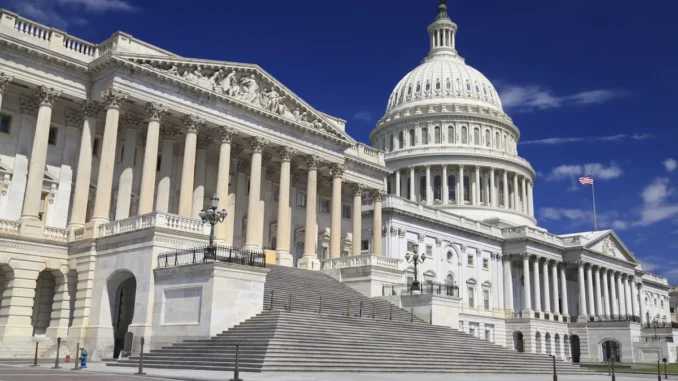
The opening week of June places U.S. stablecoin policy under hard deadlines, with comment periods for the GENIUS Act frameworks scheduled to close at the Treasury, FDIC, and FinCEN on June 2. The closures convert federal statute into operational requirements that issuers must build against, settling questions over reserves, yield, and licensing. Banking lobbies have pressed to slow the rollout, particularly around yield-bearing stablecoins, an objection that helped stall the Clarity Act for months. The Senate floor reopens on June 3 to consolidate market structure provisions with CFTC oversight and GENIUS amendments into one vehicle, with sponsors targeting an August signing.
ECB board member Isabel Schnabel argued in Seoul on Monday that central banks must respond to swelling stablecoin volumes with stricter regulation and retail central bank digital currencies, framing the digital euro as essential infrastructure. The global stablecoin circulating supply has approached $300 billion, with Tether and Circle accounting for roughly 90%, all of it dollar-denominated. Schnabel warned that the concentration risks cementing U.S. monetary dominance through network effects while leaving euro-pegged alternatives marginal. She also flagged run risk from liquidity mismatches and weak reserve quality, urging guardrails that preserve monetary policy transmission without resisting innovation outright across European payments rails.

Coinbase activated direct Indian rupee deposits and withdrawals for customers in India starting June 1, routing transfers through the Immediate Payment Service interbank network and bypassing the Unified Payments Interface that derailed its 2022 launch. The rollout adds spot trading and perpetual futures with a local INR order book, anchoring traders to domestic liquidity rather than global pricing. India’s cryptocurrency market reached roughly $3.04 billion in 2025 and is projected to expand to $14.21 billion by 2034. Onboarding is staged, with some users still hitting purchase blocks, but the exchange has registered with India’s Financial Intelligence Unit and is offering INR deposits without fees.

Crypto hedge and liquid funds entered the second half of 2026 in a defensive posture, with Bitcoin trading well below its October highs, perpetual futures open interest contracting, and on-chain activity cooling into a textbook bear market rhythm. Fund managers say asset selection, project fundamentals, and the discipline to harvest alpha now matter far more than directional beta, a shift away from the long-only token baskets that dominated the prior cycle. Several managers have rotated toward yield strategies, market-neutral books, and concentrated bets on protocols with measurable revenue. The retrenchment underscores how thin discretionary capital has become while institutions await cleaner regulatory signals from Washington.
A security researcher operating under the name Florent helped recover roughly 1,003 ETH worth about $2 million from HongCoin’s 2016 ICO contract, ending a nine-year freeze that trapped funds for 48 original investors. The contract’s refund logic had been broken by an integer counter that crashed to 356 after years of partial withdrawals, capping payouts at 3.56 ETH while most holders held significantly more. By exploiting an unprotected overflow in an admin function originally meant to mint bounty tokens, Florent demonstrated that calling it with a specific input would reset balances to 1 and clear the refund check, with the multisig team signing 41 unlock transactions.
House Financial Services Committee Chair Rep. French Hill has identified tokenization as Congress’s next legislative priority after stablecoins and market structure, expressing confidence the Clarity Act will secure bipartisan support in the Senate following 78 Democratic House votes last year. Hill argued that Senate negotiators have already absorbed substantial House language on DeFi, ethics rules, and sales practices, with the Senate Banking Committee markup expected this month. Tokenization of equities, treasuries, and private credit has accelerated as traditional asset managers move issuance on-chain, raising questions about disclosure, custody, and how existing securities frameworks apply to settlement on public blockchain rails.
The week’s storylines converge on a single arc: digital assets are transitioning from speculative frontier to regulated infrastructure, with policy windows in Washington and Frankfurt setting the terms institutions will trade against for the next cycle. Stablecoin rules, CBDC architecture, exchange access in emerging markets, and tokenization frameworks are each pieces of the same plumbing rebuild, and capital is reorienting accordingly. The cooling among hedge funds and the patient work of unlocking long-trapped altcoin contracts both reflect a market maturing rather than retreating. Regulatory clarity, not price action, is the dominant signal this cycle, and the calendar now makes that explicit.



Be the first to comment