

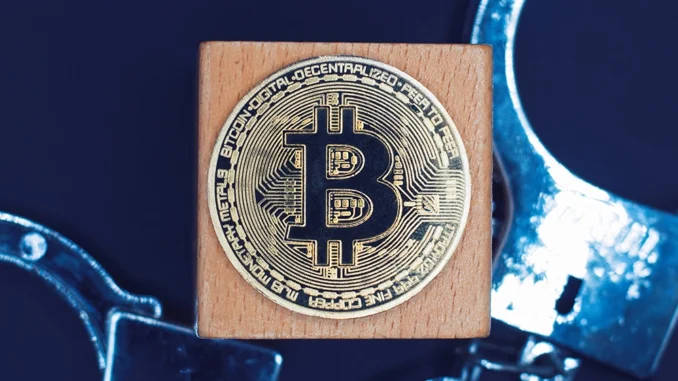

The United States Treasury Secretary Scott Bessent has announced the seizure of roughly $1 billion in Iranian crypto assets from various wallets as part of Operation Economic Fury, with some of the wallet owners reportedly not yet knowing the funds are gone.
“I believe that we have seized about a billion dollars of their crypto,” Bessent said, while speaking with the New York Post at the Reagan National Economic Forum on May 29. “Just outright grabbed the wallets. Some of them may be typing in right now and not have realized that their wallet had been grabbed.”
Bessent went on to say that the seizures were part of the ongoing U.S. campaign to put financial pressure on Iran, known as Operation Economic Fury.
Operation Economic Fury was launched in the spring of this year by Defense Secretary Pete Hegseth as part of a broader strategy by the Pentagon to put “maximum pressure” on Iran and, in the process, cut off funding for its weapons programs, regional proxy groups, and military activities by limiting its ability to earn, move, and access money. It utilizes sanctions, asset freezes, financial restrictions, and actions against oil-smuggling, shadow-banking, weapons-procurement, and digital asset networks linked to Iran’s government and military.

The operation began in April with the Pentagon imposing a naval blockade—which saw at least 13 ships retreat and turn back in the first three days of the operation—while Treasury Secretary Bessent simultaneously announced, on April 15, additional sanctions on individuals and entities associated with the Iranian regime.
On Friday, Bessent praised the progress of the operation, saying: “I think between five and a half to six weeks of an incredibly successful military campaign and Operation Economic Fury, where we have really cut them off. They are at the end of their Tether now financially.”
Economic fury hitting Iranian wallets
The Treasury Secretary’s latest comments came a few weeks after the U.S. Treasury Department’s Office of Foreign Assets Control (OFAC) sanctioned two blockchain wallets linked to Iran, while requesting that Tether freeze $344 million in USDT stablecoin held in the wallets, as part of an operation aimed at “maximizing economic pressure across the entirety of the government to Iran.”
Bessent announced the measures in an April 24 post on X, saying that OFAC would “follow the money that Tehran is desperately attempting to move outside of the country and target all financial lifelines tied to the regime.”
He added that “under Economic Fury, U.S. Treasury will continue to systematically degrade Tehran’s ability to generate, move, and repatriate funds.”
On April 23, Tether announced it would support the U.S. government in freezing the $344 million USDT across two addresses, with the freeze executed after the addresses were identified, preventing further movement of funds.
“When wallets are identified as connected to sanctions evasion, criminal networks, or other illicit activity, Tether can move to restrict those assets,” said Tether. “That work has become a routine part of the company’s response to lawful requests from authorities in the U.S. and abroad.”
The company added that the case demonstrated “that digital assets on public blockchains are not beyond reach when issuers and law enforcement work together.”
Watch | Unlocking crypto futures: Key takeaways from Blockchain Futurist 2025
title=”YouTube video player” frameborder=”0″ allow=”accelerometer; autoplay; clipboard-write; encrypted-media; gyroscope; picture-in-picture; web-share” referrerpolicy=”strict-origin-when-cross-origin” allowfullscreen=””>


Be the first to comment