



Yen stablecoins are moving from concept to deployment, with Japan positioning them as programmable cash for regional B2B settlement. If your team touches cross‑border invoices, remittances, or Web3 commerce in Asia, this shift matters.
This article explains what makes a “yen stablecoin” under Japanese rules, which projects are shipping now, how they compare with USD stablecoins, and the practical steps treasurers and product teams can take to pilot on-chain settlement—without falling into common pitfalls.
We also map the regulatory signals behind the momentum, including a new policy concept from Japan’s ruling party that supports 24/7, programmable settlement rails and yen‑denominated instruments.

Quick Answer
Editor’s note: After the LDP’s policy nod and JPYC’s funding round, pilot conversations shifted from “if” to “how,” especially around escrow and supplier prepayments. We trialed small on‑chain netting runs and saw reconciliation times shrink, but chain selection and redemption SLAs still made or broke the experience. The EJPY announcement helped frame a trust‑type path that auditors could accept. The next six months will be about liquidity density across Ethereum, JOC, and Kaia. — Sophia Bennett
Japan wants yen stablecoins to serve as a regional settlement alternative because they offer 24/7 finality, programmable cash‑like tokens governed by domestic law, and a currency unit Asian counterparties already use for trade and hedging. With pilots now spanning Ethereum, Japan Open Chain, and Kaia, the groundwork for interoperable, compliant JPY rails is forming—even if liquidity and FX still anchor to USD in many corridors.
- Policy tailwind: Japan’s ruling party endorsed yen stablecoins and 24/7 programmable settlement.
- Real issuers: EJPY and JPYC are expanding chains and use cases for B2B and Web3 payments.
- Regional fit: JPY is a familiar trade unit in Asia; on-chain rails can compress settlement times.
- Practical hurdles: Liquidity, KYC/AML, redemption mechanics, and chain choice still decide viability.
What is a yen stablecoin in Japan, and how do models differ?
Japan’s framework distinguishes between bank‑linked money on ledger (such as tokenized deposits) and trust‑type or issuer‑backed stablecoins. The design choices determine who can issue, how reserves are held, and what redemption rights users have. In practice, institutions and B2B users gravitate toward models with clear legal claims, auditable reserves, and programmable features that mirror cash settlement.
Trust‑type yen stablecoins segregate reserves in a trust, typically with licensed trustees and clear 1:1 redemption terms; tokenized deposits are liabilities of a bank on-chain. Both approaches target compliance and finality, but they vary in programmability, distribution, and how they integrate with existing banking rails.
On May 13, 2026, the Japan Blockchain Foundation announced EJPY, a trust‑type, yen‑pegged stablecoin to be issued on Japan Open Chain (JOC) and Ethereum for B2B settlements, remittances, and Web3 payments (The Block). This signals a push toward enterprise‑grade issuance under domestic oversight.
Meanwhile, established issuer JPYC expanded to the Kaia mainnet (chain ID 8217) on May 15, 2026 and publicly posted the contract address (0xe7c3d8c9a439fede00d2600032d5db0be71c3c29) (KAIA DLT Foundation / PR TIMES (press release)). That multi‑chain posture is crucial for liquidity routing and merchant integrations across Asia.
How would a yen rail reduce friction in Asian settlement?
Cross‑border payments in Asia often move through correspondent banks, batch cutoffs, and opaque FX spreads. Yen‑denominated stablecoins can compress this into near‑instant settlement with transparent on-chain pricing. For manufacturers, trading houses, and Web3 platforms billing in JPY, programmable money reduces the gap between invoice and finality.
Programmable settlement enables escrow logic, milestone‑based disbursements, or delivery‑versus‑payment (DvP) against tokenized invoices and bills of lading. Co‑existence with existing rails means treasury teams can net transactions on‑chain intra‑day, then redeem to bank accounts as needed.
Regional hubs can also clear multi‑currency flows more efficiently: yen stablecoins pair with USD/USDC or CNH liquidity for on‑chain FX, while local entities handle KYC and tax reporting. The outcome is not necessarily “disintermediated banks,” but rather bank‑supervised, lower‑latency settlement.
Pro tip: Start with low‑complexity use cases—supplier prepayments or marketplace escrow—where programmable rules and 24/7 settlement add immediate value without requiring deep ERP overhauls.
Who is actually shipping in 2026, and what does that signal?
Two signals stand out. First, the arrival of EJPY as a trust‑type stablecoin on JOC and Ethereum indicates credible, compliance‑first issuance targeted at B2B and remittance flows (The Block).
Second, JPYC’s expansion and funding momentum suggest a broader ecosystem buildout. On May 15, 2026, JPYC began issuance on Kaia mainnet and published its contract address (KAIA DLT Foundation / PR TIMES (press release)), and by May 22, 2026 the company reported cumulative Series B fundraising of roughly ¥5 billion to accelerate rollout (JPYC (PR TIMES press release)).
Policy is keeping pace. On May 19, 2026, Japan’s ruling Liberal Democratic Party approved a “Next‑Generation AI & On‑Chain Finance” concept that explicitly backs yen stablecoins, tokenized deposits, and 24/7 programmable settlement, including steps toward a joint megabank stablecoin (Neweconomy.jp). While timelines and designs may evolve, the direction of travel is clear: an interoperable yen rail aligned with bank‑grade compliance.
Taken together, these developments are less about retail speculation and more about enterprise throughput—B2B invoices, merchant payouts, and settlement legibility for auditors and regulators.

How do yen stablecoins compare with USD stablecoins for Asian payments?
USD stablecoins dominate crypto liquidity and many trade finance corridors, but yen rails can be the right tool when invoices, hedges, and treasury KPIs are natively in JPY. The choice depends on counterparty preferences, FX exposure, and the chains your partners can support.
Below is a practical comparison lens. It’s directional, not prescriptive—conditions vary by corridor and counterparty risk policies.
| Factor | Yen stablecoins (EJPY/JPYC etc.) | USD stablecoins (e.g., USDC/USDT) |
|---|---|---|
| Unit of account | Native JPY for invoices/hedging in Asia | Global default; many vendors price in USD |
| Liquidity depth | Emerging; improving with multi‑chain rollout | Deep on major chains and exchanges |
| Regulatory clarity | Strong in Japan with trust/bank models | Varies by jurisdiction and issuer |
| On/off‑ramp to banks | Increasing via Japan‑based providers | Broad, especially in US/EU corridors |
| Settlement cost/speed | Fast; depends on chain (JOC, Ethereum, Kaia) | Fast; wide L2 and CEX support |
| FX exposure | Minimizes JPY conversion steps | May add JPY↔USD conversions |
What should businesses evaluate before using a yen stablecoin?
A methodical evaluation reduces operational risk and avoids false starts. Focus on issuer credibility, redemption mechanics, technical fit, and reporting workflows.
- Issuer and legal model: Trust‑type vs bank liability; who holds reserves; audit cadence; published attestations.
- Redemption terms: 1:1 redemption policies, fees, cutoffs, and who (entity types) is eligible.
- Chain support: Where your counterparties operate—Ethereum, JOC, Kaia—and available bridges or native mint/burn.
- Liquidity venues: On‑chain pools, market makers, and centralized exchanges that list JPY pairs.
- KYC/AML and travel rule: Onboarding requirements for your entity and beneficiary controls.
- Custody and key management: MPC or qualified custodian; policies for approvals and transaction limits.
- Accounting and tax: JPY as functional currency; treatment of gains/losses; documentation for auditors.
- Operational runbooks: Reconciliation, incident response, and fallback if a chain stalls or gas spikes.
Not every corridor requires a new rail. Start with a pilot that complements existing bank settlement, measure time‑to‑cash and error rates, then expand.
What are the key risks and compliance considerations?
Stablecoins collapse when basics are ignored. Counterparty risk sits with the issuer and reserve structure; smart‑contract risk sits with the chain and token contracts. Both need diligence and ongoing monitoring.
Compliance spans KYC/AML, sanctions screening, and travel‑rule data exchange. Many issuers enforce whitelist controls at the token or platform level. Cross‑border use introduces local rules on foreign exchange, data localization, and consumer protection; your compliance team should map each jurisdiction where funds flow.
Operationally, watch for liquidity fragmentation across chains, bridge risk, and redemption delays around holidays. Treasurers should maintain cash buffers and secondary routes for critical payouts.
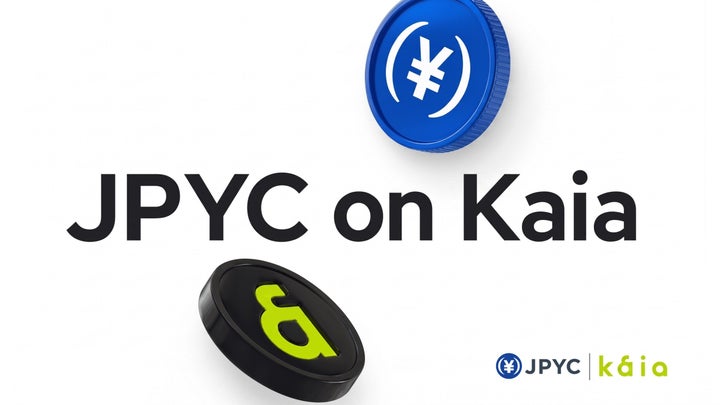
JPYC on Kaia announcement graphic (May 15, 2026) — visual confirming JPYC’s Kaia mainnet onboarding, signalling an Asian expansion route for a yen stablecoin useful for regional settlement corridors. — Source: KAIA DLT Foundation / PR TIMES
How should teams choose between Ethereum, Japan Open Chain, and Kaia?
Chain choice affects liquidity, fees, tooling, and counterparties you can reach. Ethereum offers the broadest ecosystem and institutional custody support; L2s can cut costs, but not every JPY token supports them yet. Japan Open Chain (JOC) is tailored for Japan‑centric compliance and enterprise B2B flows, while Kaia targets consumer and regional app ecosystems.
As of mid‑2026, issuers are deliberately going multi‑chain: EJPY is slated for JOC and Ethereum (The Block), and JPYC has begun issuance on Kaia with a published contract address (KAIA DLT Foundation / PR TIMES). That flexibility can reduce vendor lock‑in.
Align your choice with your top counterparties, the custody stack you use, and the analytics tools your auditors trust. Keep optionality: a treasury policy that allows multiple chains, with caps per venue and defined exit paths, preserves leverage in a changing market.
Common Mistakes
- Skipping issuer due diligence: Not all “stable” designs are equal. Review legal structure, audits, redemption terms, and any whitelist restrictions before moving funds.
- Underestimating FX steps: Even with JPY tokens, you may need interim USD or local currency conversions. Map FX legs and hedging before go‑live.
- Ignoring travel‑rule data: If your flow touches VASPs, ensure you can attach/receive required originator/beneficiary data to avoid blocked transfers.
- Single‑chain dependence: Building solely on one chain can magnify downtime or fee spikes. Maintain a secondary route or a timed settlement window.
- Loose key management: Missing multi‑sig/MPC approvals or disaster recovery plans can turn a minor error into a material loss.
For deeper reporting and ongoing coverage of stablecoin policy and issuers, visit Crypto Daily.
Frequently Asked Questions
Can non‑Japanese entities hold and use yen stablecoins for B2B settlement?
In many cases, yes—subject to issuer onboarding, KYC/AML, and local rules in your country. Some issuers restrict access to whitelisted addresses or specific entity types. Always check eligibility and documentation requirements before planning flows.
Will Ethereum gas fees make JPY settlement impractical?
Not necessarily. High‑value B2B payments can absorb L1 fees, and some issuers may support L2s or alternative chains like JOC and Kaia with lower costs. Your chain policy should consider fee ceilings and fallback routes.
Can I net invoices on‑chain and redeem to a bank the same day?
Operationally, yes—tokens settle in minutes. Redemption to bank accounts depends on issuer cutoffs, compliance checks, and banking hours, which may introduce delays. Confirm SLAs and plan buffers around holidays.
How do auditors treat yen stablecoins on the balance sheet?
Treatment varies by jurisdiction and standard. Many firms classify stablecoins as cash equivalents or digital assets, depending on redemption rights and liquidity. Align with your auditor early and keep thorough transaction records and attestations.
What if a counterparty only accepts USD stablecoins?
You can convert on‑chain via regulated venues or liquidity pools, but that reintroduces FX steps and spread costs. If JPY exposure is important, hedge the USD leg or negotiate dual‑currency terms.
Is a “megabank stablecoin” imminent?
Japan’s ruling party endorsed steps toward a joint megabank stablecoin as part of its on‑chain finance concept, but specifics and timelines remain to be determined (Neweconomy.jp). Expect phased pilots rather than a single big‑bang launch.
How do Kaia and Japan Open Chain fit into regional commerce apps?
Kaia is popular with consumer‑facing apps in Asia, which can help merchant payouts, while JOC emphasizes compliance and enterprise integrations. With issuers going multi‑chain, choose the venue that best reaches your customers and liquidity.
Disclaimer: This article is provided for informational purposes only. It is not offered or intended to be used as legal, tax, investment, financial, or other advice.




Be the first to comment