



Samsung, the world’s largest smartphone maker, is partnering with Solana (SOL) to bring USDC stablecoin transfers directly to Galaxy devices, potentially putting blockchain-based payments in the hands of more than 1 billion users globally.
Announced Tuesday, the partnership will initially make Solana-powered USDC transfers available to 82 million Galaxy devices in the United States, with the service expected to launch in the last week of October.
Through Samsung Wallet and Samsung Pay, eligible users can send USDC across borders using Solana. Built-in fiat on- and off-ramps will also allow users to convert between digital dollars and local currencies, removing much of the complexity typically associated with crypto transactions.
Notably, Samsung’s annual device shipments and its massive installed Galaxy base could make the integration a major distribution channel for stablecoins if the feature expands internationally. Rather than requiring users to download a separate crypto wallet or interact with an exchange, Solana’s infrastructure will operate largely behind the scenes.
“Stablecoins have the potential to make moving money around the world faster and easier,” said Woncheol Chai, head of Samsung Electronics’ digital wallet team.

 
The partnership comes as Solana continues to gain traction in the stablecoin and payments sector.
PayPal and Western Union have already used Solana for stablecoin initiatives, while Visa has tapped USDC on the network for payment settlement. The Solana Foundation said stablecoin activity on the blockchain has grown significantly, with more than $5.25 trillion in stablecoin volume processed in 2026.
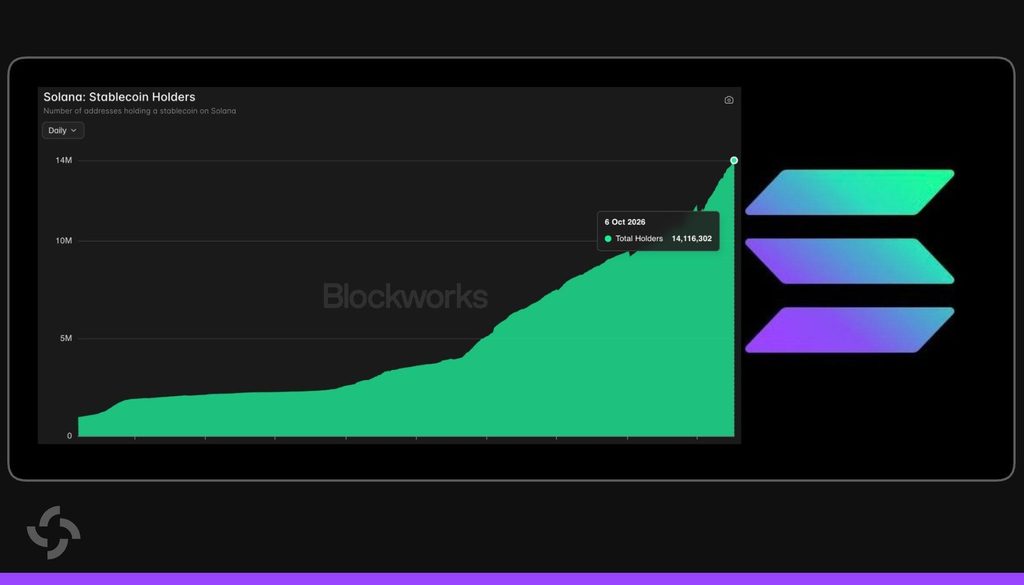
The network is also seeing rapid growth in its user base. According to Solana-focused outlet SolanaFloor, the number of stablecoin holders on Solana has surpassed 14 million, marking a new all-time high and representing more than 4 million additional holders since the start of the year.
The development comes as payment companies increasingly turn to blockchain networks to move digital dollars faster and across borders. Earlier this year, Western Union announced a Solana-based initiative, while Visa began settling stablecoin transactions on the network. With more pilots emerging and stablecoin activity surging, Solana appears to be hitting a major inflection point for payments.
Samsung has also been steadily expanding its digital-asset footprint. The company introduced blockchain wallet functionality on Galaxy smartphones in 2019 and has since added further crypto integrations, including Coinbase access for U.S. users.
Notably, Solana is not the only blockchain entering Samsung Wallet. Sui also announced that Samsung Wallet will support USDC on its network across 82 million Galaxy devices in the United States.
Users will be able to hold and transfer USDC within the wallet, while Sui said transfers will carry zero network fees, meaning users will not need SUI tokens to cover gas.
For Solana, however, the Samsung partnership represents a potentially significant mainstream adoption opportunity.
That said, the initial rollout is limited to eligible U.S. Galaxy users, with expansion into additional markets subject to local regulatory requirements. If Samsung eventually extends Solana-based stablecoin functionality across its global Galaxy ecosystem, billions of dollars in digital payments could move closer to everyday smartphone users.




Be the first to comment