


What to know:
- US-Iran talks end without agreement, and Pakistan negotiations collapse officially.
- Ceasefire now at risk after failed negotiations and rising tensions continue.
- Hormuz dispute and nuclear issues remain unresolved, driving regional uncertainty further.
- Oil markets and regional tensions are expected to rise in the coming days.

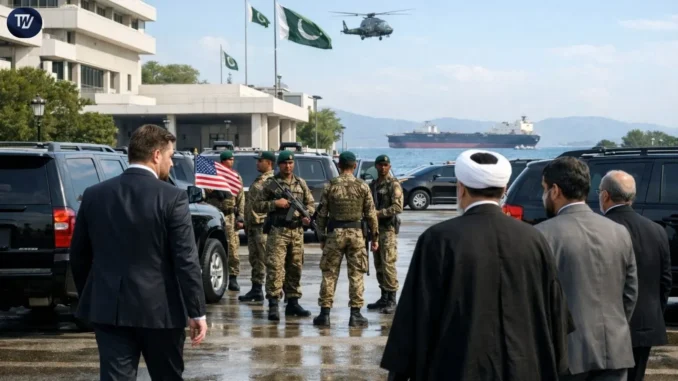
US and Iran negotiations in Islamabad end without agreement after 21 hours, heightening tensions and risking fragile ceasefire collapse, as of 12 April 2026.
Vice President JD Vance led the American delegation and said he is returning without a deal after Iran refused to commit to not pursuing a nuclear weapon.
He stated that the US red lines were clearly communicated, but Iran chose not to accept the terms. Iranian media described the US demands as excessive, while officials said differences were expected and further diplomacy remains possible.

Both delegations indicated limited progress on technical issues but failed to close gaps on final security guarantees. Talks were attended by technical experts and lasted into the night before ending without a breakthrough.
Pakistan facilitated the meetings and urged continued dialogue to avoid further escalation in the region. US officials said the proposal presented was the final and best offer from their side.
Also Read: Iran Crypto Payments Trigger Global Shipping Sanctions Concerns: Chainalysis
Hormuz Tensions and Nuclear Dispute Deepen
Talks collapsed after the US and Iran failed to bridge gaps over the Strait of Hormuz and nuclear issues, leaving the ceasefire uncertain. The Strait of Hormuz remains a critical waterway carrying a large share of global oil and gas trade and is a central point of dispute.
Officials warned that unresolved issues could quickly escalate and risk renewed conflict in the region. The end of talks follows competing demands, with each side holding firm on core strategic positions.
Two supertankers attempted transit through Hormuz but turned back amid rising uncertainty. Market analysts warned that oil prices could reopen higher alongside a stronger dollar.
According to experts, taking extreme stands on either side was bound to rule out any rapid settlement right from the start. The crux of the conflict involved issues pertaining to nuclear materials and which entity would regulate their control.
Regional Conflict and Market Impact Loom
The abrupt end to talks leaves the recent ceasefire arrangement in limbo and raises fears of renewed escalation. Energy markets reacted as uncertainty grew, with traders warning that oil prices could rise sharply when trading resumes.
Pakistan described the negotiations as productive and appealed to both sides to continue dialogue to resolve the situation. At the same time, Israel continued its attacks on Hezbollah in Lebanon amid the ongoing war.
It is reported that thousands have been killed within the region, with those from Iran, Lebanon, and surrounding areas suffering most. The ceasefire remains on thin ice, its vulnerability tempered only by continued negotiations, despite there being no clear breakthrough.
However, regional experts warned that the continuing strikes could spill over into neighboring countries. The number of casualties continues to rise on multiple fronts, such as Lebanon and Iran. Further negotiations may still take place if both parties reconsider their strategic postures soon.
Also Read: Binance Offers UAE Staff Relocation as Iran Tensions Escalate



Be the first to comment