



Crypto security risks showed little sign of easing during the first half of 2026. Instead, attacks accelerated to record levels, pushing industry losses beyond $1.1 billion in just six months.
A report by Blockaid tracked over 212 on-chain incidents. These losses alone exceed the total losses recorded throughout 2025.
Furthermore, the incident count reached 3.4 times the previous full-year level, suggesting attackers are exploiting vulnerabilities faster than projects can address them.
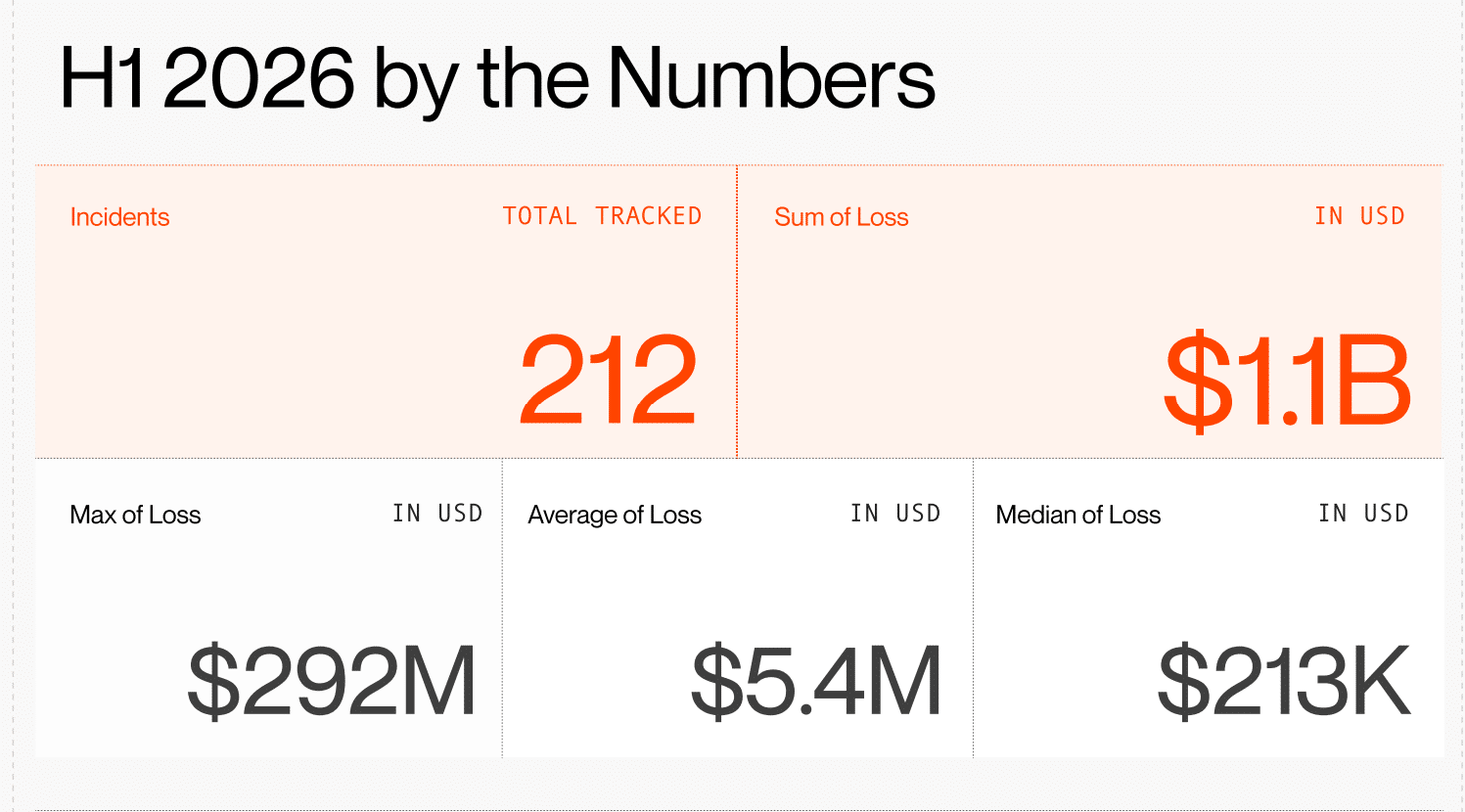
April alone accounted for over $600 million in losses across DeFi, translating to over 50% of these losses. The Kelp DAO ($293 million) and Drift Protocol ($285 million) incidents stood out as the biggest individual attacks.

The two incidents also demonstrated how a single breach can erase significant value within hours. Meanwhile, the $5.4 million average loss and $213,000 median loss showed that smaller attacks remained persistent across the ecosystem.
Together, these figures suggest security threats are becoming broader and more costly, increasing pressure on crypto projects to strengthen infrastructure, smart contract auditing, and incident response before losses climb even higher.
Ethereum and Solana lead security losses
Those rising losses also reveal where attackers concentrated their efforts during the first half of 2026. Ethereum [ETH] recorded the largest losses at $332 million. Solana [SOL] trailed it closely behind at $326 million, making the two largest blockchain ecosystems the primary targets.
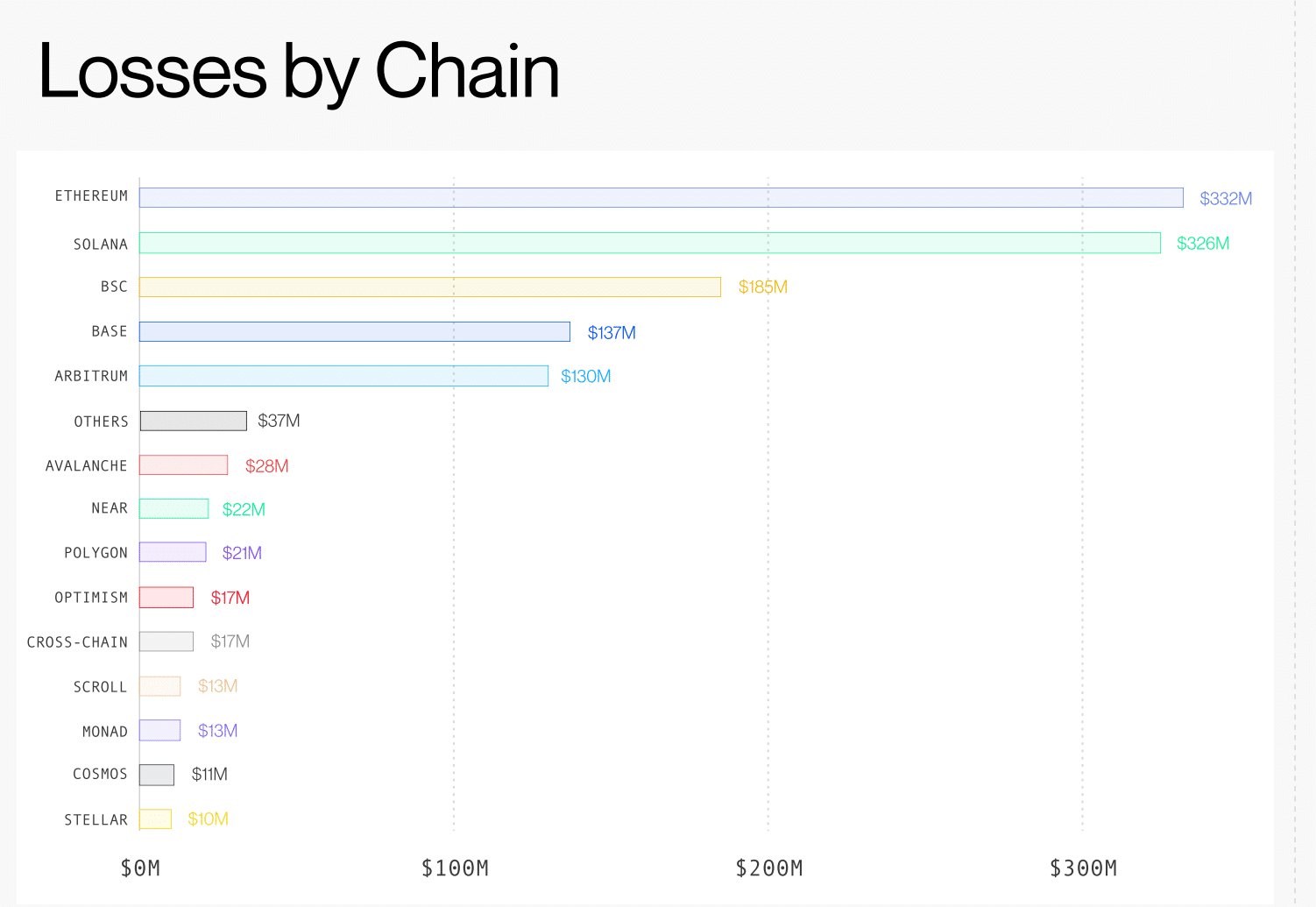
However, the attack methods differed considerably. Ethereum’s concentration of high-value protocols made smart contracts and protocol code the preferred targets. In contrast, Solana’s signer-heavy multisig ecosystem meant compromised private keys and signing infrastructure accounted for more than 98% of losses.
Meanwhile, cross-chain bridges remained the largest source of dollar exposure, with the $292 million KelpDAO exploit demonstrating how bridge infrastructure continues to attract sophisticated attacks.
These trends show that attackers are targeting the architecture specific to each blockchain rather than merely focusing on larger ecosystems.
Can crypto outpace attackers?
Rather than merely trying to prevent them, crypto security has evolved into measuring recovery success based on the pace of recovering the funds.
Despite improved auditing, bug bounty programs, and real-time monitoring having reduced the time to respond to an attack and limited loss, recovery is still very inconsistent.
However, despite these efforts, recovery remains inconsistent, especially after key compromises. Looking ahead, stronger signer security, continuous monitoring, and faster incident coordination will likely determine whether future losses decline.
Until recovery improves alongside prevention, the industry’s expanding security infrastructure will remain effective at limiting damage rather than stopping attacks.
Final Summary
- Crypto security losses exceeded $1.1 billion in H1 2026, showing attackers continue evolving faster than industry defenses.
- Crypto security will depend on stronger prevention, faster recovery, and better operational defenses to reduce successful exploits.






Be the first to comment