



What to Know:
- Benjamin Cowen argues Bitcoin spring rally rebound was a classic market fakeout.
- Historical cycle data suggests June could bring deeper downside pressure.
- The final bottom of the current four-year cycle may not arrive until late 2026.

Bitcoin has struggled in recent weeks. Many investors point to rising tensions in the Middle East and recent sales by Michael Saylor’s company, Strategy, as the main reasons behind the decline. But crypto analyst Benjamin Cowen sees something different. Bitcoin spring rally may be a trap, warns the analyst.
According to the founder of Into The Cryptoverse, the current weakness has little to do with headlines. Instead, he believes Bitcoin is following a mathematical pattern that has appeared in previous market cycles. In his view, the recent rebound was not the start of a new bull run. It was a temporary rally before another leg lower.
Cowen notes that Bitcoin reached a cycle peak of $126,200 in October 2025. That top arrived 1,162 days after the market bottom, matching the timing seen in earlier cycles. The sharp declines that followed in January and February were then interrupted by a recovery in March and April. However, that recovery may have misled investors.

Also Read: Bitcoin Sell Signal Sparks $10,000 Price Warning
Bitcoin Spring Rally Fits Historic Fakeout Pattern
Cowen argues that the recent Bitcoin spring rally lasted roughly 16 weeks, which falls directly within the historical range of 15 to 25 weeks often seen during so-called “dead cat bounces.”
Despite the rebound, Bitcoin never managed to establish a strong position above its 200-day simple moving average. That failure is important because previous cycles showed similar behavior before markets resumed their downward trend.
Many bulls point to June’s average return of 6.91% as a reason for optimism. Yet Cowen says that figure is distorted by exceptional years such as 2011 and 2019, when Bitcoin posted unusually large gains.
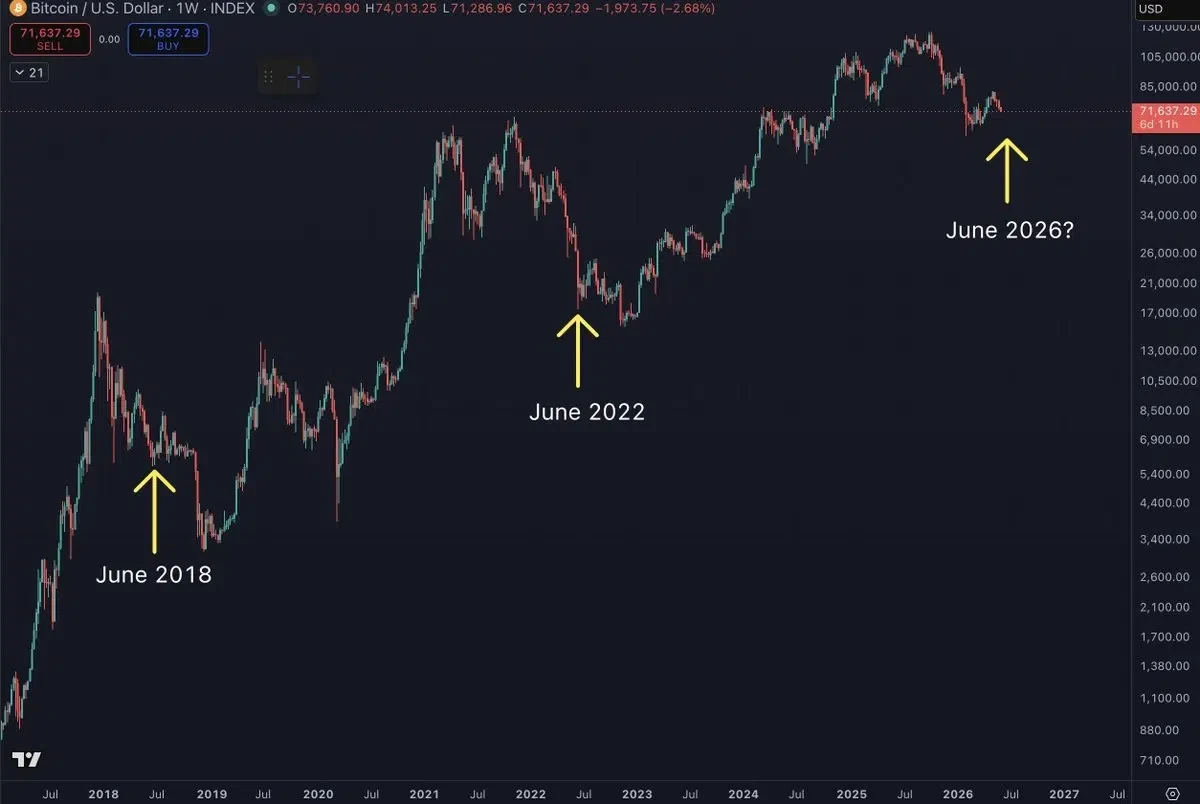
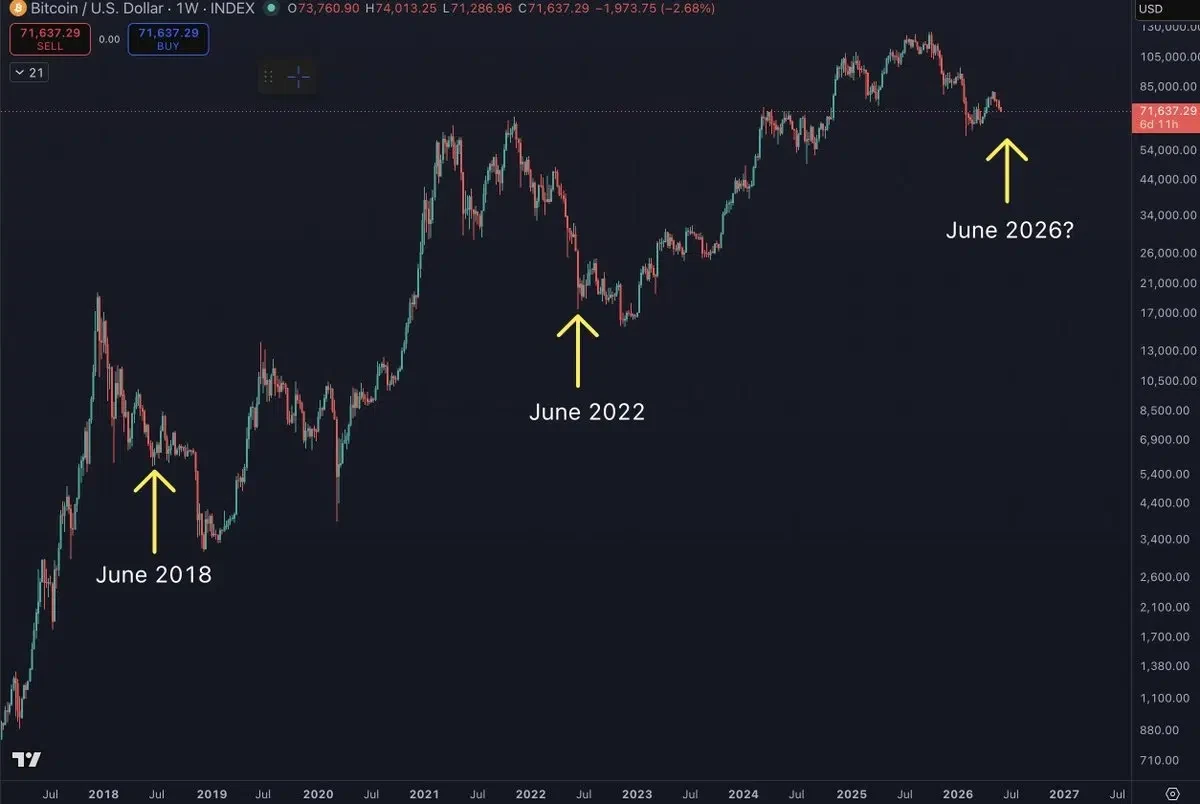
Bitcoin Spring Rally Faces a Tough June Test
Historical data suggests June has often been weak during post-peak correction periods. Cowen also highlights that U.S. midterm election years have traditionally created difficult conditions for risk assets.
With trading volumes falling and market sentiment weakening, he believes Bitcoin could break below the February low near $60,000.
If history repeats, the market may face a sluggish summer followed by a challenging September. The final bottom of the current four-year cycle could arrive between October and November 2026, setting the stage for the next major uptrend.
Also Read: Bitcoin Price Faces Rising Leverage Pressure as Liquidation Risks Increase



Be the first to comment