



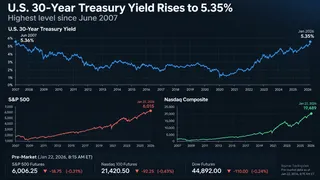
The U.S. 30-year Treasury yield has climbed back toward 5.35%, pushing long-term borrowing costs to levels not seen since June 2007 and creating a new test for an equity market already under pressure from inflation and higher oil prices.
The historical comparison is striking. The long bond last traded around this area in June 2007, before nearly two decades of generally lower long-term rates reshaped valuations across stocks, housing and corporate debt.
But the bigger issue for investors is not the date.
A 30-year Treasury offering more than 5% gives investors a relatively high risk-free alternative at the same time expensive technology and AI stocks are being valued on profits expected years into the future.
That makes the latest bond selloff a direct stock-market story.

Higher Yields Put AI and Tech Valuations Under Pressure
Growth stocks are particularly sensitive to rising long-term rates because analysts discount future earnings using interest rates as part of the valuation process.
As yields rise, those future profits are worth less in today’s dollars.
Higher Treasury yields and AI stocks shows why companies such as Nvidia, AMD and other high-growth names can be more exposed than mature businesses whose profits arrive sooner.
The pressure is already visible.
Nasdaq and S&P 500 futures weakened Thursday as Treasury yields climbed and oil prices remained elevated, while the 10-year yield moved close to 4.9%.
The move also comes only weeks after a similar bond selloff pushed the 30-year yield above 5.3% and dragged technology shares lower. Coinpaper tracked that earlier Treasury-driven stock selloff, when the Nasdaq fell more sharply than the broader market.
Treasury’s $6 Billion Buyback Failed to Calm Investors
There is also a more unusual angle behind the latest move.
The U.S. Treasury increased its long-dated debt buyback to $6 billion, triple the previous ceiling, but investors were not impressed.
Reuters reported that long-term yields continued climbing after the announcement, with investors still focused on deficits, persistent inflation and the sheer scale of the roughly $32 trillion Treasury market.
That matters because the government is trying to improve liquidity at the exact moment markets are demanding more compensation to hold long-dated U.S. debt.
Why Treasury yields are rising points to the same structural forces: heavy government borrowing, inflation risk and weaker demand for duration.
Why the 2007 Comparison Matters, and Why It Can Mislead
The 2007 comparison is powerful, but it should not be treated as a prediction of another financial crisis.
The last time the 30-year yield reached 5.35% was June 2007, but high long-term rates alone did not cause the 2008 crash.
The more relevant comparison is the shift in financial conditions.
Higher Treasury yields now raise mortgage rates, corporate borrowing costs and the discount rate used to value equities. They also give investors a more competitive alternative to stocks.
That is especially important after years in which low rates helped support premium valuations across technology.
The current bond move is therefore less about whether “2007 is repeating” and more about whether U.S. stocks can continue supporting elevated valuations while long-term government debt offers returns above 5%.
If the 30-year yield continues rising beyond 5.35%, the pressure may spread well beyond bonds.



Be the first to comment