



Ether.fi has committed $100 million to a new real‑world asset (RWA) vault on Plume, a move that places licensed yield and redemption mechanics ahead of headline total value locked (TVL). The allocation is positioned as exclusive to the Plume vault, signaling intent as much as size.
The announcement on June 4, 2026, tightens the link between liquid staking capital and off‑chain cash flows — but with regulated infrastructure in the loop. Plume’s Bermuda subsidiary also disclosed key licensing progress in May, indicating a framework designed for institutional‑grade issuance and transfer.
This is less a play for TVL bragging rights and more a step toward auditable income streams, regulated transfer rails, and legal finality around who owns what — and how fast they can redeem it.

According to reporting, the $100 million was sourced from a mix of ether.fi’s liquidity provider base and capital managed in its existing liquid vaults, which were said to hold roughly $300 million in TVL at the time of the move (The Block).
| Point | Details |
|---|---|
| $100M exclusive allocation | Ether.fi allocated $100M exclusively to a new Plume RWA vault on June 4, 2026 (PR Newswire). |
| Licensed vault manager | Plume’s Bermuda subsidiary (KDAB) received in‑principle Class M Digital Asset Business Licence from the Bermuda Monetary Authority on May 20, 2026 (Plume). |
| Operational rails | Plume cites over $350M in distributed asset value and SEC transfer‑agent registration via Kimber Transfer Agency, aligning on‑chain records with traditional registries (Plume). |
| Source of funds | Mix of ether.fi liquidity providers and managed capital from existing liquid vaults (~$300M TVL collectively at the time) (The Block). |
| Beyond TVL | Focus turns to licensed custody, asset mandates, duration/liquidity terms, and transfer‑agent recordkeeping rather than raw deposit totals. |
| Who might benefit | DAOs, crypto funds, and treasuries seeking regulated yield rails; retail access may depend on KYC/AML and jurisdictional restrictions. |
How a $100M RWA bet changes the ether.fi playbook
Editor’s note: A few teams I speak with now split idle capital between short‑duration cash products and basis trades, using RWA wrappers as the “boring core.” Licensing progress in Bermuda kept coming up on diligence calls, and the shared theme was the same: TVL is nice, but redemption math and legal finality are what win allocations. — Lena Carter
Ether.fi built its brand on liquidity and staking‑aligned yield. By directing $100 million exclusively into Plume’s RWA vault, it is extending that thesis into off‑chain income tied to regulated structures. The exclusivity matters: it implies deeper integration than a passive listing or aggregator slot and sets expectations for operational collaboration.
The allocation timing also pairs with Plume’s licensing milestones. Ether.fi’s capital is not just parking in treasury bills or credit via a wrapper; it is leaning into a vault manager pursuing regulatory approvals that aim to formalize origination, transfer, and redemption. That is the core of “beyond TVL” — optimizing for redeemability, legal certainty, and risk controls rather than surface‑level deposits.
As for where the money came from, reporting indicates a blend of ether.fi’s liquidity providers and capital previously in liquid vaults with an estimated ~$300 million combined TVL at the time (The Block). That mix suggests both opportunistic rebalancing and a willingness among LPs to explore RWA yield under a regulated umbrella.
Pro tip: Exclusivity cuts both ways. It can unlock tighter service levels and clearer accountability, but it concentrates platform risk. Balance that against diversification goals.
Inside Plume’s regulated vault stack
On May 20, 2026, Plume said its Bermuda subsidiary, Kimber Digital Assets Bermuda ISAC Ltd. (KDAB), received an in‑principle Class M Digital Asset Business Licence from the Bermuda Monetary Authority, positioning KDAB as a first mover for regulated on‑chain vault management in that framework (Plume).
Plume additionally reported over $350 million in distributed asset value and noted SEC transfer‑agent registration via Kimber Transfer Agency — a detail that matters for recordkeeping, cap‑table accuracy, and compliant secondary movements of tokenized shares (Plume).
On June 4, 2026, ether.fi’s allocation was announced as exclusive to the Plume RWA vault (PR Newswire). The regulatory posture does not guarantee outcomes, but it sets expectations for audits, reporting cadence, and redemption protocols that many on‑chain vaults have lacked.
Regulation can’t eliminate market risk, but it can standardize disclosures, clarify investor eligibility, and reduce operational ambiguity around who holds what, when, and under which law.
Yield mechanics: from staking spreads to real cash flows
RWA vaults typically capture real‑economy yields such as short‑dated government paper, repo, bank deposits, or asset‑backed credit. Unlike staking or points, these cash flows stem from contractual obligations and interest accrual, not token emissions. That distinction changes how to measure risk and return.
What actually drives returns
- Asset mix and duration: A vault holding short‑dated, high‑grade instruments will have lower credit and duration risk but may offer a lower nominal yield than longer or lower‑quality credit.
- Fees and frictions: Manager fees, custody, hedging, on‑chain wrapper costs, and rebalancing gas can trim headline yield.
- Liquidity profile: Redemption windows, potential gates, and settlement cycles influence effective yield if capital is tied up during stress.
- Currency exposure: Non‑USD assets or cross‑border settlement can introduce FX basis and legal risks.
How to underwrite net yield (without the hype)
- Start with the stated gross yield and deduct disclosed fees to estimate an initial net figure.
- Adjust for duration: longer average maturity should earn an illiquidity or term premium but increases mark‑to‑market volatility.
- Model stress redemptions: if exits take several days, compute the opportunity cost during those windows.
- Examine collateral concentration: concentrated counterparties may justify a spread but increase tail risk.
Pro tip: Compare the vault’s net yield to a like‑for‑like benchmark (e.g., short‑dated sovereigns of the same currency and duration). Spreads make more sense when apples match apples.

Due diligence checklist for RWA vaults (beyond TVL)
- Legal wrapper and venue: Which entity issues shares? Which jurisdiction governs investor rights? For Plume’s case, the vault manager cites a Bermuda Class M path via KDAB (Plume).
- Transfer‑agent rails: How are share ownership and redemptions recorded? Plume references SEC transfer‑agent registration via Kimber Transfer Agency (Plume).
- Asset mandate: What instruments are eligible? What concentration, credit rating, and duration limits apply? Are there stress‑test disclosures?
- Custody and segregation: Which banks or trust companies hold assets? Are client assets ring‑fenced from corporate creditors?
- Valuation policy: How is NAV priced daily? What happens if market data is unavailable? Are fair‑value committees defined?
- Liquidity terms: Settlement cycles, cut‑off times, gates, and side‑pocket mechanics in exceptional events.
- Audit and reporting: Frequency of financial statements, assurance level, and on‑chain proofs of reserves or reconciliations.
- Operational continuity: Disaster recovery, key management for smart contracts, and signatory controls.
- Compliance scope: KYC/AML requirements and investor eligibility by jurisdiction; clarity for US persons is particularly important.
Who this move could serve — and who should wait
Natural early users
- Crypto treasuries and DAOs seeking dollar‑denominated yield with clearer redemption mechanics and audit trails.
- Funds hedging exposure: Stable carry that pairs with basis or volatility strategies while keeping on‑chain composability.
- Liquidity providers rotating part of idle collateral into short‑duration income between risk deployments.
Users who may need to wait
- Retail participants in restricted jurisdictions, pending KYC/AML onboarding processes and offering documentation.
- Builders who require instant liquidity at all times; if vault redemptions settle T+N, it may not suit ultra‑low latency use cases.
- Teams without the operational bandwidth to monitor NAV, gates, and policy changes; RWA oversight is not set‑and‑forget.
Pro tip: Pilot with treasury “tranches” that match your liquidity runway — keep operating expenses in instantaneous assets and park longer‑dated reserves in the vault if permitted.
Metrics that matter more than TVL
- Net yield versus matching‑duration benchmark: Compares the vault’s value‑add net of all fees.
- Average days to cash: Time from redemption request to fiat settlement in the beneficiary account (or on‑chain stablecoin receipt).
- Duration and concentration: Weighted average maturity and the top‑5 counterparty exposure as a percentage of NAV.
- Tracking error: Deviation of NAV from benchmark in normal markets — a sign of liquidity or valuation frictions.
- Stress policy clarity: Are gate thresholds, side‑pocket triggers, and valuation overrides pre‑disclosed?
- Regulatory posture: License status changes, audits published, transfer‑agent event logs — core signals of operational maturity.
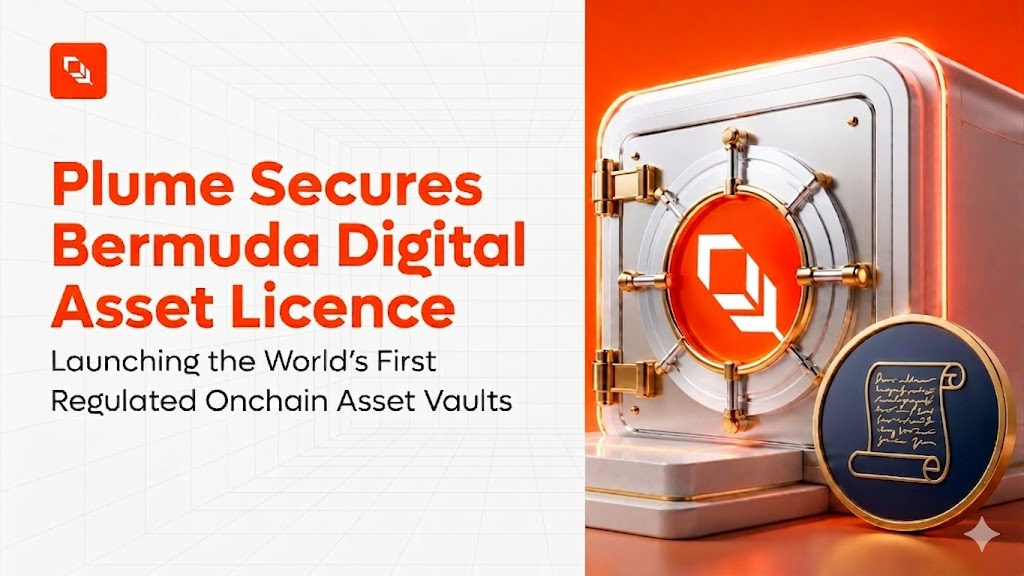
Header graphic from Plume’s May 20, 2026 blog post announcing KDAB’s Bermuda Class M digital‑asset licence — visual confirms Plume’s regulatory milestone that enables the regulated on‑chain vaults used in the ether.fi $100M Plume RWA offering. — Source: Plume (plume.org)
Integration paths: how ether.fi and Plume might route flows
Neither party has publicly detailed every integration step for end users, but several plausible paths fit market norms. One route would allow whitelisted participants to subscribe to the vault via on‑chain shares representing underlying off‑chain assets. Another could enable ether.fi depositors to opt into RWA sleeves within existing interfaces, subject to eligibility checks and offering docs.
What matters most is how transfers, KYC/AML, and NAV updates synchronize across systems. With a transfer agent in the loop, share registries can mirror on‑chain token balances under a single cap table — a necessity for compliant secondary transfers and orderly redemptions (Plume).
For lending markets, vault shares that meet clear eligibility and valuation standards can become collateral — but only where oracles, haircut frameworks, and redemption SLAs are robust. That is where “beyond TVL” shows up: in the ability to reuse the asset safely.
Risks and failure modes to price in
- Regulatory reversals: In‑principle approvals can change; conditions may be added before full authorization. Monitor license status updates.
- Custody and bank risk: Even short‑dated sovereign exposure rides on custodians and settlement agents. Review segregation and insolvency protections.
- Smart‑contract vulnerabilities: Vault share tokens and admin keys need rigorous controls and external reviews.
- Liquidity gates: During stress, redemption queues or gates may extend settlement, degrading effective yield and increasing basis risk.
- Credit and duration shocks: Spread widening or rate moves can draw NAV below expectations; mark‑to‑market losses may crystallize on forced redemptions.
- Operational mismatches: If on‑chain transfers get ahead of off‑chain registries, reconciliation gaps can freeze movement until records catch up.
Common mistake: Equating “regulated” with “risk‑free.” Licenses and audits improve process quality but do not underwrite market or counterparty risk.
Pro tip: Set pre‑commitment exit rules: if NAV deviation, redemption SLA, or license status breach hits a threshold, pause new deposits until disclosures catch up.
For context: On June 4, 2026, ether.fi confirmed the exclusive $100M Plume vault allocation (PR Newswire). Plume’s May update cited its Bermuda Class M path and SEC transfer‑agent registration via Kimber, alongside $350M+ in distributed asset value (Plume). The funding mix referenced LPs and ether.fi’s liquid vaults (~$300M TVL) per coverage on the day of the announcement (The Block).
This article is for information purposes only and should not be considered investment advice. Always review offering documents and consult qualified professionals where appropriate.
If you want more context like this as the market evolves, Crypto Daily tracks regulated RWA launches, staking flows, and on‑chain liquidity trends in real time. Visit Crypto Daily for ongoing coverage.
Frequently Asked Questions
What exactly is Plume’s RWA vault that ether.fi funded?
It is a vault structure on the Plume network that invests in off‑chain, real‑economy instruments and issues on‑chain shares that represent claims on underlying assets. Ether.fi disclosed a $100M exclusive allocation to this vault on June 4, 2026 (PR Newswire).
Does Bermuda’s in‑principle Class M approval make the vault “safe”?
No license removes market or counterparty risk. The in‑principle approval for KDAB signals regulatory oversight and a pathway to full authorization, but investors should still evaluate custody, asset mandates, liquidity terms, and disclosures (Plume).
Is this accessible to U.S. individuals?
Access depends on the offering’s eligibility rules, including KYC/AML and investor qualifications. Some RWA products are limited to certain jurisdictions or accredited investors. Check current documentation and onboarding requirements.
How is this different from staking‑based yield?
Staking rewards are native to blockchain consensus and can vary with network conditions. RWA vault yields arise from contractual interest on off‑chain instruments like short‑dated sovereigns or credit. They carry different risk profiles, fees, and liquidity dynamics.
What should DAOs and treasuries monitor after subscribing?
Track net yield vs. a matching‑duration benchmark, redemption settlement times, concentration limits, NAV deviations, and any changes to license status, custody arrangements, or offering terms.
What happens in a stress event?
Vaults may use gates, side pockets, or extended settlement cycles to manage redemptions. Review the prospectus and stress policy to understand how exits are prioritized and how NAV is valued when markets are dislocated.
How does this compare with other RWA platforms?
Key differences are licensing venue, transfer‑agent capabilities, eligible asset mandates, redemption SLAs, and composability in DeFi. Compare those dimensions rather than headline TVL or quoted yields alone.
Disclaimer: This article is provided for informational purposes only. It is not offered or intended to be used as legal, tax, investment, financial, or other advice.





Be the first to comment