


Key Takeaways
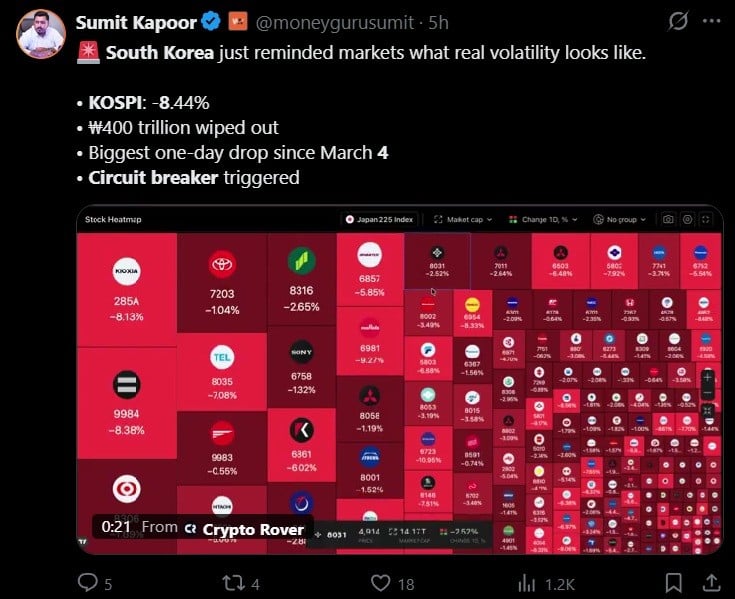
- South Korea’s KOSPI fell 8.44% to 7,477 on June 8, tripping a circuit breaker for only the ninth time.
- Samsung Electronics and SK Hynix each dropped about 10% as a chip selloff led the rout.
- Fed rate-hike fears and the U.S.-Iran standoff are pressuring global risk assets, including bitcoin.
A Rare Trading Halt
The Korea Exchange activated a Level 1 circuit breaker at 9:03 a.m. local time, suspending trading for 20 minutes after the benchmark KOSPI fell 683 points, or 8.4%, to 7,477. It was only the ninth circuit breaker in the index’s history, revealing the severity of the move.
Circuit breakers are designed to halt trading temporarily when prices fall too far, too fast, giving markets time to absorb information and preventing panic-driven cascades. A Level 1 halt in South Korea is triggered when the index drops 8% or more from the previous close and holds there for at least a minute. The selloff quickly became one of the most dramatic single-day moves in the Korean market in years.

The damage was concentrated in chipmakers as Samsung Electronics and SK Hynix (two heavyweights that dominate the KOSPI) each fell about 10% intraday, dragging the entire index lower. Both companies are central to the global supply of memory chips and artificial-intelligence (AI) hardware, leaving the index acutely exposed to swings in tech sentiment.
The trigger was a U.S.-led semiconductor selloff that spread across Asia. A disappointing AI chip sales outlook from Broadcom helped sour sentiment, raising fears that the AI-driven rally in tech stocks had run ahead of fundamentals. Those concerns rippled through Taiwan, Japan, and South Korea, where chip exporters carry outsized weight.
Macro pressures compounded the slide as stronger-than-expected U.S. employment data revived fears of further Federal Reserve rate hikes, while escalating tensions in the Middle East added to the risk-off mood.
Spillover Into Crypto
The equity rout did not stay contained, given that bitcoin and other digital assets have traded in tight sympathy with risk markets through the recent turmoil, and the Korean crash added to a fragile backdrop for crypto. Bitcoin.com News reported last week that BTC had just endured the worst week of 2026, sliding to an intraday low near $59,100 before a tentative rebound.
South Korea is one of the world’s most active crypto-trading hubs, and sharp moves in its equity market often coincide with shifts in local crypto sentiment. A flight from risk in Seoul can translate into selling pressure on digital assets, even as some investors rotate into bitcoin as an alternative store of value during equity stress.
The same macro forces driving the KOSPI lower (i.e. rate-hike fears, AI-valuation jitters, and geopolitical risk) have weighed on crypto for weeks, reinforcing how tightly the two markets are now linked.
What Comes Next
After the 20-minute halt, attention turned to whether the selling would resume or stabilize. Circuit breakers pause trading but do not address the underlying catalysts, and the path from here depends on how chip stocks, U.S. rate expectations, and Middle East tensions evolve (President Trump announced yesterday that Israel has “no choice” but to accept a U.S.-brokered deal with Iran).
With global markets on edge over AI valuations and Fed policy, the next major move in digital assets may be decided as much in equity markets as onchain.





Be the first to comment