


What to know:
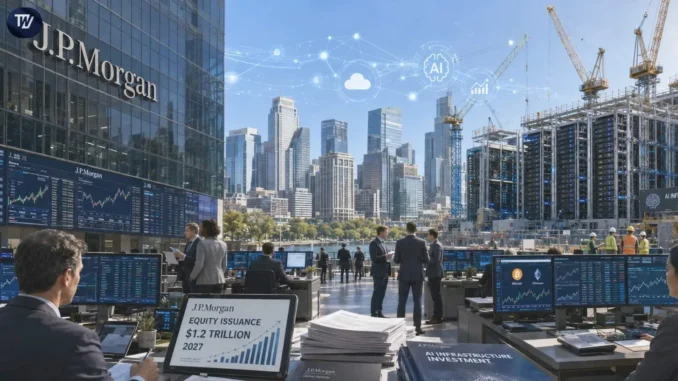
- JP Morgan forecasts $1.2T US equity issuance in 2027 as firms fund AI infra, ending the 20-year buyback era.
- New equity supply may compete with capital flows into Bitcoin, Ethereum, and tokenized assets.
- While liquidity tightens, AI’s need for decentralized compute and blockchain payments creates overlap with crypto infrastructure.

For twenty years, corporate stock buybacks were the main feature of US equity markets, reducing float and propping up prices. Now JP Morgan is signaling a turnaround, highlighting that US equity issuance could hit $1.2 trillion in 2027.
The reason behind this is not M&A or opportunistic fundraising, but the capital intensity of AI infrastructure. This change has a few implications for liquidity in traditional finance as well as crypto and blockchain ecosystems.
The Transition from Buybacks to Issuance
The buyback phase was mostly about giving back capital to shareholders rather than reinvesting in the business. JP Morgan points out that the trend is getting reversed as hyperscalers and other businesses are going to equity markets for funding of AI data centers, chips, and model training. Instead of buying back shares, companies will be issuing them, resulting in a net increase in supply. For crypto markets, this is significant because institutional investors, as a rule, manage their holdings comprehensively, and equity issuance has an effect on overall risk-taking behavior.

Also Read: JP Morgan Chase Sued Over Alleged $328 Million Crypto Ponzi Scheme
Liquidity Implications for Digital Assets
A large number of newly issued shares might end up competing for the same subset of institutional and retail investors whose money is also directed towards Bitcoin, Ethereum, and tokenized assets. If the market absorption of new equity is high, it could bring a decrease in allocations to digital assets. However, the expansion of AI depends heavily on decentralized computing, data validation, and blockchain-based payments, which implies a synergy between traditional equity fundraising and investments in Web3 infrastructure.
Also Read: JP Morgan Under Fire from Trump Over Debanking Allegations
Opportunities and Structural Challenges
Increasing the quantity of shares available in the market might lead to lower prices. But at the same time, it brings money for the long-term growth of crypto-related sectors, which include cloud services and hardware manufacturing. One of the difficulties is figuring out how to work together: as investors’ preferences change, blockchain-based organizations and DAOs have to adjust to a scenario where global financial liquidity is less stable. At the same time, there is a potential in presenting decentralized networks as cheaper and more efficient alternatives to costly centralized AI systems.
Also Read: JP Morgan Extends JPM Coin to Canton Network in Major Blockchain Expansion


Be the first to comment