



TLDR
- Brent crude rose 0.6% to $72.40 a barrel; WTI gained 1% to around $69.64–$70.07 a barrel Monday
- The U.S. and Iran traded strikes over the weekend after disagreements over Tehran’s authority in the Strait of Hormuz
- Both sides agreed to halt hostilities and hold new peace talks in Qatar this week
- Oil had slumped over 10% last week after an initial U.S.-Iran interim peace deal was signed
- Analysts warn oil supply recovery could take the rest of 2026 due to tanker backlogs and damaged infrastructure
Oil prices moved higher on Monday after fresh U.S.-Iran hostilities over the weekend rattled markets and raised new doubts about a fragile peace deal between the two countries.
Brent crude for August delivery rose 0.6% to $72.40 a barrel in early European trade. WTI contracts for September delivery gained around 1% to $69.64 a barrel.
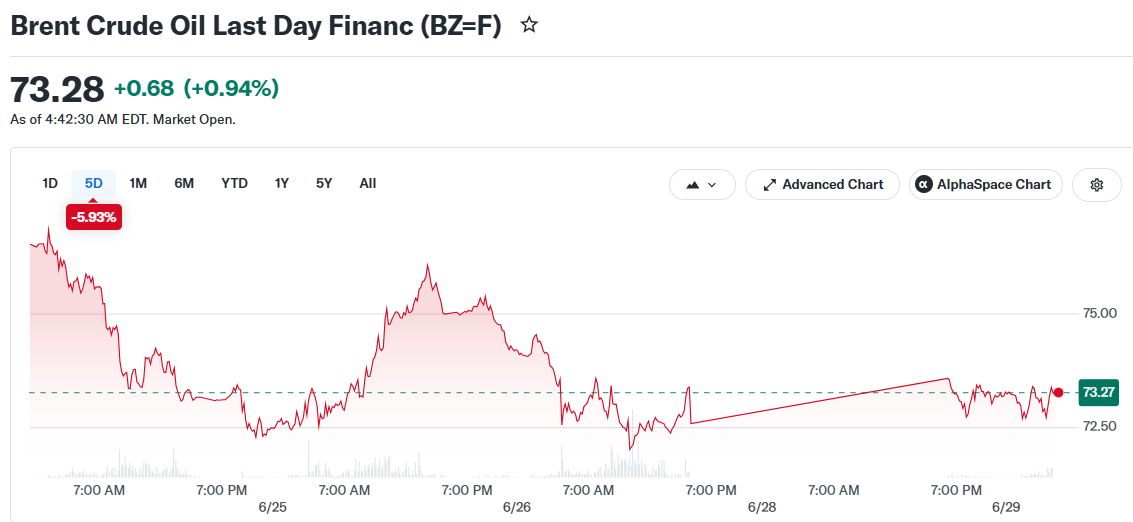
The gains come after oil hit its lowest level in four months last week. Prices had dropped over 10% after the U.S. and Iran signed an interim peace deal, which caused investors to price out a risk premium from crude.
The Weekend Flare-Up
The two countries traded military strikes through late last week and into the weekend. The clashes stemmed from disagreements over Iran’s assertion of its authority in the Strait of Hormuz, a key shipping route for global oil.
BREAKING: President Trump announces new US Military strikes on Iran and threatens that Iran “will no longer exist” if there comes a point when “we are no longer able to be reasonable.” pic.twitter.com/Rax1W90dEE
— The Kobeissi Letter (@KobeissiLetter) June 27, 2026
The exchange of fire slowed traffic through the Strait of Hormuz and pushed prices higher on Monday. However, gains were capped after Axios reported both sides agreed to immediately halt hostilities.
The U.S. and Iran have reportedly agreed to hold new talks in Qatar this week. The two countries had already committed to a 60-day window of negotiations to work toward a more lasting peace agreement.

Hormuz Flows Still Below Normal
Even before this weekend’s flare-up, oil flows through Hormuz had not fully recovered. Flows came back close to pre-war levels last week, but the renewed attacks have added fresh uncertainty.
“While commercial shipping is expected to resume ahead of renewed peace talks, traffic through Hormuz remains below normal levels,” MUFG analyst Soojin Kim said.
ANZ analysts echoed that view, warning that physical oil flows remain constrained by tanker backlogs, damaged infrastructure, and production shut-ins.
“Recovery will be gradual and asymmetric,” ANZ wrote, adding it could take the rest of 2026 for oil supplies to normalize.
A separate issue complicating the peace process is the ongoing conflict between Israel and Lebanese group Hezbollah. Iran has demanded that Lebanon be included in any broader peace deal. Israel and Hezbollah continued to clash in Southern Lebanon despite multiple ceasefire attempts.
MUFG’s Kim also noted that oil prices are likely to stay under downward pressure as the geopolitical risk premium continues to unwind and regional supply slowly recovers.
The key question now is whether the U.S. and Iran can reach agreement during their 60-day talks on a comprehensive and lasting peace deal.
🚨 Our JUNE Stock Picks Are Live!
A new month means new opportunities. Our analysts have just released their top stock picks for June, highlighting companies with strong momentum that rank highly on our KO Score algorithm. We’re also now sharing trade ideas for both long-term and short-term investors, giving you more ways to spot potential opportunities in the market.
Sign up to Knockout Stocks today and get 50% off to unlock the full list and see which stocks made the cut.
Use coupon code Special50 for your exclusive discount!



Be the first to comment