



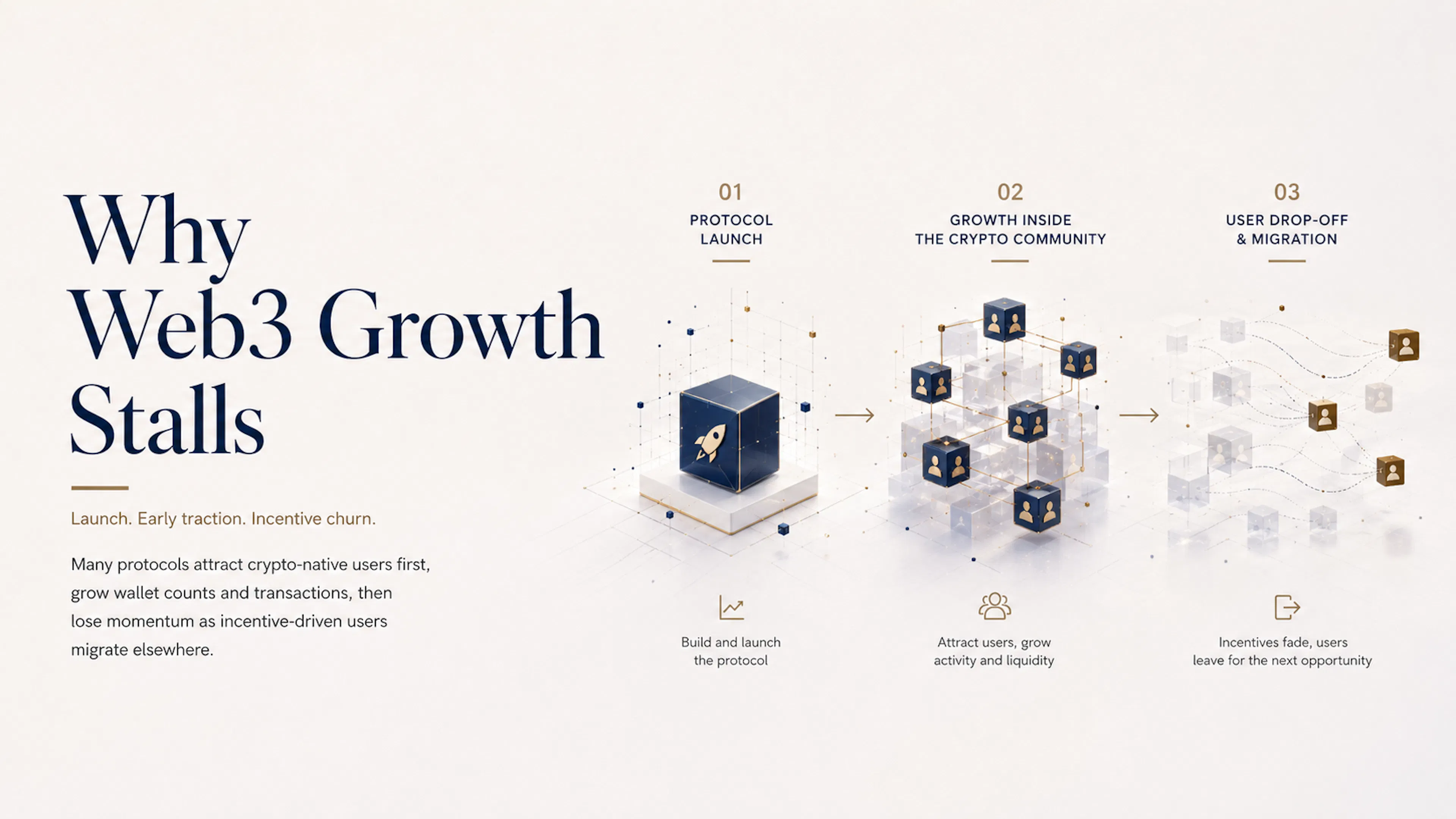
There is a pattern that seemingly repeats itself across Web3 market cycles with a kind of mechanical precision, i.e., whenever a new protocol launches with solid infrastructure, it attracts developer attention, and builds an early user base almost entirely within the existing crypto community.
Subsequently, wallet counts rise, transaction volumes follow, and the numbers look promising through the growth phase. However, as soon as this happens, momentum subsequently stalls, and incentive-driven users simply migrate to whatever is launched next, leaving the project to neither fail dramatically nor become what it set out to be.
That said, what rarely changes across that story is the absence of institutional distribution, given that the users who came were already in crypto, and those who didn’t would have needed a reason to start, and “early-stage L2 with yield opportunities” is not that reason for most people.
The shift can be traced back to 2025 and early 2026, with a growing number of Web3 projects moving away from community-first growth models and toward formal partnerships with corporations that have spent decades earning consumer trust at scale.
Soneium, its Ethereum L2, was built in direct collaboration with Sony Group Corporation, while its tokenized securities platform Strium was developed alongside SBI Holdings, one of Japan’s largest financial institutions. In March 2026, Startale
The difference in what those relationships unlock (be it user distribution, regulatory navigation, or brand credibility) is not a marginal advantage but rather a deciding factor in ensuring long term utility.
What Corporate Partners Actually Contribute
There is an important distinction between what a corporate partner’s capital provides and what the partnership itself brings to the table. SBI Holdings, with more than 80 million customers, 14 million securities accounts, and over 11 trillion yen in assets under management, for instance, provides a kind of distribution infrastructure that most blockchain projects spend years trying to replicate through token incentives and community programs.
In all of this, regulatory positioning matters as well because companies operating in regulated financial markets cannot align themselves with protocols that have unclear legal standing. SBI Holdings operates within Japan’s established financial regulatory framework, while Sony’s global operations span dozens of regulatory jurisdictions.
Their presence in the Soneium ecosystem effectively signals that the network meets the standards institutional partners are required to observe.
The Sony-Startale Case Study
What makes the Sony-Startale arrangement particularly instructive is how clearly each party contributes what the other cannot easily replicate independently. Sony, for its share, brings access to hundreds of millions of consumers already accustomed to digital content and virtual goods (through its PlayStation, Crunchyroll, and Sony Pictures offerings)
Startale, on the other hand, contributes the technical architecture Sony would not plausibly build in-house within a relevant timeframe. In this regard, Soneium has already processed over 600 million transactions and grown to 5.4 million active wallets since its January 2025 mainnet launch (with 250-plus independently built applications now live across gaming, music, and AI-driven content).
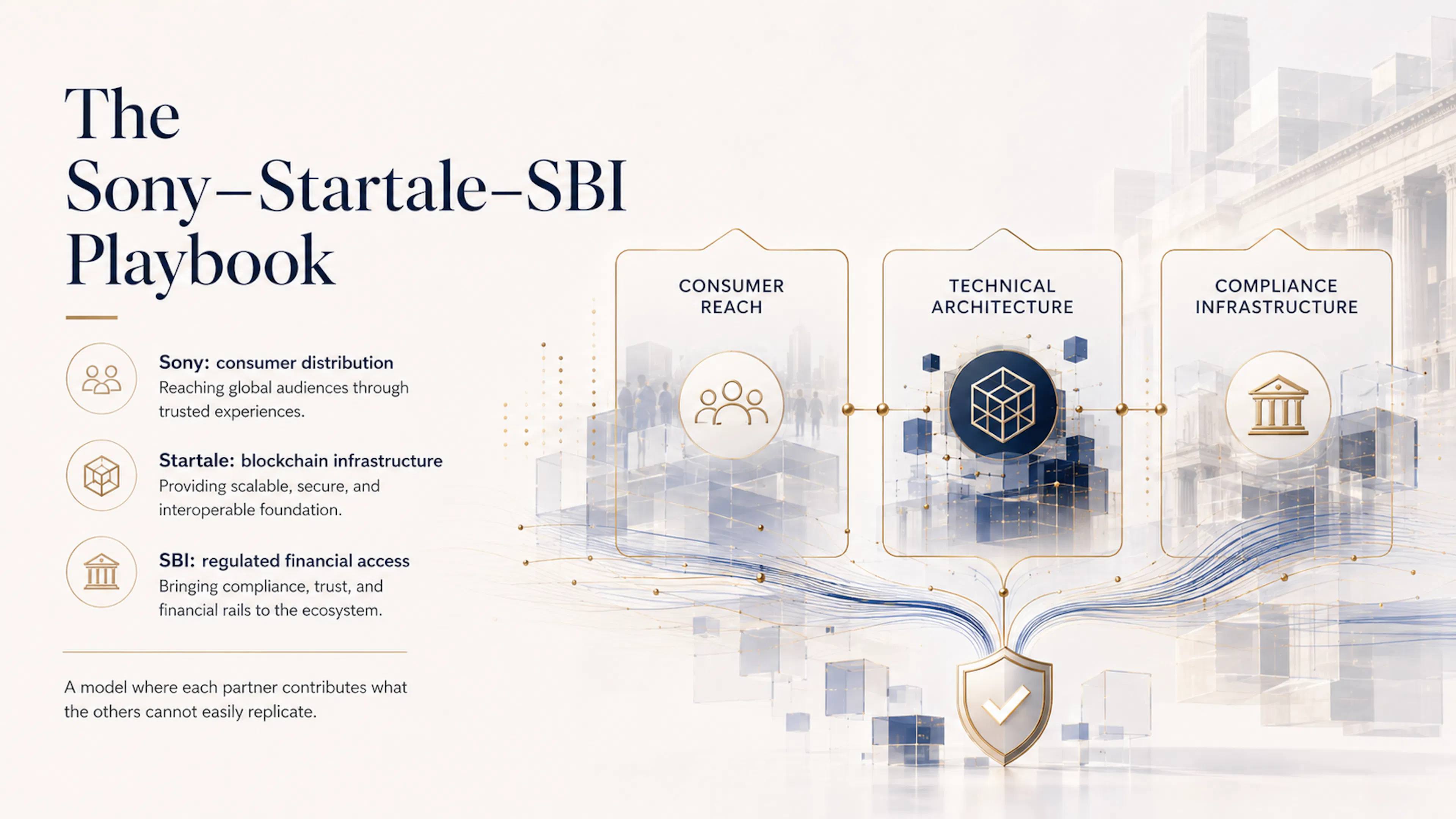
JPYSC, the yen-denominated stablecoin announced in February 2026, issued by Shinsei Trust & Banking, and Japan’s first trust bank-backed JPY stablecoin, provides a regulated settlement layer that ties institutional and consumer use cases together, while Strium enables 24/7 trading of tokenized securities and real-world assets within SBI’s compliance framework, targeting the 14 million securities account holders already within SBI’s existing ecosystem.
A Model Worth Watching
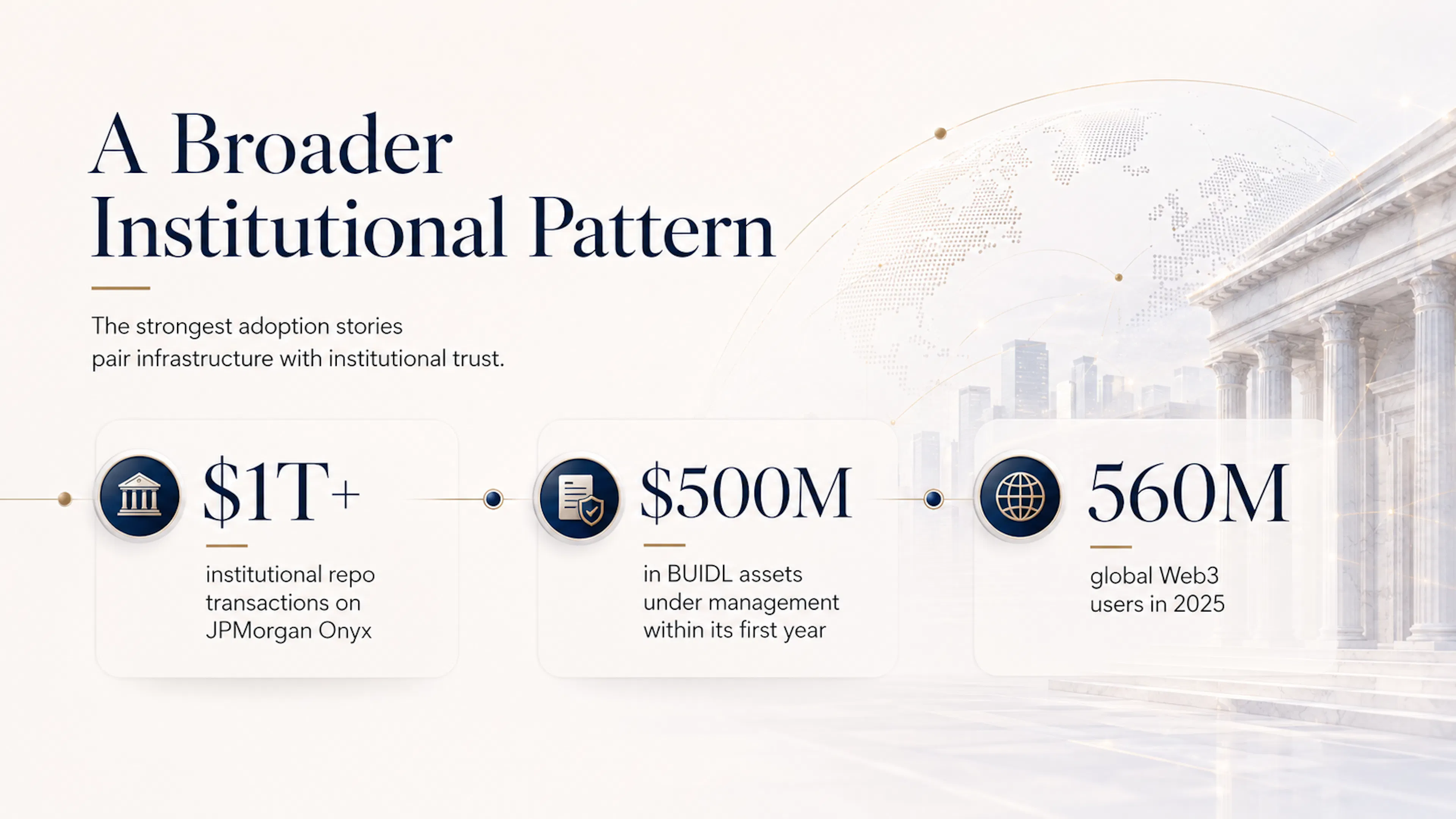
Startale is not the only company operating on this logic, as JPMorgan’s Onyx blockchain has also
And with Web3 reaching roughly 560 million users globally in 2025, converting that figure into something resembling mainstream financial infrastructure will require more than better technology but trust that takes decades to build (something most blockchain projects simply cannot build in isolation).
Don’t forget to like and share the story!
HackerNoon has reviewed this report for editorial quality. All claims, opinions, and analysis are the author’s, and all intellectual property rights rest with the author.



Be the first to comment