



What to know:
- Vietnam sets crypto fines for investors who use unlicensed domestic trading platforms.
- Crypto providers without licenses may face fines of up to 200 million Vietnamese dong.
- Regulated crypto trading could begin in Vietnam as early as the third quarter of 2026.
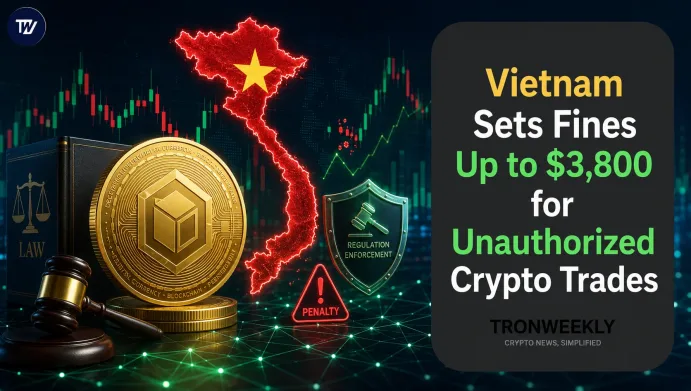
Vietnam has introduced formal penalties for crypto violations as it prepares to move more trading onto licensed domestic platforms. The Vietnam crypto fines will apply to investors, service providers, and token issuers. The rules support the country’s five-year pilot market.
Decree No. 284/2026/NĐ-CP was signed on July 16 and will take effect on Sept. 1. It sets administrative penalties for unauthorized trading and service activity. The decree also covers failures involving customer checks and token issuance during the pilot program.
Also Read: XRP Ledger Upgrade Moves Closer to Validator Vote With Major New Features

How New Penalties Affect Vietnam’s Domestic Crypto Traders
Domestic traders that use platforms not authorized by the Ministry of Finance may be subjected to fines ranging from 30 million to 50 million dong, which is around $1,140 to $1,900. The Vietnam crypto fines target trading activity outside the approved domestic system.
The purchase of assets that are restricted to foreign investors faces stricter rules. Fines in such instances will range from 70 million to 100 million dong, or approximately $2,660 to $3,800. Such regulations provide specific restrictions for purchasing certain kinds of assets.
Despite being a restrictive environment, Vietnam continues to maintain a high ranking among countries that adopt cryptocurrencies.
It was ranked fourth by the Chainalysis report in the Global Crypto Adoption Index of 2025. Figures reported by the company suggest over $220 billion of crypto transactions between July 2024 and June 2025.
The government has been preparing to move local users from foreign exchanges to domestic exchanges. In March, officials were considering restrictions on overseas crypto trading.
The effort formed part of a wider plan to control capital flows and strengthen domestic supervision under local regulatory oversight.
What Vietnam Crypto Fines Mean for Crypto Firms
According to reports, several financial organizations had already managed to pass the initial screening round for the pilot licensing program.
Those include affiliates of Techcombank, VPBank, LPBank, VIX Securities, and Sun Group. Vietnam aims at authorizing just a few exchanges in the pilot period.
Crypto service providers also face penalties under the Decree 284 regulations. Failure to identify the identity of clients in order to open accounts will attract fines ranging from 50 million to 70 million dong. The Vietnam crypto fines include penalties for licensing and marketing violations.
Failing to obtain licensing to provide crypto services will lead to fines of 180 million to 200 million dong. The same penalties apply for marketing without authorization.
These Vietnam crypto fines sit beside know-your-customer requirements, reporting, and anti-money laundering duties.
Why Vietnam Introduced Fines Before Market Launch
Vietnam adopted a license application process for crypto trading platforms in January. The Vietnam Securities Commission is responsible for the licensing application process for licensed trading operations in the domestic market.
In May, Deputy Minister of Finance Nguyen Duc Chi said that the regulated crypto trading would start in the third quarter of 2026.
The newly issued decree provides for penalties for non-compliance with the law prior to commencement of regulated trading. Vietnam crypto fines will help enforce compliance rules in the pilot market compliance framework.
Also Read: Allbridge Core Exploit Pauses Cross-Chain Bridge After $1.65M Solana Attack



Be the first to comment