


What to know:
- Pakistan, Egypt, and Qatar seek to revive key talks before the US-Iran MoU window closes.
- Iran and Oman reportedly back the mediators’ formula as Trump weighs final US approval.
- Brent and WTI sink to two-week lows as restricted Hormuz traffic keeps risks elevated.
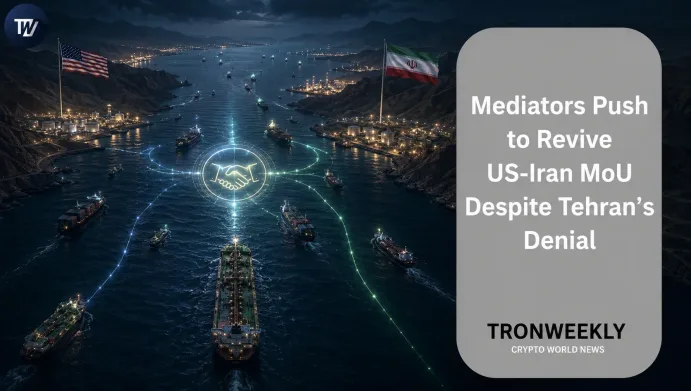
Regional mediators are close to a proposal that could revive the US-Iran MoU. Its 60-day window closes next month. Pakistan, Egypt, and Qatar are working to resolve a key dispute over the Strait of Hormuz.
The Times of Israel reported an increase in diplomatic moves between the countries. The MoU between the US and Iran was made last month but failed due to disagreements over the interpretation of the memorandum. No announcements about any talks have been made by both sides.
Also Read: Elon Musk Eyes August 7 Launch for Grok 4.6 as AI Race Heats Up

How the Hormuz Dispute Delays US-Iran MoU Talks
The key point of contention is the interpretation of the memorandum with regard to the Strait of Hormuz. Iran claims that it allows it to have jurisdiction over the activities in the strait. Washington believes that this memorandum does not give Iran such control.
Iran and Oman are reported to have agreed on the formula of the mediators. The final decision lies with President Donald Trump, as per the report. Washington has not publicly disclosed its position on the proposal.
The White House delayed its response until President Trump held a meeting with Israeli Prime Minister Benjamin Netanyahu in Washington.
The approval will facilitate a resumption of negotiations before the expiry of the US-Iran MoU next month. However, both Washington and Tehran have not yet confirmed the date of their meeting.
Iran has also proposed a temporary system for the navigation of ships through the Strait. While one route would go through Iranian waters, part of the other route would be within the jurisdiction of Iran.
Why Iran Rejected Oman’s Strait of Hormuz Proposal
Iran dismissed the offer by Oman to divide the two routes equally. According to Deputy Foreign Minister Kazem Gharibabadi, that approach failed to address Tehran’s security concerns. Reuters reported his remarks about the rejected proposal.
Gharibabadi warned that the strait would be closed should Oman reject Iran’s proposal. Iran would also block any third country from conducting mine-clearing activities in the strait. That position would apply even if Oman invited outside assistance.
The Iranian official denied that Tehran had approached Washington or requested a ceasefire during the previous 17 days. He instead claimed that Washington sought dialogue through Oman and promised no further military action. The United States has not confirmed those claims.
What Drove Brent and WTI to Two-Week Lows
Oil prices fell sharply as the pause in US-Iran attacks raised hopes for renewed diplomacy. Brent crude futures dropped 4.8% on Tuesday and settled at $84.09 per barrel. West Texas Intermediate declined 4.1% to $79.26.
Both benchmarks reached their lowest levels in about two weeks. Brent has now lost roughly 16% across three trading sessions. The decline came despite limited shipping through the Strait of Hormuz.
Restricted traffic continues exposing energy markets to further disruption if tensions rise again. A revived US-Iran MoU could restart negotiations, but no breakthrough has been announced. The maritime disagreement and broader conflict both remain unresolved.
For US consumers, a lasting agreement could reduce pressure on fuel costs and inflation. That outcome depends on fuller shipping through the strait. It also requires Washington and Tehran to resume talks under the US-Iran MoU.
Also Read: Tether Joins Forces With Nairobi Securities Exchange to Advance Digital Asset Infrastructure


Be the first to comment