




TLDR
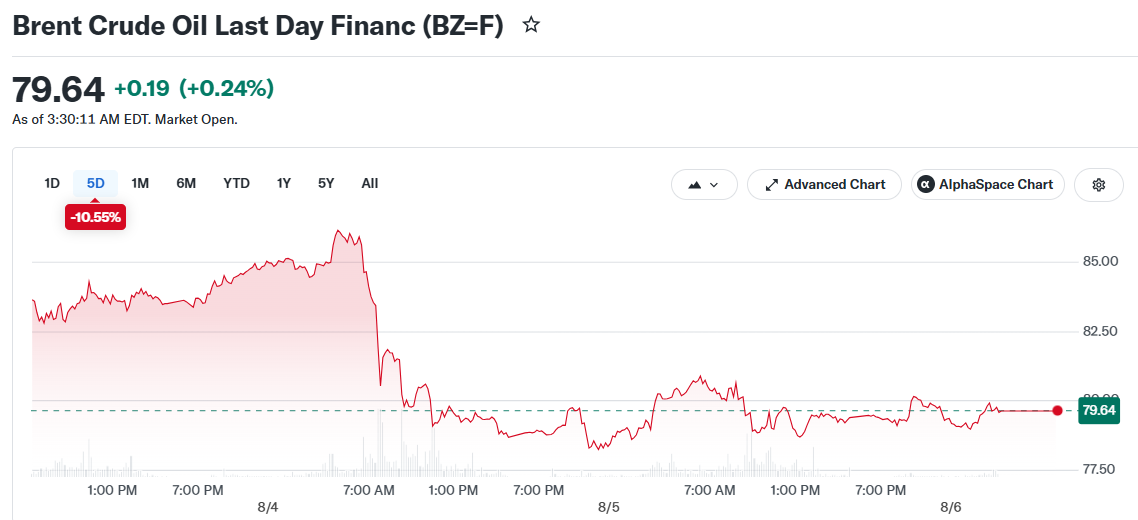
- Brent crude sits at $79.54 and WTI at $75.27, both down over 10% in the past week
- Iran and Oman agreed on coordinates for a Strait of Hormuz shipping route, but a full deal is not done
- Houthi forces attacked two Saudi oil tankers in the Red Sea and Gulf of Aden
- U.S. crude inventories rose 2.5 million barrels last week, against expectations of a draw
- Gulf crude exports remain about 40% below pre-war levels from late February
Brent crude futures were trading at $79.54 a barrel on Thursday. U.S. West Texas Intermediate futures sat at $75.27. Both benchmarks have lost more than 10% over the past week.
Iran and Oman reached an understanding on the geographic coordinates for a possible shipping route through the Strait of Hormuz. However, a full deal has not been reached. Talks on cargo fees, inspections, and security arrangements are still ongoing.
Iran’s Foreign Ministry confirmed that a joint announcement was being finalized, but said certain third parties could still derail the process.
BREAKING: 🇮🇷 Iran says a deal with Oman to reopen the Strait of Hormuz is “on the verge of being finalised“, after both countries agreed on the coordinates of routes. pic.twitter.com/L5u8Xc1UqQ
— Bull Theory (@BullTheoryio) August 6, 2026
Traders were cautious. Analysts at KCM Trade pointed to a short-lived memorandum of understanding signed in June that fell apart, raising concerns a new agreement could face the same outcome.
Before the Iran war began in late February, the Strait of Hormuz carried roughly one-fifth of global daily oil and liquefied natural gas supplies. Gulf crude and condensate exports are currently about 40% below pre-war levels.
U.S. President Donald Trump said on Wednesday that Washington was in talks with Tehran and would “see what happens.” Iran publicly denied that peace talks were underway.

ING analysts said that meaningful progress in U.S.-Iran discussions is needed before disrupted energy flows can realistically resume.
Houthi Attacks and Rising U.S. Inventories Add Pressure
Yemen’s Houthi forces said they launched missile attacks on two Saudi oil tankers, one off the Red Sea port of Yanbu and another in the Gulf of Aden. Saudi Arabia did not confirm either incident.
🇸🇦🇮🇷 BREAKING: Iran-backed Houthis say they struck two Saudi oil tankers with ballistic missiles and threaten to block “all access routes” to Saudi oil shipments.
The tanker Wafa was hit near Yanbu in the Red Sea.
A second tanker, Daisy, was struck in the Gulf of Aden. pic.twitter.com/NFokEvAJT9
— Coin Bureau (@coinbureau) August 5, 2026
Julius Baer analyst Roberto Cominotto said Houthi attacks have not disrupted oil and gas supply so far, but warned that further escalation could change that.
U.S. crude oil inventories rose by about 2.5 million barrels last week. Markets had expected a draw of 1.5 million barrels. That surprise build points to softer near-term demand.
Gasoline stockpiles fell by 1.64 million barrels, while distillate inventories dropped 3.47 million barrels, showing some tightening in refined fuel markets.
Iran warned Gulf states that any new U.S. strike on its territory would trigger retaliation against regional energy infrastructure.
Saudi Arabia slightly lowered its official selling price for Arab Light crude to Asia for September. A major oil refinery in Russia’s Yaroslavl region caught fire following a Ukrainian drone strike, with emergency services working to contain the blaze.
Markets remain in a holding pattern until a verified deal brings actual increases in oil flows through the strait.
Stop guessing and start investing with confidence. KnockoutStocks gives you the AI insights, market intelligence, and stock research you need to spot opportunities, cut through the noise, and make smarter investment decisions — all in one powerful platform.
Sign up today and get 50% OFF full access to our premium stock picks.
Simply use coupon code SPECIAL50 at checkout to claim your exclusive discount.



Be the first to comment