


Philippine crypto regulation may tighten as the Bangko Sentral ng Pilipinas considers a 12-month pause on new payment system operator registrations. The proposal also targets payment arrangements involving virtual asset service providers.
Under the proposed circular, the BSP would stop accepting new applications to register as an operator of a payment system, or OPS. The suspension would support a registration framework review. The draft does not impose an immediate freeze.
Also Read: Japan Foreign Reserves Drop $79.6B After Record Yen Intervention
How the BSP OPS Freeze Affects Applicants
The Central Bank said that it would examine its OPS classification, registration, and licensing rules. Applications that have been submitted before the freeze would be subject to assessment. However, the BSP would neither approve nor reject them until the end of the 12-month period.

Applicants will also not be allowed to commence any activities requiring OPS registration until the period of suspension ends. They will only be allowed to do so after being granted permission by the BSP independently.
Under existing regulations, the BSP currently has an OPS registration scheme that operates under the National Payment Systems Act. Its official guidance notes that this scheme provides the regulator with a minimum inventory of the payment system activities and participants.
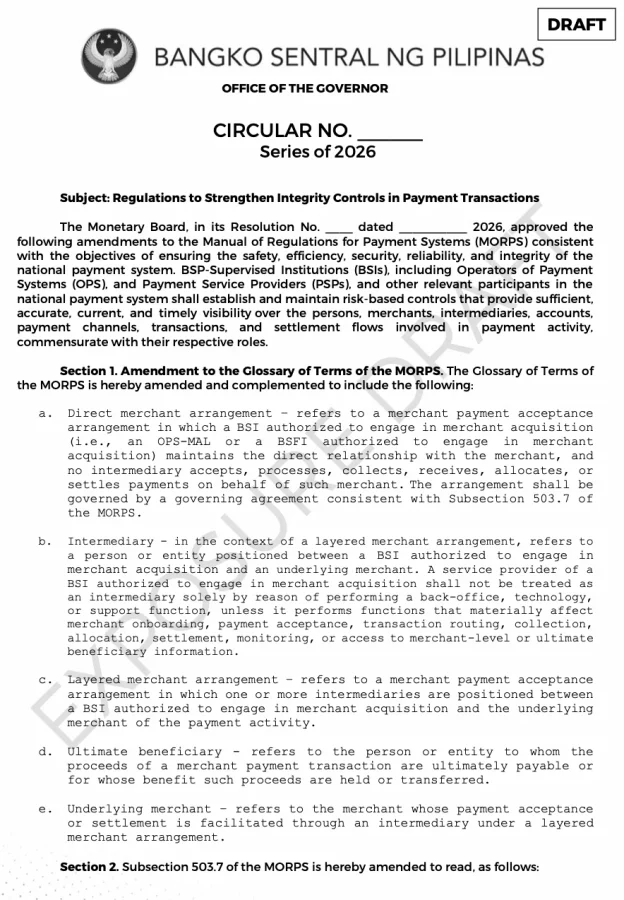
Philippine crypto regulation would also change how BSP-supervised institutions handle some virtual asset payment arrangements. Merchant acquirers are supposed to have direct links with regulated VASPs.
The direct merchant relationship offers an agreement between the acquiring entity and the merchant. This would give access to information for onboarding, monitoring, and settlement control purposes.
The proposed regulation would apply to entities requiring approval from the BSP, SEC, or any other regulatory body.
What the New VASP Rules Require
VASPs appear in the proposal beside casinos, gaming operators, adult-oriented businesses, and money-service businesses. The grouping signals that these sectors need stronger controls. It does not state that the BSP considers their underlying activities identical.
According to the Philippine crypto regulations, these regulated businesses will have to enhance due diligence and transaction monitoring measures. They may implement transaction value limits as well.
The proposal follows earlier BSP measures affecting licensed VASPs. In June, the central bank tightened token listing and monitoring requirements for VASPs. Those rules require ongoing reviews and defined suspension or delisting triggers.
Philippine crypto regulation could also force institutions to review existing layered payment arrangements. BSP-supervised firms would need to identify current relationships involving covered merchants.
They would then assess whether those structures meet the proposed direct-merchant requirement.
Institutions will have six months for conducting the review. Six additional months will be granted for the rectification of any identified weaknesses.
Possible changes include contract restructuring, setting exposure limits, and terminating arrangements that fall beyond the institutions’ risk appetite.
Philippine Crypto Regulation Tightens Merchant Oversight
The BSP also plans a centralized National QR Code Merchant Database. It will allow institutions to recognize any fraudulent, prohibited, or undesirable merchants through payment systems. This measure forms another part of the Philippine crypto regulation and merchant oversight.
Regulation might affect banks, electronic money institutions, merchant acquirers, and payment facilitators for virtual asset platforms. The impact will vary depending on how the BSP will define these arrangements in the final circular.
Philippine crypto regulation has also collided with licensing concerns regarding foreign businesses. Binance and BlockShoals were reported to have not been licensed as VASPs by the BSP even after participating in the SEC’s StratBox sandbox program.
Later, BlockShoals was given access to sandbox testing while other BSP licensing requirements still remain. The proposed rules will add another layer of compliance for firms providing service to similar arrangements.
Participation in the sandbox will not exempt entities from paying any obligations imposed by the BSP. Payment firms will continue to be obligated to satisfy all regulatory requirements.
What Happens Next With the BSP Draft
The BSP is accepting comments through its policy exposure draft portal. Parties interested can provide comments through the designated policy officers along with the draft.
There could be changes made by the central bank to the suspension, implementation period, and covered arrangement after reviewing responses.
A halt in registrations does not occur merely due to the publishing of the draft policy. If implemented, the circular will come into force after 15 days from the date of publication in the Official Gazette or a national newspaper. Thus, crypto regulation in the Philippines will move to its implementation stage.
Payment firms need to keep track of the final document on applications and relationships with VASPs. Crypto firms in the Philippines will have to have a direct relationship with the acquiring institution to access local payment facilities.
Also Read: Solana Cat Memecoin ZCAT Pays Nearly $3 Million in Zcash Rewards



Be the first to comment