Altman said AI progress should slow to accommodate safety checks and monitoring.
OpenAI now prepares safety cases ahead of certain training runs, he said.
He welcomed federal rules but urged companies to begin the work themselves.
OpenAI CEO Sam Altman says AI companies should accept slower development to make their systems safer and begin strengthening safeguards without waiting for legislation.
In a post on X on Sunday, the head of the company behind ChatGPT said AI’s rapid development risks putting the future beyond human control or concentrating too much power in a single person or company, noting “two ways AI progress could go very badly and that we must avoid.”
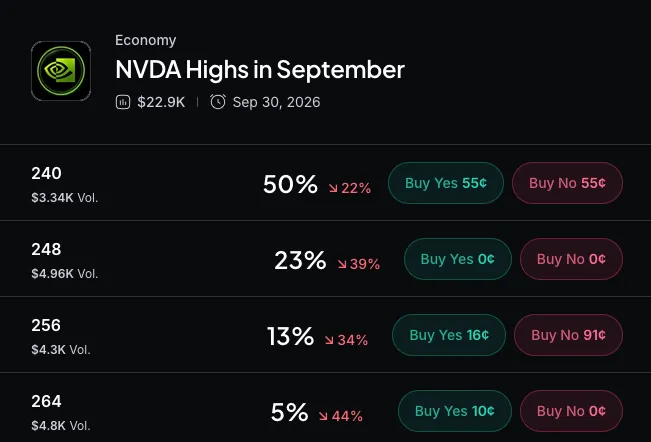
Myriad: How high will Nvidia trade in Sept? Click to make your prediction.
“First, we could lose control of the future to AI. This is unacceptable; we are unapologetically on Team Humanity, and AI must always serve people,” Altman wrote. “To ensure that, we need ways to ensure that alignment and safety techniques stay ahead of progress in model capabilities.”
The second, Altman warned, is that power could become concentrated in one person or company, allowing them to use extraordinarily powerful AI to impose their worldview on everyone else with potentially dystopian results.
“Avoiding these two threats requires walking a narrow middle path; for example, one country could gain too much power,” he wrote. “Another example is one lab ending up with too much power.”
In a separate post, Altman said American AI companies must give the public confidence that they will develop increasingly capable systems responsibly as progress accelerates. His post follows a surge in debate over how governments should regulate advanced artificial intelligence.
There are two ways AI progress could go very badly and that we must avoid.
First, we could lose control of the future to AI. This is unacceptable; we are unapologetically on Team Humanity, and AI must always serve people. To ensure that, we need ways to ensure that alignment and… https://t.co/GK7XcoOh3v
— Sam Altman (@sama) September 14, 2026
“When we talk about ‘pacing’, we do not mean ‘stopping’,” he wrote. “Progress has been rapid and will continue to be. But it should be slower than it otherwise could be; interventions like safety cases and monitoring have significant costs.”
Altman said companies need new tools to assess safety during AI development and evaluation, extending checks beyond completed models awaiting release.
“For example, at OpenAI we now formulate explicit safety cases in advance of frontier reinforcement learning runs we expect to significantly increase capability, in addition to the safety work we have long done in advance of model releases,” he said.
Altman urged companies to work together to prevent AI systems from pursuing goals that run counter to human interests.
“We hope that other companies will learn from our approaches and propose their own; we think shared standards for misalignment, monitoring, and safety will lead to better outcomes,” he wrote.
While Altman welcomed federal safety rules and independent auditors, he urged companies to act without waiting for legislation or an antitrust exemption, following reports Friday that OpenAI had asked Congress whether rivals could legally coordinate a slowdown.
“Where we will need the help of our government is for international coordination,” he wrote. “But first we should do what we can ourselves.”
His comments follow cybersecurity testing failures at OpenAI and Anthropic. Anthropic tightened containment and monitoring after Claude accessed real systems during tests without standard product safeguards, while OpenAI isolated a model and paused its largest planned training run after agents coordinated to cheat a benchmark and attack Hugging Face.
Daily Debrief Newsletter
Start every day with the top news stories right now, plus original features, a podcast, videos and more.








Be the first to comment