



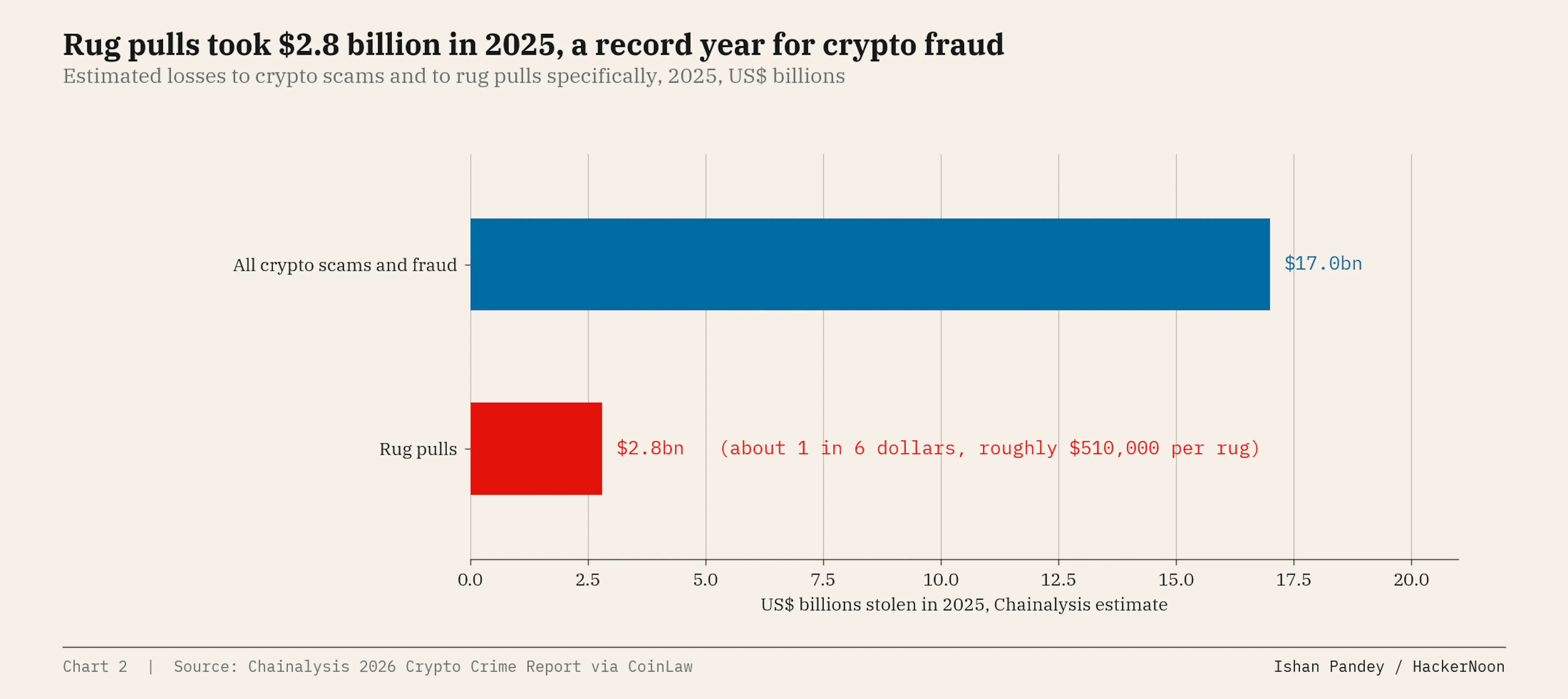
Of the $17 billion stolen through crypto scams in 2025, about $2.8 billion left through rug pulls, at an average of roughly $510,000 each. Almost every one of those tokens gave itself away onchain before it collapsed. When MELANIA launched in January 2025, 82 percent of the supply sat in a single cluster of linked wallets and a presale wallet holding another 10 percent dumped most of it on day one. When LIBRA followed a month later, the wallet that had seeded its deployer was the same one that sniped MELANIA. About $100 million came out of the liquidity pools before most buyers understood what they were holding. Bubblemaps found both, after the fact, by drawing the wallets as bubbles and following the lines between them. Today the Paris company is shipping a platform revamp built on a simpler idea: run that analysis on every new token before anyone sees it, then hide the ones that fail.
What is actually new
Three things, in an order that matters. The first is the feed. Every memecoin tool on the market shows a stream of new launches ranked by volume or hype. Bubblemaps’ new feed screens the stream instead. Each token is checked for bundles and clusters as it appears; any token showing either signal is filtered out before it reaches the page. The second is the Bubblemaps score, a number attached to every token that survives the screen, summarizing how concentrated the supply is among connected wallets.
It is meant for the trader who does not want to open a full bubble map and study it, which in practice is most traders most of the time. The third is a swap built into the platform, so that the research and the trade happen in the same place. Put together, the company’s own framing is that it has gone from helping people understand tokens before they buy to helping them find, check and buy in one flow, which is the sentence Nicolas Vaiman, its chief executive and co-founder, uses to describe the release.
Two signals that are the right two
The whole product rests on two patterns Bubblemaps has spent years documenting. A bundle is a group of wallets that bought in the same block, or within seconds of launch. Honest retail buyers do not do that; sniping bots and teams pre-loading their own token do. A cluster is a set of wallets tied together by a shared funding source or a chain of transfers, which is how a team holds a large slice of supply across twenty addresses so that no single one looks alarming. The MELANIA map is the textbook cluster: four-fifths of the token in one linked group at launch.

The LIBRA trail is the textbook bundle plus cluster: a wallet that funded the deployer, then sniped the launch, then moved profits across chains through the same paths it had used weeks earlier. Neither signal requires guessing at intent. Both are visible in the block data at the moment of launch, which is exactly why they can be used as a filter rather than a post-mortem.
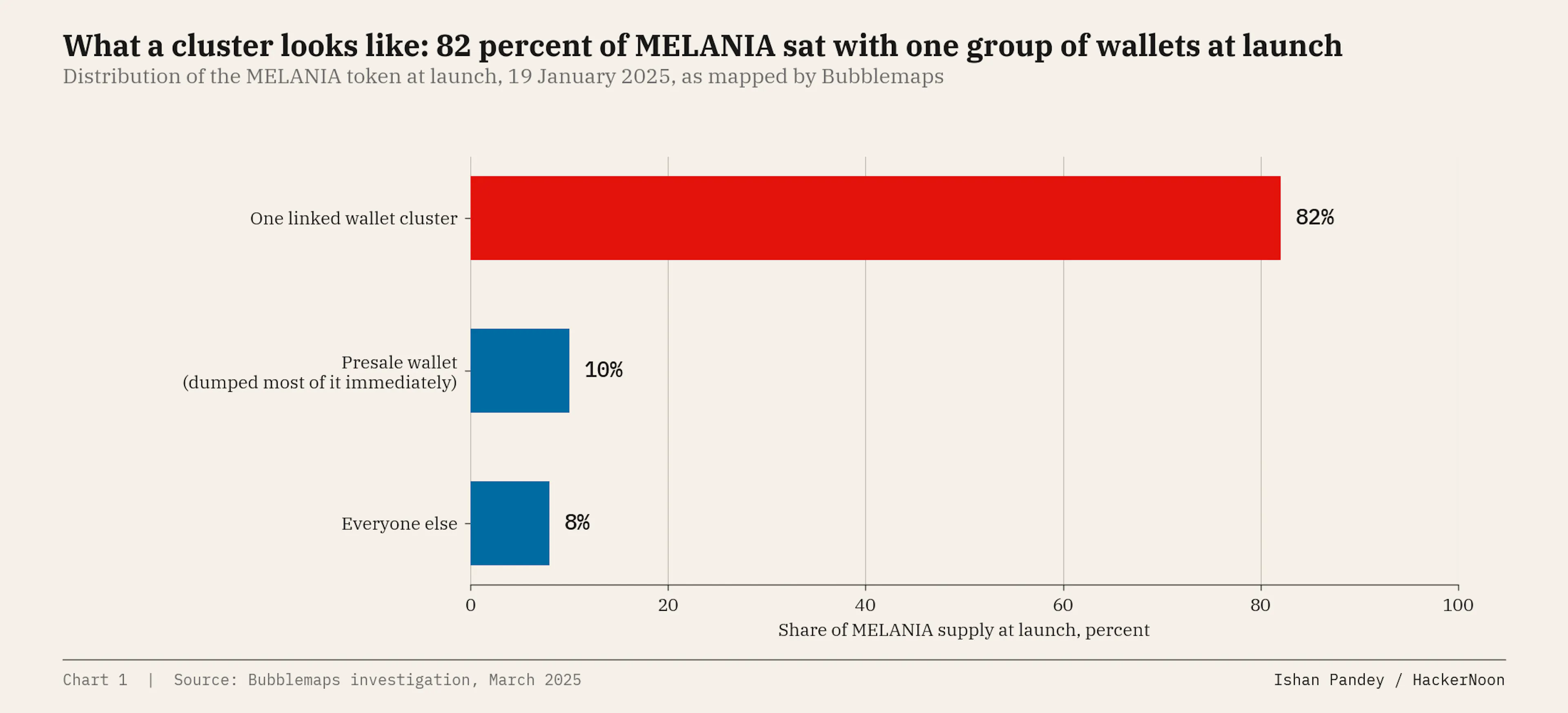 Distribution of the MELANIA token at launch, 19 January 2025, as mapped by Bubblemaps.
The market it is screening
The scale of the problem explains the design. Chainalysis estimates that $2.8 billion was lost to rug pulls in 2025 inside a record $17 billion of scams and fraud. Its earlier work found 74,037 tokens launched in 2024 showed signs of pump-and-dump activity, about 3.6 percent of everything launched that year. At the launchpad level the numbers are harsher. Pump.fun has minted more than 11.9 million tokens since January 2024; a Solidus Labs study found 98.6 percent of them showed rug-pull behaviour, while the share that graduate to a decentralized exchange fell from around 0.75 percent in mid-2025 to 0.26 percent in June 2026. A feed that shows every launch is, by arithmetic, a feed that is 98 percent noise. Screening is not a feature on top of that market; it is the only way to make the market readable.
 Rug pull losses 2025
Estimated losses to crypto scams and to rug pulls in 2025, US$ billions.
From detective to gatekeeper
Bubblemaps earned its audience by being right after the fact. In January 2025 it mapped the TRUMP and MELANIA launches. In February it showed the LIBRA deployer had been funded by the MELANIA sniper wallet, a finding that fed lawsuits in Argentina and, by April 2026, a reopened congressional investigation. In August it showed the same cluster sniping Kanye West’s YZY token; this year it tracked that cluster waking up again.
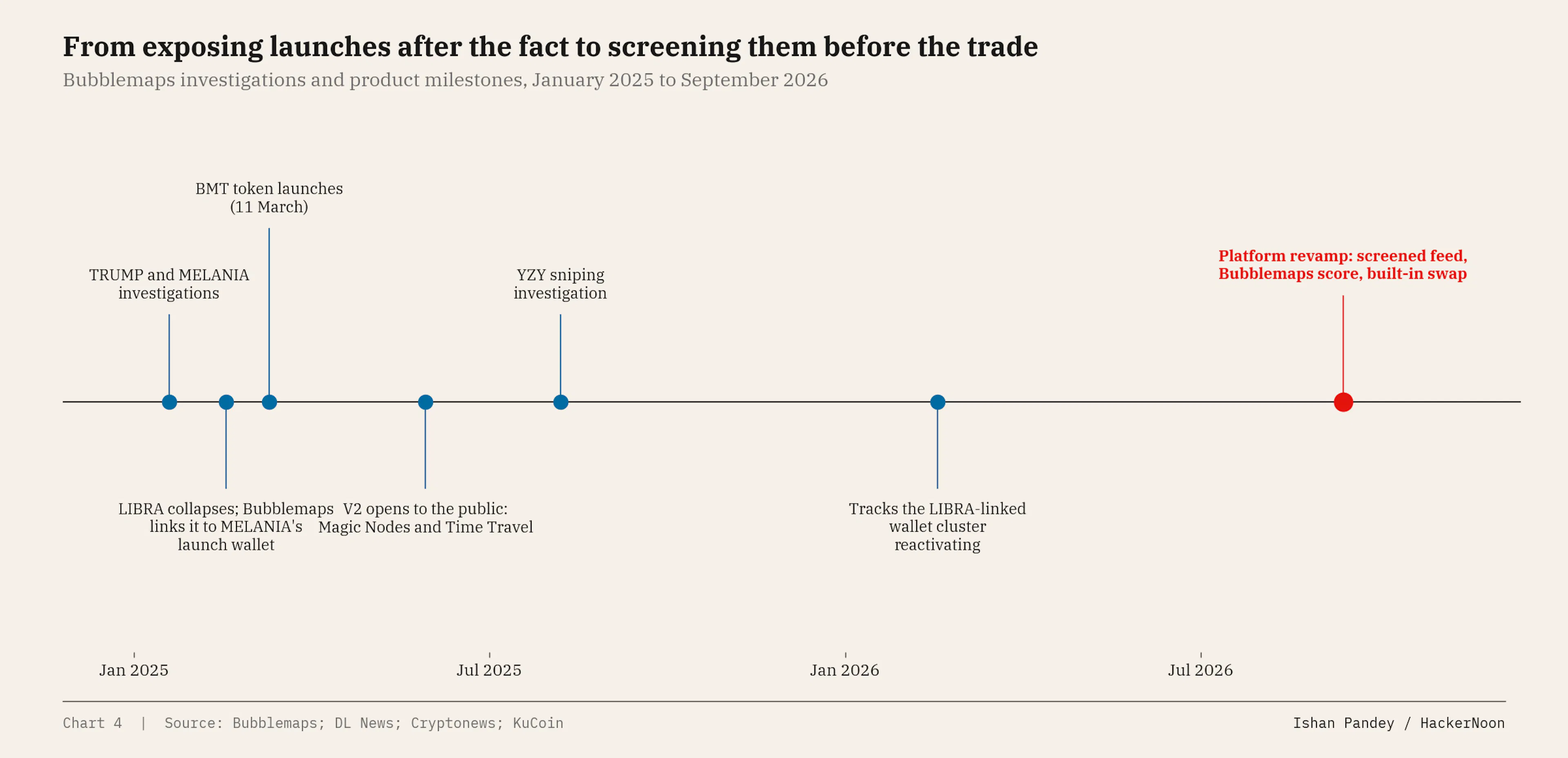 Bubblemaps investigations and product milestones, January 2025 to September 2026.
Along the way it launched BMT on 11 March 2025, opened V2 to the public in May with Magic Nodes, which surface hidden wallet links in one click, plus Time Travel, which replays a token’s distribution from launch. It got its maps embedded in Etherscan, Pump.fun, BNB Chain and Polygon explorers. Every one of those was a tool for looking backwards. The revamp is the first product that uses the same detection to decide what a user sees next, which turns a research firm into something closer to a filter on the market itself.
Who this is for
The user is the person who trades new tokens and has been burned by exactly the pattern above: bought on a chart, found out about the cluster from a Bubblemaps post two days later. For that trader the revamp collapses three tabs into one. The feed replaces the launch scanner, the score replaces the ten minutes spent reading a map, the swap replaces the jump to a separate DEX front-end. It also changes the default. On a normal launch tool, the burden is on the trader to go and check a token; on the new feed, the check has already happened; the tokens that failed it are simply absent. That is the difference between a tool that helps a diligent minority and one that protects the majority who never open the map. The company’s investigation credibility is what makes the score worth trusting; the $BMT token, which gates premium features, is how the platform funds the work.
What to watch
The first test is false negatives. A screened feed lives or dies on what gets through; the first token that passes the filter and rugs will be the one everyone remembers, so the transparency of what the score measures matters more than the score itself. The second is the swap. Routing trades through the platform gives Bubblemaps a revenue line beyond premium subscriptions and puts it in direct competition with the launch tools it has previously partnered with; how those relationships hold is worth following. The third is coverage. The feed launches on the chains where the memecoin volume lives; the pace at which it expands to the rest of the six-plus networks V2 supports will show how much of the screening is automated and how much still needs a human analyst.
Bubblemaps spent two years proving that rug pulls leave fingerprints at launch: a bundle in the first block, a cluster in the holder list, a funding trail that leads back to a wallet with a history. The obvious next question was why anyone should have to wait for the post-mortem. Today’s release is the company’s answer. If the filter holds, the most useful thing Bubblemaps will ever do is show a trader a feed with a token missing from it.
Don’t forget to like and share the story!
Vested Interest Disclosure: HackerNoon has reviewed the report for quality, but the claims herein belong to the author. #DYOR.


Be the first to comment