



We’re far from the humble beginnings of Bitcoin, and now the crypto world is a trillion-dollar industry, full of tokens, platforms, transactions… and mysteries, too. All these years since 2009 have left us with several unsolved cases related to cryptocurrencies, and we’re not only referring to the identity of Satoshi Nakamoto or the multiple hackers who have attacked various exchanges and protocols.
There’s more. Public chains can reveal where coins move, but they can’t explain every decision, identify every person behind an address, or uncover every hidden message. Let’s discover some of these puzzles, which remain unexplained to date.
Bitcoin’s Genesis Block Message
This is where it all began. It turns out that not only is
The coinbase transaction of

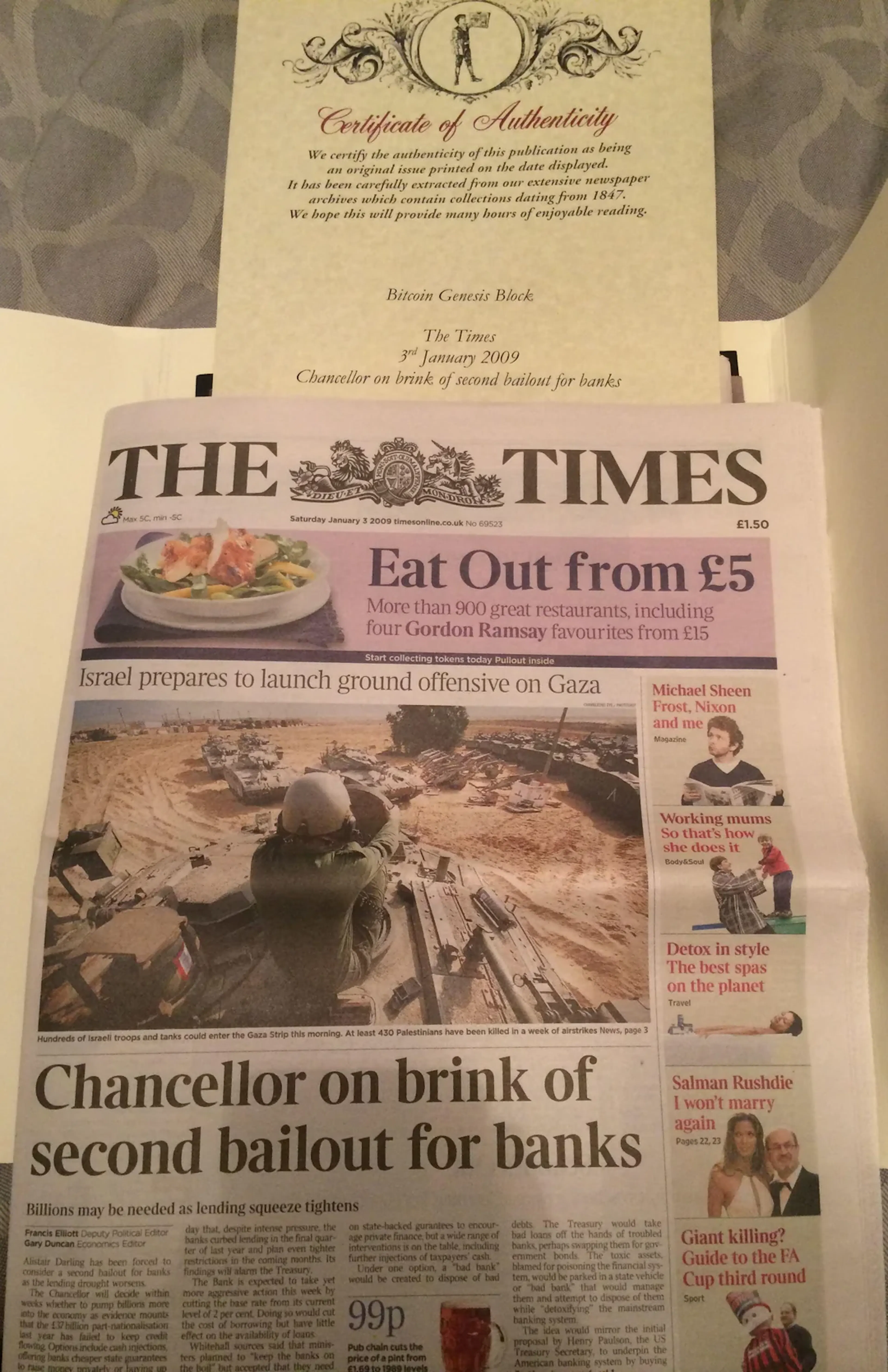
We can easily infer that it was a protest or political commentary, besides offering proof of time. A subtle hint at Bitcoin’s goal of providing an alternative to failed systems that rely on central authorities. Satoshi never talked about it, though.
Were these words merely a coincidence? Just a timestamp? Probably not. In any case, many believe they offer more than one clue about the creator of Bitcoin. As we mentioned, The Times is a British newspaper, which was also sold in print. This could suggest that Satoshi was in the UK at that time, or even that he was an Englishman. However, his identity and exact motivations remain shrouded in mystery.
“Sleeping” Bitcoin Whale Wallets
In the early days of Bitcoin, anyone with a simple CPU could mine a lot of coins, and the price was so low that purchases reached thousands of BTC —as it happened with the first Bitcoin-bought pizza. So, even if Bitcoin wasn’t exactly a popular investment back then, some people (or groups) managed to accumulate thousands of coins.
Today, they’re worth millions, and many of these early addresses have remained sleeping or “dormant” for years, without any activity on the chain. No one has been cashing out.
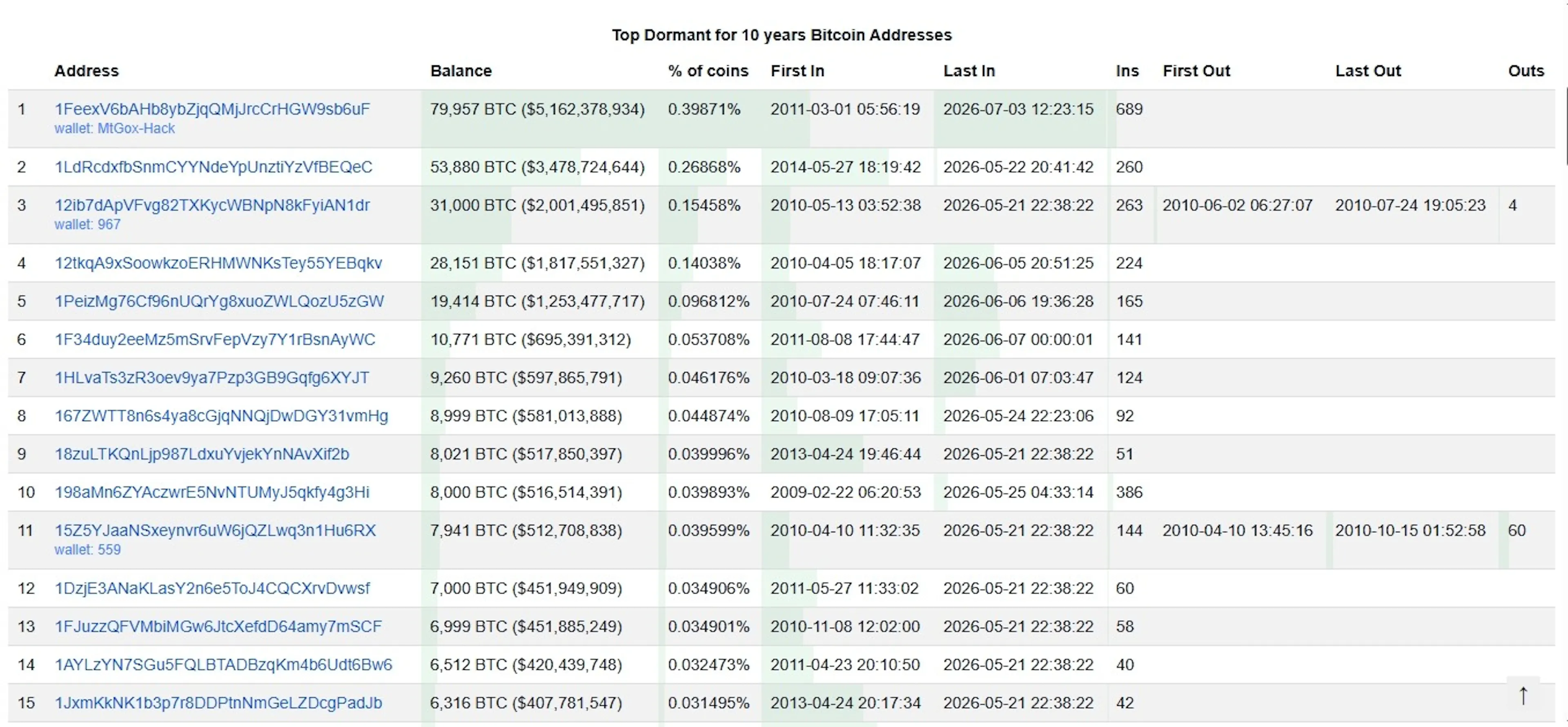 Top dormant addresses by BitInfoCharts
Bitcoin isn’t exactly anonymous, but we can’t know who’s behind most of
Others could belong to people who lost their private keys, turning vast fortunes into inaccessible digital treasure. A few owners may have chosen never to sell, treating their holdings as a long-term experiment.
Others, on the other hand, make a splash every now and then and have the entire market watching their every move.
The Pineapple Fund
In 2017, someone under the nickname “Pine,” who liked pineapples, decided to donate around $86 million in BTC to charity. Just like that. They opened a website dubbed “
“Sometime around the early days of bitcoin, I saw the promise of decentralized money and decided to mine/buy/trade some magical internet tokens. The expectation shattering returns of bitcoin over many years have led to an amount far more than I can spend. What do you do when you have more money than you can ever possibly spend? Donating most of it to charity is what I’m doing.”
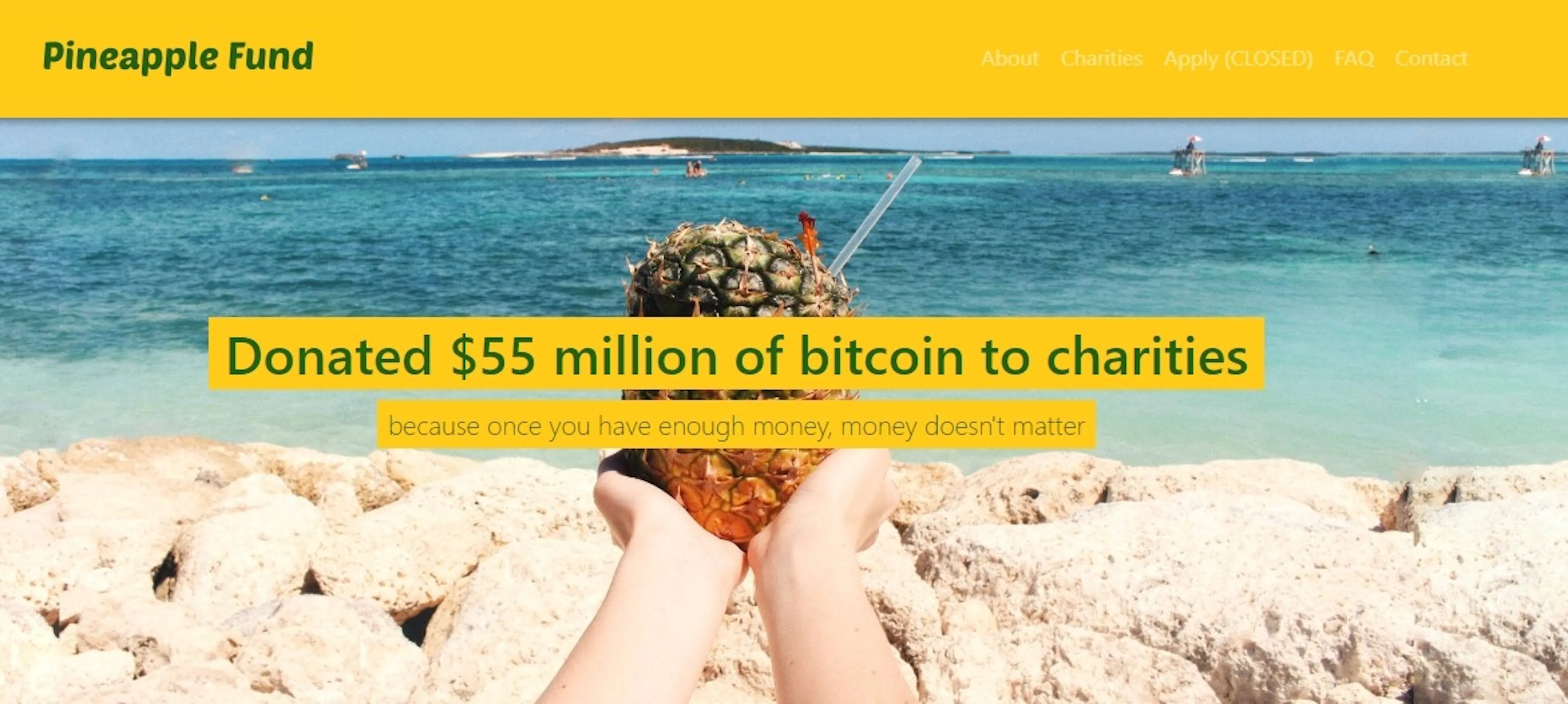
Over the following months, millions worth of Bitcoin were donated to causes ranging from clean water and medical research to environmental conservation and open-source development. The Water Project, BitGive, The Electronic Frontier Foundation (EFF), GiveDirectly, OpenBSD, and Green Steps were just some of the projects that benefited. The campaign attracted global attention because of both its generosity and its secrecy. To this date, we still don’t know who “Pine” is. We hope they’re well!
Now, if you wish to contribute as well to open-source projects, don’t forget to take a look at
Burned Coins
Not every burn comes with an explanation, though. On May 25, 2026, five Bitcoin addresses transferred 107 BTC, worth about $8.2 million at the time, to the well-known burn address 1111111111111111111114oLvT2 —making the coins permanently unspendable.
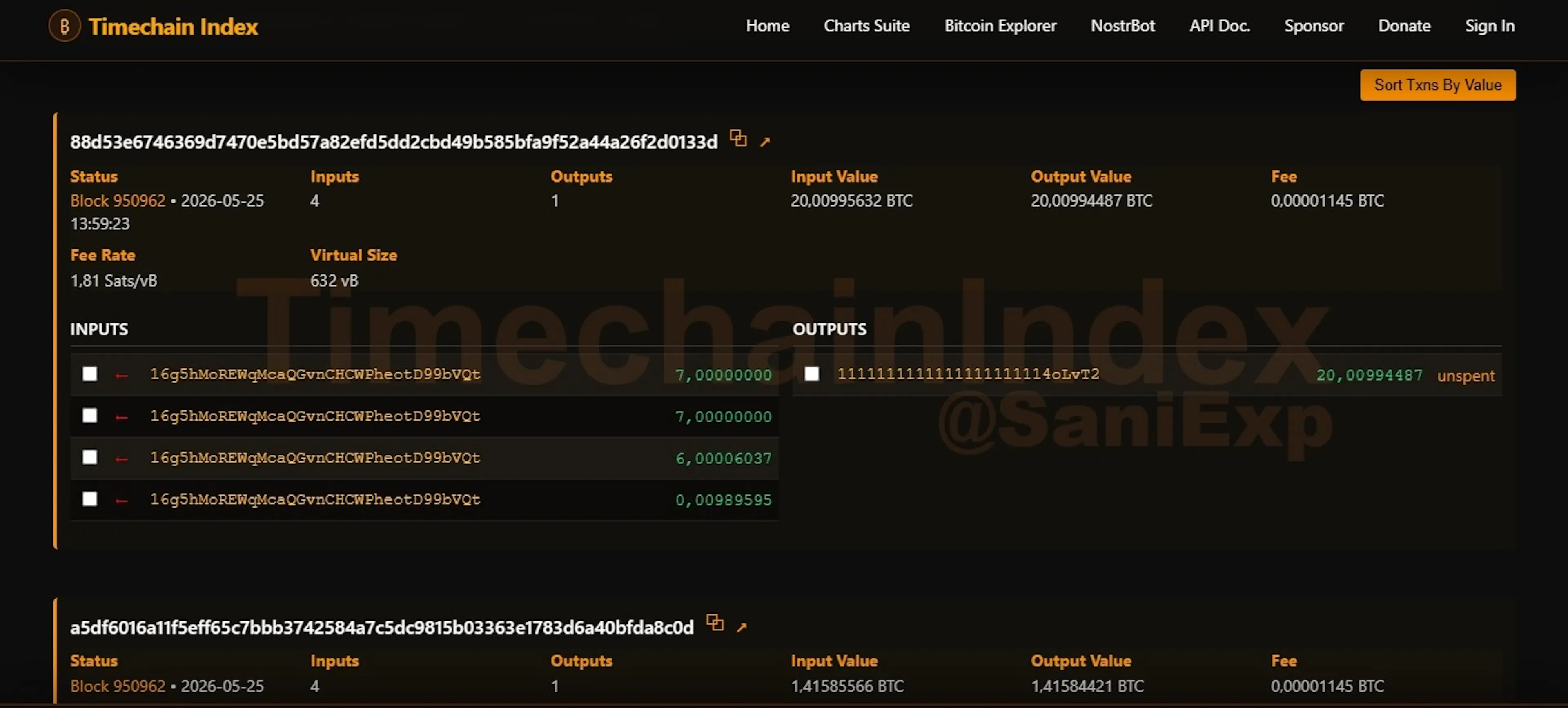 Burned BTC on Timechain Index
The wallets
Theories spread across the crypto community almost immediately. Some suggested the owner feared future quantum computers and chose destruction over theft. Others proposed a dead man’s switch that activated automatically after years of inactivity, while another hypothesis pointed to protection against a “
Hidden Messages on the Ledger
In case you didn’t know, anyone can engrave their own messages on most distributed ledgers —from Bitcoin to Ethereum and Obyte. The process often involves converting your message to hexadecimal code or finding specific wallets that support this function.
Some aren’t exactly mysterious. The genesis unit of Obyte says “Let there be light!” while on Bitcoin, we can find poems, ASCII art, personal notes, tributes to public figures, and even Catholic prayers from certain miners. Other inscriptions, however, consist of encrypted strings and puzzling references that appear without explanation, leaving visitors to wonder whether they were private communications, unsolved puzzles, or something else entirely.
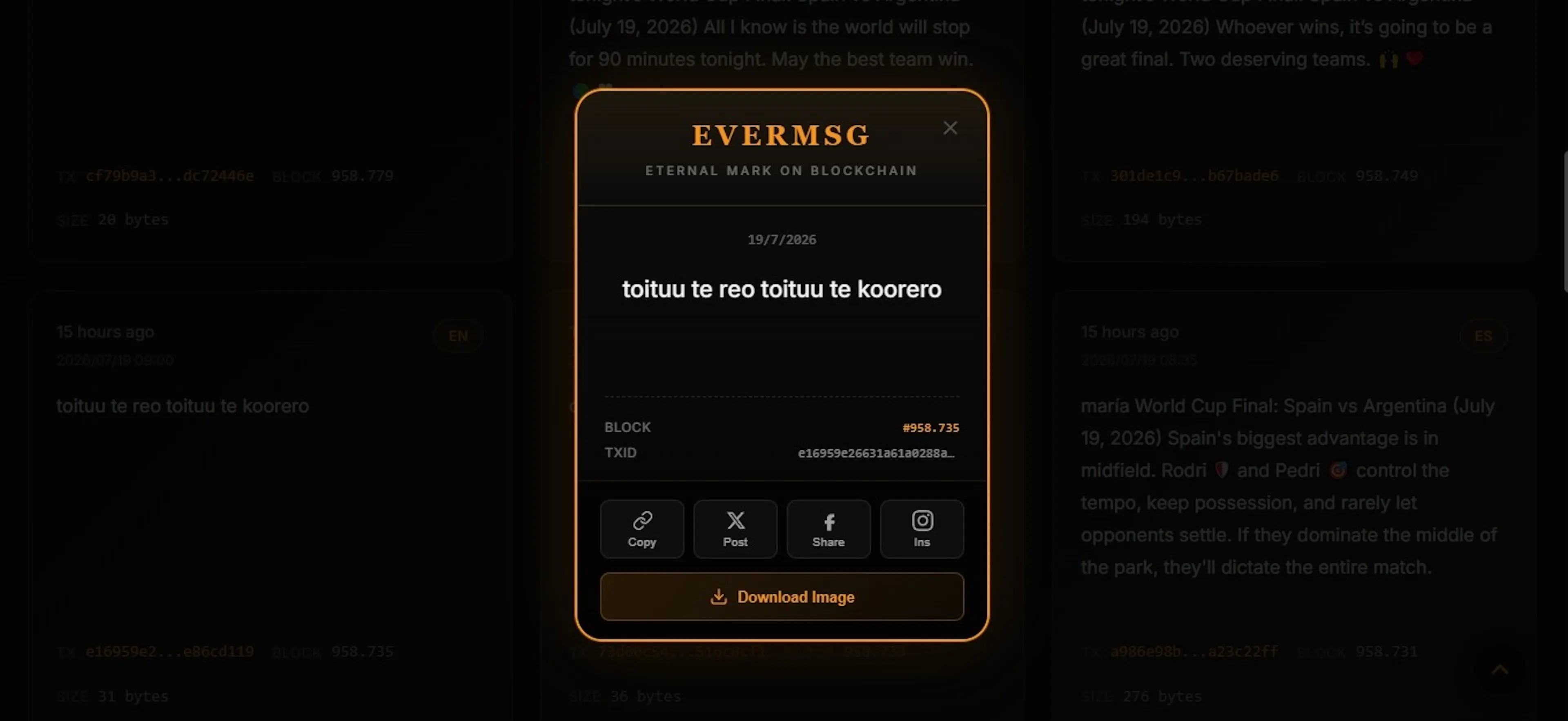
On sites like
Public ledgers record transactions with remarkable precision, but people remain wonderfully unpredictable. Perhaps that’s why, despite all the transparency, some of crypto’s greatest stories are still waiting for their final chapter.


Be the first to comment