




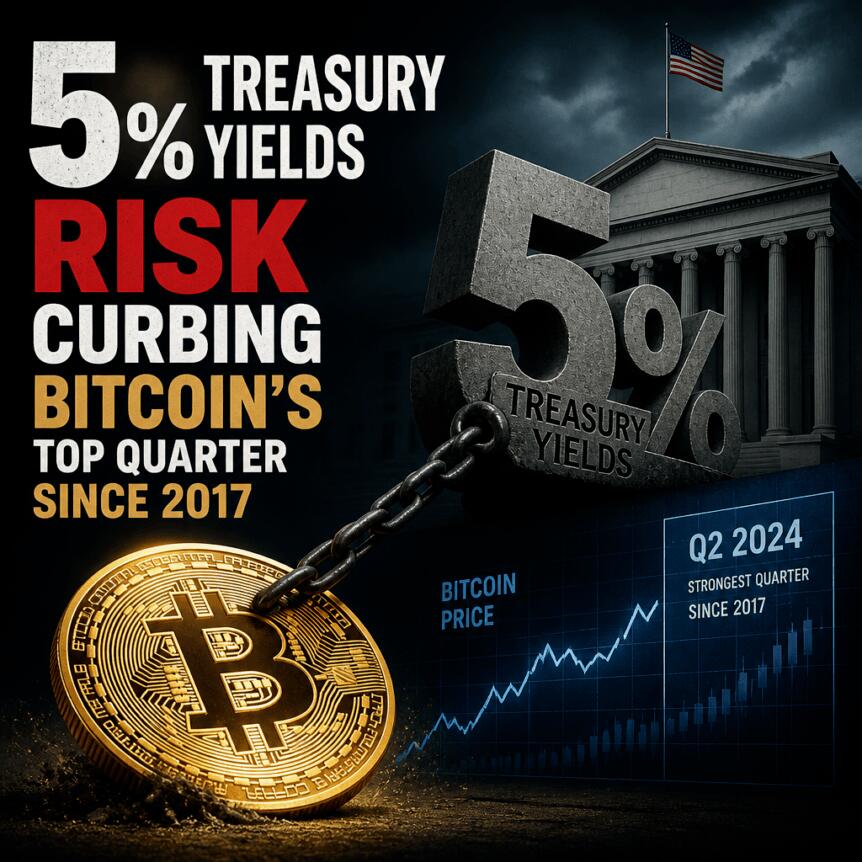
Bitcoin is entering a new phase after delivering its strongest third quarter since 2017, but analysts warn that the rally could face tougher headwinds as US government yields remain elevated. In a weekly market note, Delphi Digital pointed to a persistent “grind higher” in BTC ($85,608.00 · Live) that is running into meaningful resistance—while safer alternatives continue to look increasingly competitive.
Delphi said Bitcoin gained 43% in Q3 and then posted a third consecutive weekly advance last week. However, the firm cautioned that the move is happening alongside real rate pressure, noting the Federal Reserve’s September hike and Treasury yields reaching multi-decade highs. The key tension, Delphi argued, is simple: when investors can earn above 5% in government bonds with little risk, risk assets—including Bitcoin—must work harder to justify the trade.

Key takeaways
- Delphi Digital cites Bitcoin’s 43% Q3 gain and a third straight weekly advance, but says further upside is constrained by “real resistance.”
- Yields above 5% increase the opportunity cost of holding Bitcoin and other higher-risk assets.
- The “debasement trade” remains a supportive narrative, helped by rising attention to federal deficits and interest costs.
- Weaker-than-expected jobs data has reduced the odds of another Fed rate hike in October, which could ease some pressure on crypto—at least temporarily.
- CME’s FedWatch shows October hike probabilities have fallen sharply since the prior week.
Why high Treasury yields are tightening conditions for BTC
The most immediate drag identified by Delphi Digital is the macro backdrop. With Treasury yields sitting above 5%, the firm framed the market as a trade-off problem: government bonds offer a high return without the volatility that comes with equities and crypto. In Delphi’s view, that dynamic forces investors to demand more from Bitcoin to stay allocated to it rather than rotating into yields.
Even so, Bitcoin has not merely stalled. Delphi highlighted how BTC has managed to keep pushing upward despite the “hurdle,” pointing in part to renewed interest in what’s commonly referred to as the debasement trade. The basic premise is that sustained government borrowing and currency expansion can reduce the dollar’s purchasing power over time, which some investors believe can benefit hard-capped assets like Bitcoin.
Vanessa Grellet, managing partner at crypto-focused venture firm Arche Capital, argued that the debasement trade does not depend on low interest rates. In her view, investor attention to federal deficits and the government’s rising interest bill can keep demand for the narrative intact even while yields remain elevated.
Debt buyback headlines add another layer to market liquidity
Delphi’s macro caution comes against a backdrop of shifting Treasury-market actions. Bitcoin briefly moved above $87,000 last week before retracing, according to the coverage. Over the longer stretch, BTC has gained more than 35% since mid-August.
That period of strength followed after the US Treasury announced plans to double long-dated debt buybacks intended to support liquidity in the bond market, focusing on 10- and 20-year notes. Some investors interpreted the program as an effort to ease stress and reduce pressure on borrowing costs. Subsequent reporting indicated those buybacks were later tripled in size.
While these developments are not a direct Bitcoin catalyst, they may influence how investors think about liquidity and risk appetite across asset classes. The important question for traders is whether improved conditions in Treasuries translate into less pressure on risk assets—or whether stubborn yield levels continue to dominate sentiment for crypto.
Weaker jobs data shifts the Fed outlook—temporarily
One reason Bitcoin may be able to extend its recovery is that the rate narrative is not static. According to the US Bureau of Labor Statistics, the economy added 29,000 jobs in September—well below the forecast of 80,000—an outcome that strengthened expectations that the Federal Reserve can wait before hiking again. The report was a fresh data input into market pricing and the near-term debate over whether another move is likely in October.
Before the payrolls release, Fed messaging had already suggested officials were not rushing. Even though September projections included penciled-in expectations for an additional rate increase this year, the tone among some policymakers has leaned toward patience. New York Fed President John Williams—an FOMC voting member this year—said there was no need for urgency given the policy action already taken at the September meeting, according to coverage of his remarks.
The market impact of that shift can be seen in derivatives pricing. CME Group’s FedWatch Tool now places the odds of an October hike at around 24%, down from more than 75% a week earlier. For Bitcoin, that matters because expectations for tightening have historically been a meaningful driver of risk-asset pricing. A cooler probability of another hike can ease the immediate headwind created by high yields, even if the underlying level of rates remains supportive of bond demand.
At the same time, the drop in hike odds does not negate the earlier point Delphi made: yields above 5% remain a real benchmark competing for investor capital. In other words, the near-term timetable may have softened, but the “risk-free” competition has not disappeared.
What to watch as the rally meets macro reality
Bitcoin has shown resilience since mid-August, but Delphi’s message is that momentum may now be fighting structural resistance tied to interest rates. The next phase likely depends on whether incoming economic data continues to cool rate expectations and whether Treasury yields ease enough to reduce the opportunity cost of holding BTC. Investors should watch the Fed narrative for signs of further patience, while also tracking whether bond-market pressure persists despite policy expectations shifting.
This article was originally published as 5% Treasury yields risk curbing Bitcoin’s top quarter since 2017 on Crypto Breaking News – your trusted source for crypto news, Bitcoin news, and blockchain updates.



Be the first to comment