



The European financial markets watchdog, ESMA, has tightened stablecoin regulations with a January 2027 deadline.
On the 8th of October, in a guideline to national regulators across the EU, the watchdog added,
Any continuation of services should be strictly limited to sell-only, conversion, transfer or withdrawal functionalities necessary to avoid client detriment, and should be time-limited, risk-based and closely supervised.
Some of the services that will be permitted include swapping to MiCA-compliant stablecoins such as USDC. As such, all unauthorized stablecoin balances should be wound down in three months (8th of January 2027).
Meanwhile, the new purchases of unlicensed stablecoins, top-ups, swaps, or marketing have been stopped across licensed platforms.

The EU’s MiCA regime for stablecoins began on the 30th of June 2024, requiring the issuance of stablecoins to be authorized by EU authorities. The rules for crypto asset providers (CASPs) joined later on the 30th of December 2024. The final transitional window was extended to the 1st of July, 2026.
After the deadline, unlicensed stablecoins such as Tether’s USDT were required to be delisted across authorized platforms. The latest directive will make January next year the ultimate deadline to wind down any remaining EU exposure to unauthorized stablecoins and tokens.
EU approves 25 stablecoin issuers
As of writing, the EU has approved 25 e-Money Token (EMT) issuers, including Circle and Société Générale–FORGE. Circle’s USDC and Euro-pegged EURC are the biggest stablecoins in the region by market supply.
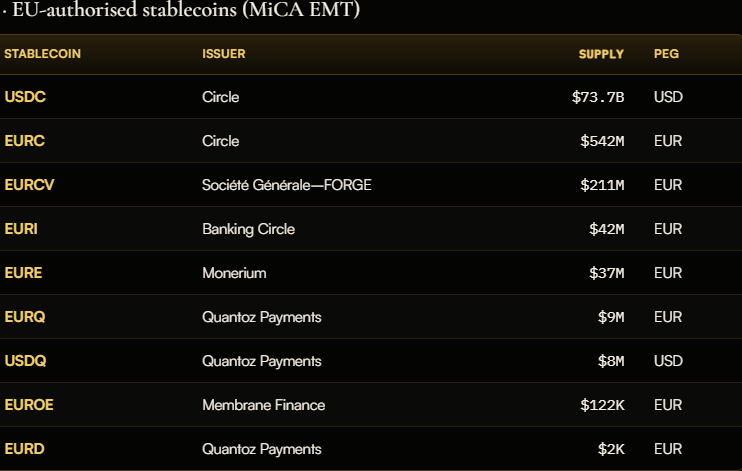
That said, the regulatory hiccups have kept Tether out of the European zone, allowing Euro-pegged stablecoin supply to gain more market share. Still, the overall Euro-based stablecoin supply stands at $822M compared to a whopping $315B for USD-pegged offerings.
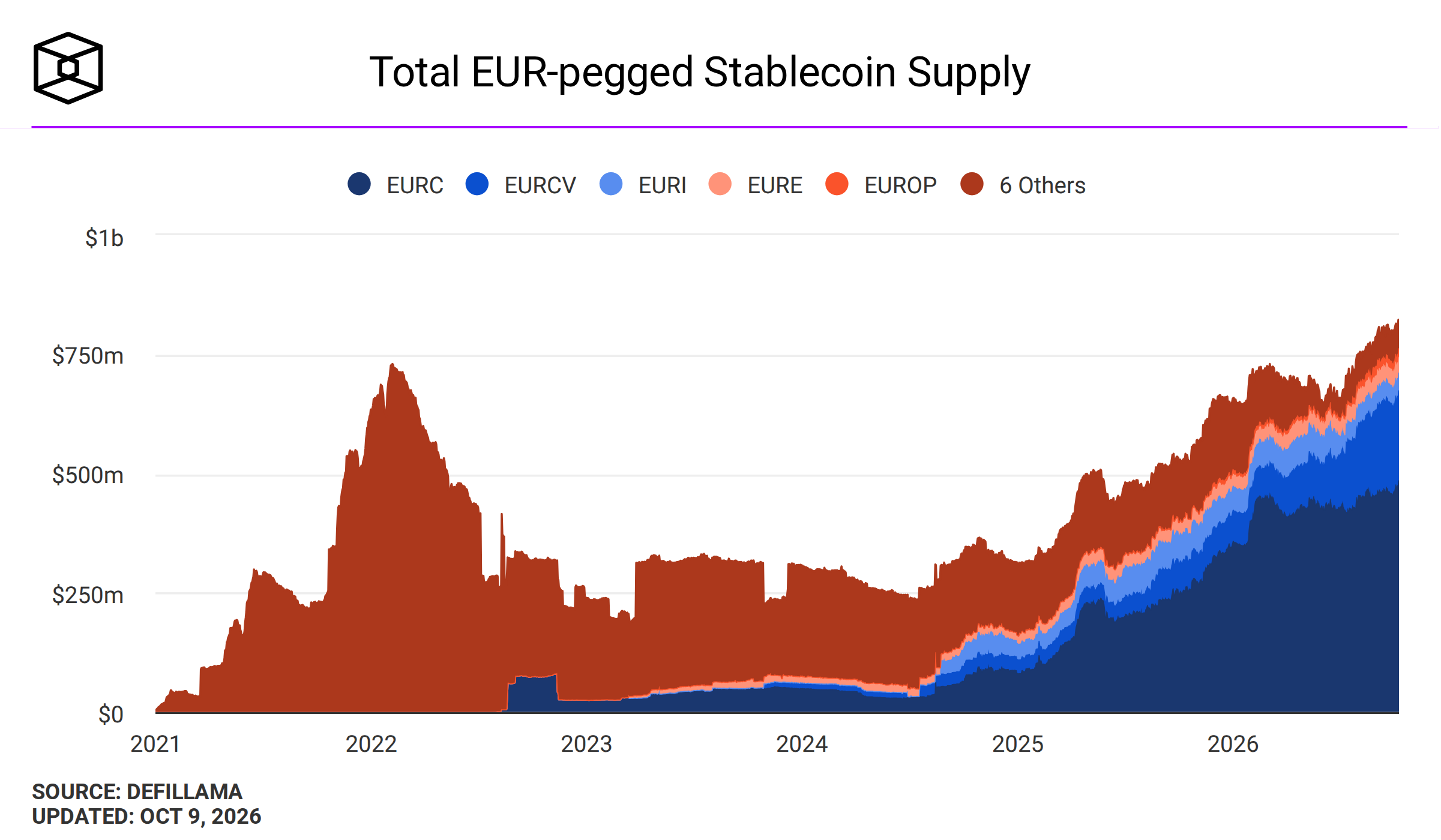
This is nearly 4x growth from 2023, and momentum is expected to continue. Most importantly, the ECB, the EU’s central bank, is closely tracking the trend, especially with regard to demand for sovereign bonds.
For the U.S.-based issuers like Tether, the stablecoin reserves are invested in cash equivalents like short-term Treasury bonds. Stablecoin issuers now hold over $200B in T-bills and are easily absorbing weak demand from China and other foreign countries.
To boost the trend and sovereign bond demand, the ECB now wants stablecoin bank deposit requirements to be revised to make the segment competitive.
Unfortunately, the EU also wants to promote its central bank-issued Digital Euro. This presents another challenging balancing act. It remains to be seen how stablecoin adoption will evolve in the EU amid strict regulations and the Digital Euro push.
Final Summary
- EU has tightened its stablecoin rules and wants non-compliant tokens to exit by next January.
- Since 2023, Euro-pegged stablecoin supply has increased fourfold to +$800 million.



Be the first to comment