



The digital asset ecosystem is facing an unusual combination of technological innovation and macroeconomic pressure. In an analysis published by Robert from the AllinCrypto YouTube channel, recent Bitcoin volatility is linked to factors such as a stronger U.S. dollar and higher oil prices, while new warnings surrounding artificial intelligence are forcing the industry to reconsider the long-term security of blockchain networks.
Ethereum researcher Justin Drake has urged the industry to begin preparing for a possible “bunker mode,” a preventive strategy that involves moving assets toward addresses whose public keys have not yet been exposed. The concern is linked to the possibility that future advances in artificial intelligence and mathematical reasoning could reduce the resources required to attack certain cryptographic schemes.
However, it is important to distinguish a potential threat from a demonstrated vulnerability. ECDSA, which is used by numerous blockchain networks, has not been broken by artificial intelligence, meaning Drake’s warning should be understood as preventive planning rather than evidence of an active cryptographic failure. Vitalik Buterin has also urged caution over rushed fund migrations, warning that complicated transfers, particularly in multisignature setups, can introduce new risks through human error.

The debate also highlights an important characteristic of decentralized networks. Blockchain protocols can evolve before a threat becomes an actual attack, through new cryptographic proposals, software upgrades and governance mechanisms. Rather than representing an inevitable threat to cryptocurrencies, advances in AI could accelerate the development of a new generation of security tools.
Samsung And Solana Bring Stablecoins Closer To Millions Of Users
While future security remains a major topic, adoption continues to advance in the real world. Samsung announced a partnership with Solana to introduce native USDC support within Samsung Wallet, allowing U.S. users to make cross-border transfers using Solana infrastructure without necessarily relying on separate crypto applications.
The rollout is scheduled for the final week of October 2026 and could reach more than 82 million eligible Galaxy devices in the United States. The importance of the agreement goes beyond the number of smartphones involved, because blockchain technology will operate behind a familiar consumer experience.
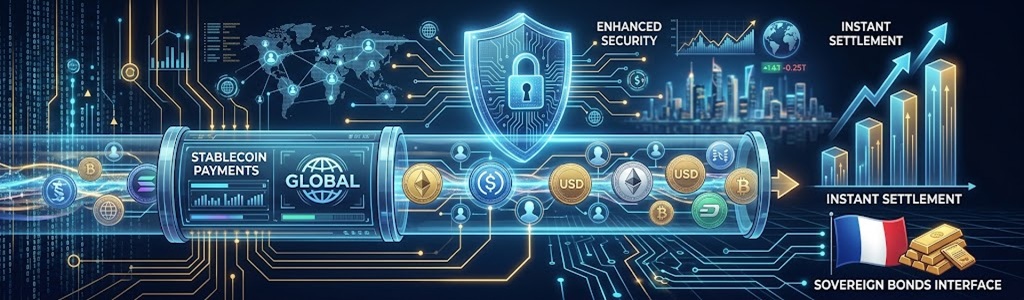
For Solana, the partnership provides another example of how stablecoins can become global payment infrastructure. USDC can function as a settlement layer while users interact with a conventional digital wallet, removing one of the major barriers to mainstream crypto adoption.
The development also fits Solana’s growing role in stablecoin activity. The network has gained importance as infrastructure for payments and settlements, supported by relatively low transaction costs and fast confirmation times. For the crypto market, an integration of this scale could have a direct consequence: millions of people may begin using blockchain infrastructure without needing to understand all of its underlying technical components.
France And Rising Bond Yields Intensify The Global Debt Debate
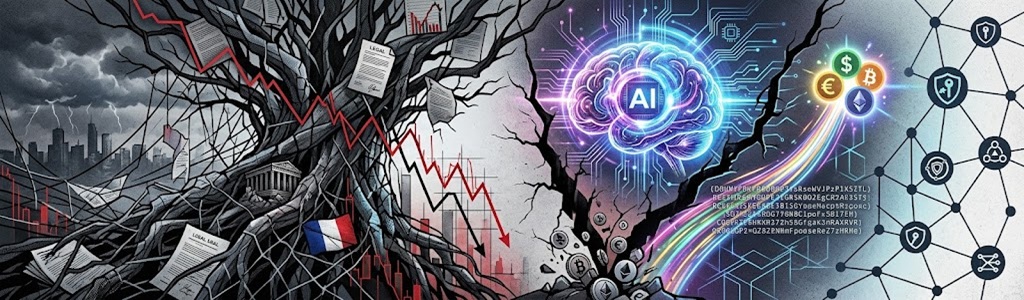
The other major element highlighted by Robert is the deterioration of financial conditions for some governments. France has become one of the most closely watched cases because of the sharp increase in its sovereign bond yields, as Paris struggles to contain its deficit and reach agreements over the national budget.
The International Monetary Fund has repeatedly emphasized the importance of maintaining sustainable fiscal trajectories as financing costs rise. The concern extends beyond France. The IMF has warned that global public debt is approaching 100% of global GDP, while higher interest rates increase the cost of refinancing existing obligations.
In France, ten-year government bond yields have climbed sharply, reducing part of the country’s historical financing advantage over other European issuers. Reuters recently reported that French borrowing costs had increased by almost 80 basis points since the beginning of September, reaching levels not seen in roughly 25 years.
This environment provides an additional argument for investors who view Bitcoin and other digital assets as alternatives to certain risks within the traditional financial system. Bitcoin does not depend directly on the ability of a specific government to refinance its debt, while stablecoins and tokenized assets can create new channels for transferring and settling value globally.
Bitcoin Faces Volatility As Crypto Infrastructure Keeps Expanding
On the technical side, Robert interprets Bitcoin’s recent correction as a potential test of support following the previous upward move. His analysis points to external factors such as a stronger dollar and the rise in oil prices, both of which can pressure risk assets. Gaps in derivatives markets and Bitcoin’s reaction around key technical levels will remain important in determining whether the pullback ultimately becomes consolidation before another bullish move.
The final takeaway is that today’s threats do not necessarily weaken the long-term crypto thesis. AI is forcing the industry to improve its security, while pressure on sovereign debt is increasing interest in alternative and verifiable financial systems. At the same time, partnerships such as Samsung and Solana demonstrate that adoption can continue even when markets experience significant uncertainty.
The challenge for investors will be distinguishing between confirmed risks and future scenarios without losing sight of the structural transformation underway. Crypto infrastructure is not remaining static in response to problems within traditional finance; it is evolving precisely to address them. In that sense, stronger cryptography, stablecoins and open blockchain networks could become some of the defining components of the next generation of global finance.
Disclaimer: This article has been written for informational purposes only. It should not be taken as investment advice under any circumstances. Before making any investment in the crypto market, do your own research.



Be the first to comment