


Strategy has spent $192.4 million buying back its STRC preferred shares while purchasing just 250 Bitcoin for $21.5 million between October 5 and 11, 2026.
Summary
- Strategy spent $192.4 million repurchasing STRC shares between October 5 and October 11, company disclosures show.
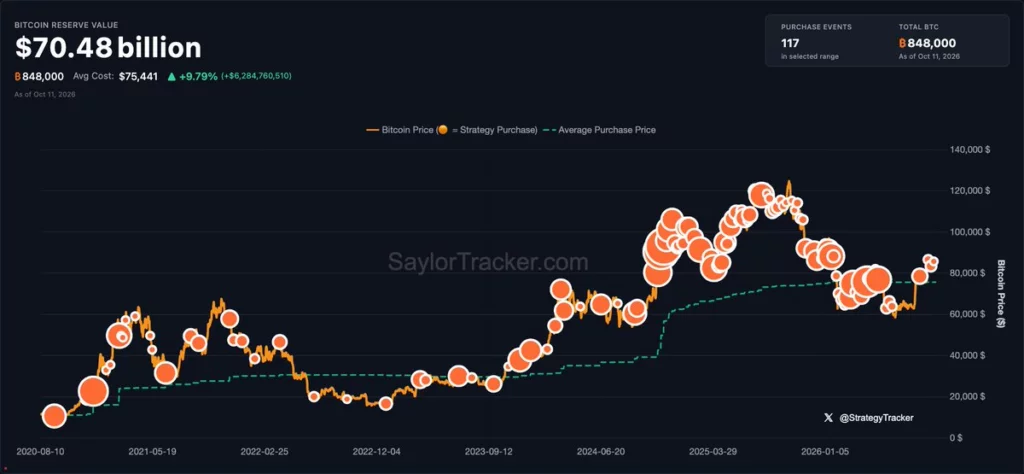
- The company purchased 250 Bitcoin for $21.5 million at an average price of $86,194 each.
- Strategy’s Bitcoin holdings reached 848,250 BTC, acquired for approximately $64 billion including fees and expenses.
- MSTR share sales funded $21 million in Bitcoin purchases, while existing cash covered another $500,000.
- Strategy reported $4.88 billion in designated reserves and $640.5 million in other available cash balances.
According to the company’s October 12 announcement, the transactions increased its Bitcoin (BTC) holdings to 848,250 BTC, acquired for approximately $64 billion, including fees and expenses. The latest purchase carried an average price of $86,194 per coin, while the company repurchased roughly 1.93 million shares of its Variable Rate Series A Perpetual Stretch Preferred Stock, known as STRC.

The STRC repurchases were nearly nine times the amount spent on Bitcoin during the reporting period. Strategy financed most of its cryptocurrency acquisition through common stock sales, while its preferred-share transactions continued under the company’s existing capital management program.
Strategy directs $192.4 million toward STRC repurchases
Between October 5 and 11, the Virginia-based company repurchased approximately 1.93 million STRC shares for $192.4 million. Based on the reported totals, Strategy paid an average of roughly $99.69 per share during the week.
STRC is a variable-rate perpetual preferred security listed on Nasdaq. The instrument forms part of Strategy’s digital credit offerings, which provide investors with dividend income backed by the company’s capital structure and Bitcoin-focused treasury business.
The latest transactions fall under Strategy’s digital credit securities repurchase program, which management expanded to $2 billion in September. Following the purchases, the company reported $354.8 million in remaining repurchase authorization for its preferred securities. Its separate MSTR common stock repurchase program retained $1 billion in available capacity.
In its June 29 capital framework filing, Strategy identified STRC as an initial priority for repurchases when management considers the transactions beneficial to its capital structure. The framework allows purchases through public markets, negotiated transactions and other permitted methods, subject to market conditions and applicable rules.
Strategy CEO Phong Le previously explained the company’s approach to managing the preferred security during its second-quarter financial update. He said management intended to repurchase shares when STRC traded below $100, describing the objective as maintaining a trading range near $99 to $100.
The company has continued using the program over recent months. As previously reported in related coverage of Strategy’s September transactions, Strategy spent $174 million repurchasing STRC and $75.7 million acquiring 950 BTC during the week ending September 20.
Strategy adds 250 Bitcoin using MSTR share sale proceeds
Although preferred-share repurchases accounted for most of the latest reported spending, Strategy continued increasing its Bitcoin treasury. The company purchased 250 BTC at an average price of $86,194, taking its aggregate holdings to 848,250 BTC as of October 11.
The company disclosed that $21 million of the purchase came from net proceeds generated through sales of its Class A common stock, which trades under the MSTR ticker. Management used another $500,000 from existing USD Cash to complete the $21.5 million purchase.
Strategy conducts these share sales through its at-the-market offering program, which allows the company to issue securities into public markets over time. Its October 12 announcement confirmed that MSTR sales funded the majority of the latest Bitcoin acquisition, while the remaining amount came from available cash.
The reported $64 billion aggregate acquisition cost places Strategy’s average purchase price near $75,450 per Bitcoin, based on rounded company figures. Strategy includes transaction fees and other acquisition expenses when calculating its total investment.
Executive Chairman Michael Saylor confirmed the acquisition in an October 12 post on X, stating:
He reported that the company held 848,250 BTC and approximately $5.5 billion in U.S. dollar assets as of October 11.
The announcement followed Saylor’s October 11 post, in which he wrote, “There’s always room for more orange.” The message preceded the company’s confirmation of its latest Bitcoin purchases.
Strategy holds $5.5 billion in dollar assets after purchases
Following the transactions, Strategy reported a USD Reserve balance of $4.88 billion and a separate USD Cash balance of $640.5 million as of October 11. Together, the two balances totaled approximately $5.52 billion.
The company maintains distinct purposes for these holdings. Its USD Reserve supports payments on preferred stock dividends and interest on outstanding debt, while USD Cash remains available for Bitcoin purchases, capital management activities and other permitted corporate uses.
Under the framework adopted in June, Strategy generally must maintain a reserve covering at least 12 months of expected preferred dividends and debt interest. The company requires board authorization for certain uses outside the stated reserve policy, including reductions below the minimum coverage level.
Saylor discussed the company’s liquidity position in a separate October 12 X post. He reported a USD duration of 3.5 years and an STRC Bitcoin credit metric of 52 basis points, using assumptions of 10% annual Bitcoin returns, 40% Bitcoin volatility and a Bitcoin price of $82,252.
The calculations rely on the stated assumptions and represent company-reported credit metrics, not guarantees of future returns or liquidity coverage.
Strategy’s latest cash disclosure follows earlier transactions that reduced its available funds through preferred-share repurchases. Its October 5 SEC filing disclosed the use of $154.1 million of USD Cash for STRC repurchases and $13 million for Bitcoin purchases during the September 28 to October 4 reporting period. The company used $142.5 million from its designated reserve for preferred dividends and debt interest during the same period.
STRC buyback program retains $354.8 million in capacity
Strategy’s latest transactions continue a repurchase policy introduced during the summer. In its July 30 financial announcement, management identified regular STRC purchases below $100 as part of its approach to preferred-share capital management.
During September, Strategy expanded its digital credit securities repurchase authorization from $1 billion to $2 billion. The company subsequently continued buying back STRC shares while reporting smaller weekly Bitcoin purchases.
The repurchase framework does not require Strategy to spend its entire remaining authorization. Its June policy permits management to modify, suspend or terminate the program without a fixed expiration date, depending on available funds, trading conditions and corporate requirements.
Meanwhile, the company has maintained separate repurchase authority for MSTR common shares. Strategy’s October 12 disclosure showed the full $1 billion authorization remained available under that program, with no corresponding common stock repurchase reported in the supplied weekly figures.
The earlier October 5 SEC disclosure showed that Strategy purchased 334 BTC for $28.7 million between October 1 and 4, at an average price of $85,838.80. The company simultaneously reported preferred-share repurchases and other capital management transactions for the period.
Strategy’s June capital framework permits the company to fund authorized preferred-share repurchases using available cash, new capital or proceeds from Bitcoin monetization, subject to its policies. Management retains discretion over the timing and size of future transactions, and the authorization does not establish a mandatory purchase schedule.



Be the first to comment