


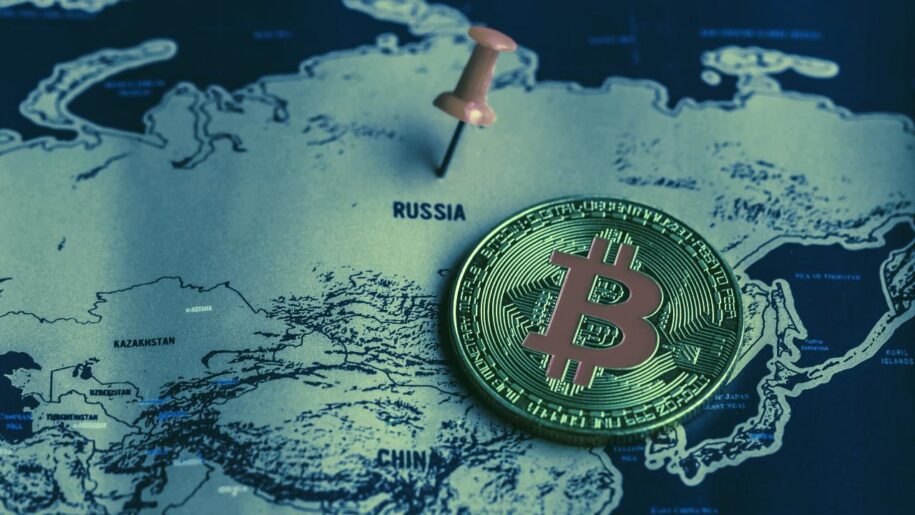
Moscow Exchange is targeting December 1 for crypto transactions, but its custody and withdrawal terms have yet to show what customers would actually own.
Key Takeaways
- Moscow Exchange is testing crypto transactions with professional market participants.
- Published reporting has not established whether retail users can withdraw BTC, ETH or USDT onchain.
- The 300,000-ruble annual cap applies to unqualified investors, according to Interfax.
The trade may be simple; the ownership structure is not
Interfax reported that Moscow Exchange plans to begin crypto transactions on December 1 after starting tests with professional participants. Boris Blokhin, the exchange’s senior managing director for sales and business development, said the service would use a partner settlement digital depository, where market participants would open accounts.
That detail matters because a crypto trade can produce several very different forms of exposure. A buyer might receive coins that can be moved to a personal wallet, a custodial claim recorded by a depository, or a security or contract whose value follows a crypto asset. Each route can track the same market price, while giving the holder different rights.
Direct wallet ownership
The holder controls the transfer key
BTC can be sent onchain, while the holder carries responsibility for securing the wallet and recovery phrase.
Custodial crypto account
A provider controls the operating wallet
The customer has a balance and a contractual claim, subject to the provider’s custody, withdrawal and compliance procedures.
Listed crypto exposure
The investor owns a financial instrument
A share or futures contract may reflect crypto prices without giving its holder an onchain withdrawal right.
A depository account may create a claim rather than a wallet balance
The reported use of a partner digital depository suggests that custody and settlement could be organised through established market infrastructure. A depository can maintain an ownership record and process settlement between participants without giving each customer a private key or a direct claim on a blockchain address.
MOEX has not yet published the client documents needed to answer the practical questions: whether accounts will be segregated or omnibus, who bears custody risk, whether assets can leave the system, and what happens if a participant or custodian fails. Those terms are central to the product, especially for buyers who assume a Bitcoin trade automatically delivers Bitcoin they can transfer.
Those routes can follow the same BTC chart while offering very different control over the underlying asset, as shown by the differences between Bitcoin held through a listed product and Bitcoin held in a wallet.
MOEX already offers futures, which answer a different need
The exchange already provides crypto-linked futures. Its existing materials describe Bitcoin and Ether futures as a way to gain exposure through the derivatives market.
Futures are agreements linked to price movements. They involve margin, settlement rules and contract specifications, rather than the custody of transferable coins. The planned service could broaden the ways Russian market participants access crypto, though the December announcement does not yet establish where it sits between derivatives exposure and onchain ownership.
Retail access would begin with limits
Interfax reported that unqualified investors would be able to access Bitcoin, Ether and USDT through one intermediary, with purchases capped at 300,000 rubles per year. Qualified investors could access a wider range of cryptocurrencies traded through the exchange or over the counter without that reported limit.
The cap limits the amount an ordinary investor could place into the system over a year. It does not explain whether that investor could transfer assets to an external wallet, hold them in a personal blockchain address, or redeem them through another provider. The exchange’s final rules would need to answer those questions.
What to check Before using the service
- What does the customer legally own?
Check whether the terms describe legal title, beneficial ownership or a contractual claim against the depository or intermediary. - Where are the assets held?
The documents should identify the custodian, explain whether accounts are segregated or pooled, and state the protections around client assets. - Can customers withdraw assets onchain?
A BTC, ETH or USDT balance may remain within a regulated account if the provider does not offer transfers to an external wallet. - What happens when markets are under pressure?
Withdrawal processing, conversion procedures, trading hours and restrictions can shape access to an account during sharp volatility.
December may reveal whether the service offers crypto ownership or crypto access
Moscow Exchange’s plan points to a more formal route into crypto markets through familiar securities-market infrastructure. The reported depository model could make settlement and compliance easier for regulated participants, while also placing custody between the buyer and the blockchain.
The key document is still missing: the rulebook explaining the customer’s rights after a trade. Until it is published, December 1 remains a planned launch date rather than a complete description of what Bitcoin, Ether or USDT access on MOEX will mean in practice.
This article is provided for informational purposes only and does not constitute legal, financial or investment advice. Moscow Exchange’s final product terms and applicable regulations may change before any launch.

Kosta has reported on cryptocurrency markets and blockchain infrastructure since 2020, bringing over six years of hands-on experience in the crypto industry built through daily tracking of markets, trends, and emerging blockchain developments. Specializing in Bitcoin on-chain analysis, institutional ETF flows, and digital asset price action, his work at Coindoo has been cited by other news agencies and consistently covers market developments with a focus on data-driven reporting across Bitcoin, Ethereum, Solana, and XRP.
Over the years, Kosta has contributed to multiple crypto media outlets in different regions, authoring over 6,000 articles across the sector. His reporting spans cryptocurrency markets and the broader fintech industry, tracking not only price action but also the technological and regulatory forces shaping the ecosystem.
To support his analysis, Kosta actively leverages on-chain data and metrics from leading platforms such as Santiment, Glassnode, and CryptoQuant, enabling deeper, evidence-based market insights. He believes in the power of transparency and the data that underpins the blockchain ecosystem.
His academic background in Marketing Management from Denmark further complements his analytical approach, adding a strong understanding of communication strategy and content positioning to his work.


Be the first to comment