



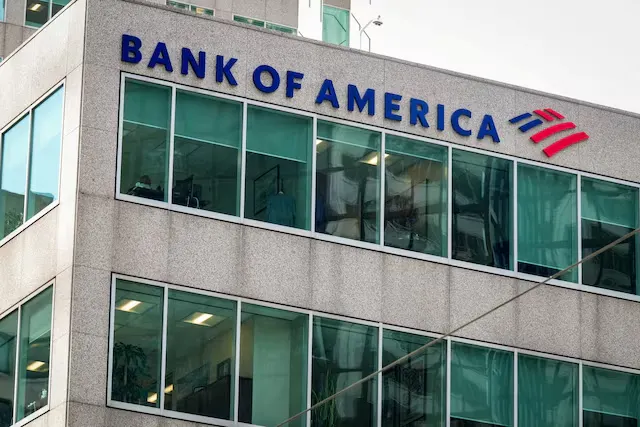
Bank of America faces a $1.2 billion penalty after U.S. regulators found serious weaknesses in its anti-money laundering controls and failures to report suspicious financial transactions. Announced on October 13, 2026, the enforcement action concerns billions of dollars in potentially suspicious payments and continued compliance problems despite an earlier regulatory order.
The U.S. Treasury Department and the Office of the Comptroller of the Currency (OCC) said the bank failed to properly monitor trillions of dollars in transactions. These weaknesses led to numerous delayed suspicious activity reports (SARs), including reports involving billions of dollars and indicators of possible money laundering. In some cases, filings took more than six months.
Also Read | UNI Price Outlook in Focus as Whale Activity Signals Market Interest
Bank of America Money Laundering Failures Trigger Penalties
The OCC levied a civil monetary penalty of $750 million on Bank of America; this is the highest penalty ever levied by the regulatory body. Additionally, FinCEN imposed a penalty of $1.2 billion; however, this amount should be reduced by the OCC’s penalty of $750 million. This means that the two figures cannot be added up to form a total amount.

In addition to this, the bank has to rectify the identified shortcomings and improve its systems to detect, investigate, and report any suspicious activities. The identified shortcomings left the financial system vulnerable to financial crimes, including money laundering and fraud. This case shows how big banks are supposed to comply when dealing with international transactions.
Regulators Identify Gaps in Suspicious Transaction Reports
Under American law, banks are required to file suspicious activity reports in cases where transactions might be involved in money laundering, fraud, or any form of financial crime. It was discovered that Bank of America’s monitoring system did not detect or escalate suspicious payments and hence made it difficult for investigators to look at such activities.
The Department of the Treasury had noted about $600 million worth of transactions dealing with salvaged automobiles as one of the transactions under suspicion. The other transactions suspected were trade-based money laundering and transactions related to national security threats. The other factors that were discovered were weaknesses in staff training, investigation process, and internal audit.
December 2024 Order Failed to Resolve AML Deficiencies
The bank had already agreed to a cease-and-desist order from the end of 2024 where it would have to rectify issues related to the Bank Secrecy Act and AML Program. However, the OCC has revealed that serious issues were ongoing for more than a year after the decision was made, and among those issues was the failure to report suspicious transactions to the investigators.
The OCC further noted that important staff members of the compliance department had inadequate training and qualifications, and the audit department had failed to detect long-existing issues found by the examiners. The management had also not taken the required corrective actions.
Bank of America Responds as Earnings Approach
It has been reported that Bank of America has invested billions of dollars on the development of technologies and deployed thousands of employees to prevent financial crime. The bank stated that it was making progress in handling the problems highlighted by the regulators and was committed to finishing the necessary work. According to The New York Times, the bank did not admit or deny the charges.
The fine has come at a time when the bank is preparing to report its earnings quarterly in October 14th. The bank is expected to make around $8 billion in quarterly profits. Thus, the financial implications of the enforcement action become critical for investors. The OCC mentioned that it would get the penalty of $750 million from Bank of America as the U.S. Treasury, and the FinCEN enforcement includes a credit for that penalty.
The case comes on the heels of another enforcement action against American Express, where regulators have fined the company $350 million for failing to keep track of suspicious transactions.
Compliance Reforms Will Determine What Happens Next
For Bank of America, it remains crucial to address all deficiencies mentioned by the regulators, including enhanced transaction monitoring, training, internal audit processes, and escalation of suspicious activities. Other steps that will be necessary for the bank to take include reviewing the history of transactions for any suspicious activity that was not reported.
For customers, the findings do not establish that every flagged transaction involved a crime. For investors, the penalty creates a direct financial cost and highlights the importance of regulatory compliance. The key next step is whether the bank can demonstrate that its corrective measures prevent similar failures and meet regulators’ requirements.
Also Read | Cardano Ecosystem Development Brings ADA Price Trend Into Focus


Be the first to comment