




On-chain data shows the Bitcoin mining Difficulty is headed for another 3% drop this weekend. Here’s what this could mean for the network.
Bitcoin Block Time Has Been Slower Than Expected Recently
According to data from CoinWarz, the Bitcoin Difficulty is estimated to decrease during the upcoming adjustment. The “Difficulty” here refers to a metric built into the BTC network that controls how hard miners would find it to mine on the blockchain.

The indicator’s value automatically changes about every two weeks during regular network adjustments. Whether the Difficulty goes up or down comes down to the conditions on the blockchain since the last adjustment.
Satoshi wrote in a simple rule for the network to follow: keep block time consistent at 10 minutes per block. When miners go through blocks at an average pace faster than this, the chain responds by upping its Difficulty. Similarly, it drops the metric instead if the validators are slower than needed.
The next Difficulty adjustment will occur during Friday night. Below are the details related to this event.
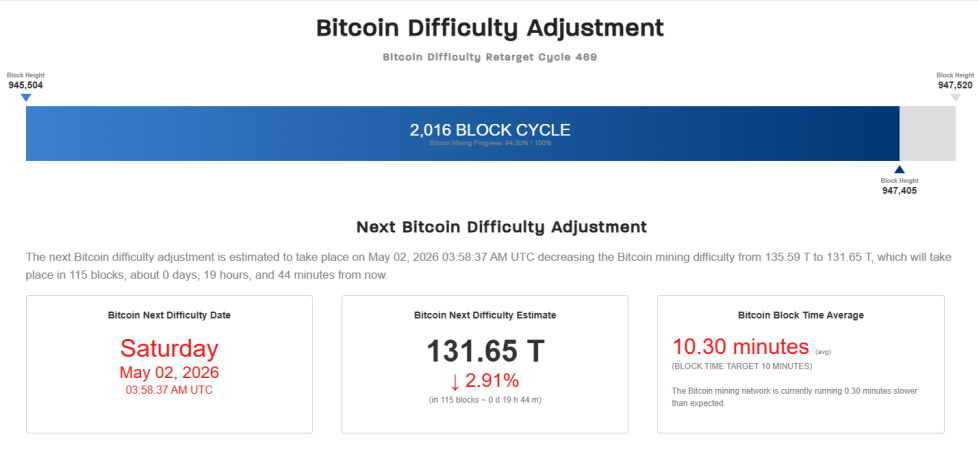
How the next network adjustment will change the Difficulty | Source: CoinWarz
As is visible above, the average block time on the Bitcoin network has been 10.30 minutes since the last adjustment. This is 0.30 minutes slower than the blockchain wants, so it will ease up the Difficulty by about 2.91% to bring miners back up to speed.
This will be the second consecutive adjustment to lead to a decline in the Difficulty.
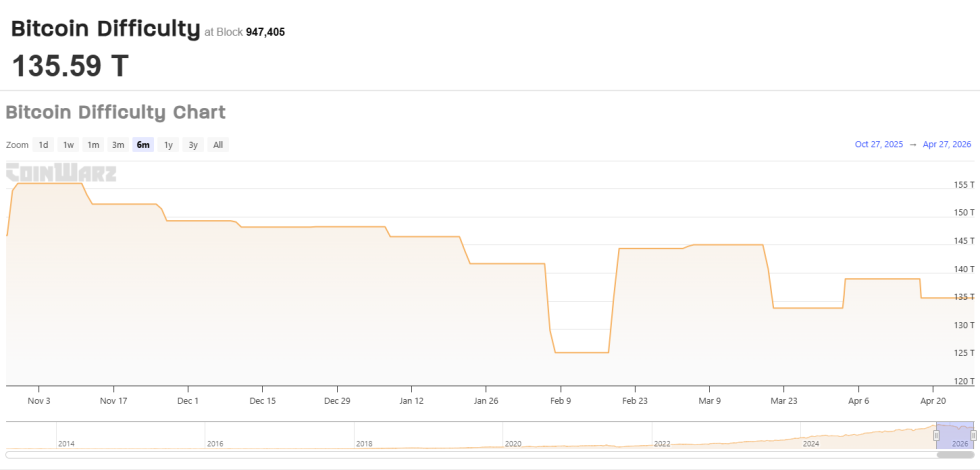
Looks like the metric has been on the way down over the last few months | Source: CoinWarz
The network is being forced to decrease the metric as a consequence of some miners exiting from the network recently. As the below chart from Blockchain.com shows, the Bitcoin Hashrate, a metric tracking the total amount of computing power connected by the miners to the network, has seen its 7-day average value head down.
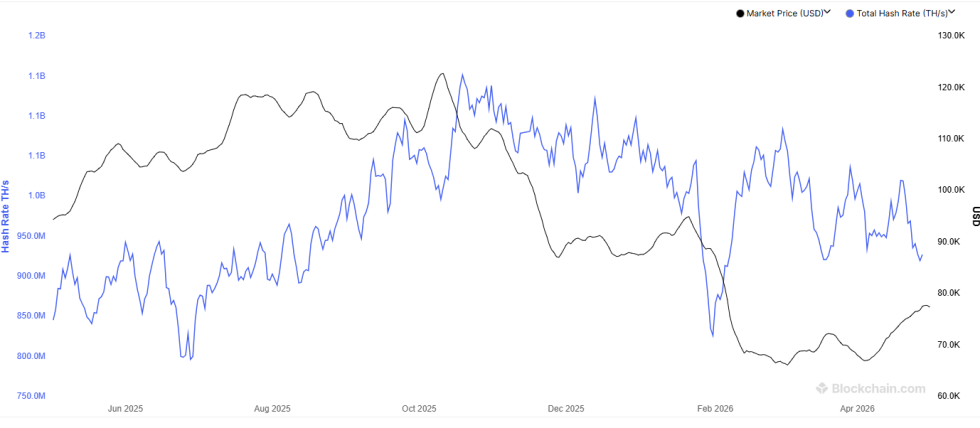
The trend in the BTC Hashrate over the last twelve months | Source: Blockchain.com
The exodus from the miners is likely to be a consequence of the bearish price action that Bitcoin has witnessed since Q4 2025. This is because the main source of revenue for miners is the block subsidy. The block subsidy is handed out at a fixed BTC rate and thanks to the Difficulty’s existence, miners always get it at a more-or-less equal rate of time (that is, the block time), so the only variable related to miner income is the asset’s USD rate.
While the Hashrate did manage to hold up through the drawdown itself, it would appear that the Bitcoin price remaining depressed recently has finally made some of these validators pull out their computing power.
BTC Price
At the time of writing, Bitcoin is floating around $78,600, up 2.7% in the last 24 hours.
The price of the coin has surged over the past day | Source: BTCUSDT on TradingView
Featured image from Dall-E, chart from TradingView.com
Editorial Process for bitcoinist is centered on delivering thoroughly researched, accurate, and unbiased content. We uphold strict sourcing standards, and each page undergoes diligent review by our team of top technology experts and seasoned editors. This process ensures the integrity, relevance, and value of our content for our readers.



Be the first to comment