


For the first time since 2011, Syria can trade freely with the European Union. The European Council on May 11 formally repealed the suspension of the 1977 EU-Syria Cooperation Agreement, a move that reopens the door to Syrian exports including oil, gold, and diamonds flowing into EU markets.
What actually changed
Back in 2011, the EU partially suspended its cooperation agreement with Syria in response to the Assad regime’s brutal crackdown on civilian protesters. That suspension froze the trade provisions of a deal that had been in place since 1977, effectively cutting Syria off from Europe’s single market for most goods.
The reversal traces directly to the fall of Bashar al-Assad’s government in December 2024. With the regime gone, the EU began easing economic sanctions in May 2025, and the full restoration of trade ties announced this month represents the final step in that normalization process.
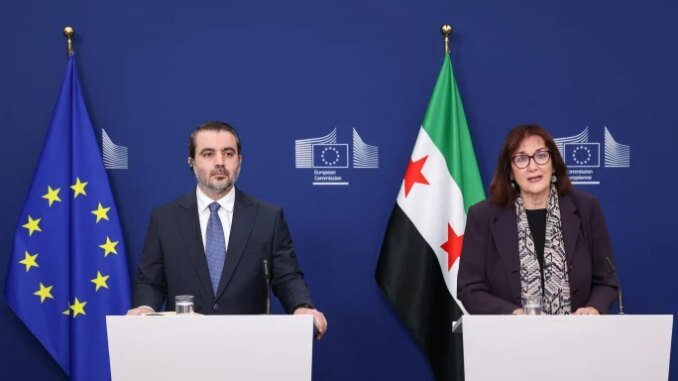
The announcement came at a Syria-EU Partnership Coordination Forum held in Brussels, co-chaired by EU and Syrian officials. EU Commissioner Dubravka Suica framed the decision as a commitment to supporting Syria’s economic recovery.
Beyond trade, the EU announced €280 million (roughly $329.6 million) in aid earmarked for 2026-2027. That sits on top of prior commitments: €175 million pledged in 2025, plus an additional €180 million allocated this year. All told, the EU’s combined financial support package reaches €620 million.
The bigger picture
The 1977 Cooperation Agreement, which originally governed trade and economic relations between the then-European Economic Community and Syria, was always more modest than the sweeping association agreements the EU later struck with other Mediterranean neighbors. Still, its full reinstatement signals that Europe views the post-Assad government as a legitimate partner, not just a humanitarian concern.
What this means for markets and investors
Oil is the most notable item on that list. Syria’s pre-war oil production was already in long-term decline, but the country still sits on proven reserves. With sanctions lifted and trade channels open, international energy companies and commodity traders will be watching closely to see whether the new government can attract investment to restart production at scale. Gold and diamond exports, while smaller in volume, offer additional revenue streams.
The €620 million in combined EU aid also creates opportunities for contractors, NGOs, and development firms involved in reconstruction. Infrastructure, healthcare, education, and energy are all sectors where significant capital will need to flow.


Be the first to comment