

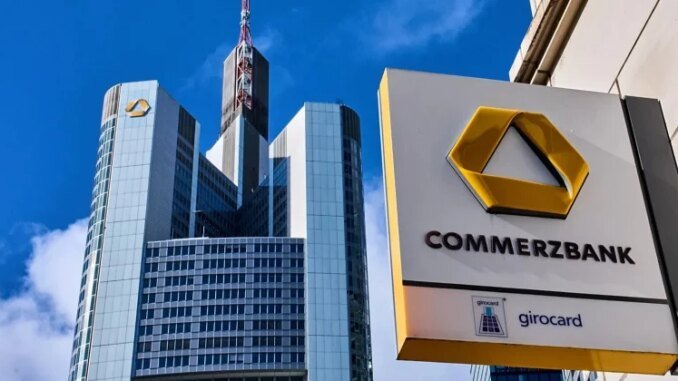

Commerzbank’s management board has formally rejected UniCredit’s roughly €37 billion takeover proposal, urging shareholders to toss the offer in the bin. The German lender’s central complaint: the bid doesn’t include a meaningful control premium, which is banker-speak for “you’re not paying enough for the privilege of running this place.”
The rejection, announced on May 18, 2026, marks a sharp escalation in a saga that has been simmering for well over a year. UniCredit has spent that time quietly amassing a near-30% stake in Commerzbank, creeping toward the threshold under German law that would force a mandatory takeover offer.
What Commerzbank actually objects to
The board’s critique goes beyond sticker price. Commerzbank characterized UniCredit’s proposal not as a genuine merger of equals or even a traditional acquisition, but as a unilateral restructuring plan. In English: UniCredit wants to buy the company and then reshape it on its own terms, without offering a concrete combination strategy that both sides could evaluate.
The absence of a market-standard control premium is the most pointed criticism. When one company buys another, the acquiring firm usually pays a premium above the target’s trading price to compensate shareholders for handing over control. Commerzbank’s board is telling investors that UniCredit’s offer doesn’t clear that bar, making it a bad deal for anyone who tenders their shares.

The labor and political dimension
This isn’t just a boardroom disagreement. Commerzbank’s works council, which represents the bank’s employees, has labeled the takeover attempt as outright hostile. Employee representatives have gone further, appealing directly to the German government to block the deal.
Their argument leans heavily on national banking sovereignty. Germany losing operational control of its second-largest commercial bank to an Italian rival is, for many domestic stakeholders, a matter of economic independence rather than simple corporate finance. The workforce is also concerned about the inevitable job cuts that come with cross-border bank mergers, where overlapping back-office functions and branch networks get consolidated.
Germany has a long tradition of employee representation in corporate governance through its codetermination system, which gives workers seats on supervisory boards. That structural feature means labor opposition isn’t just symbolic. It carries real weight in how the company navigates strategic decisions.
UniCredit’s long game
UniCredit’s approach has been anything but impulsive. The Italian bank has spent more than 18 months building its position in Commerzbank, gradually accumulating shares to reach nearly 30% ownership.
Under German securities law, crossing the 30% ownership threshold triggers a mandatory takeover offer to all remaining shareholders. UniCredit appears to have strategically parked itself just below that line while testing the waters.
What this means for investors
For Commerzbank shareholders, the board’s rejection creates a familiar tension. Management says the offer undervalues the company, but a near-30% stake held by a determined acquirer tends to put a floor under the share price.
For those watching from the digital asset side, both Commerzbank and UniCredit have been developing crypto custody and tokenization capabilities under evolving EU regulations. Any ownership change would inevitably raise questions about which digital asset strategies survive integration and which get shelved.


Be the first to comment