



Key Takeaways
- Mike Belshe warns MiCA limits insurance to €100K, creating system-wide risks for European stablecoins.
- Recalling how 1 SVB failure depegged USDC in 2023, Belshe warns the banking sector can crash crypto.
- Bitgo’s CEO demands better rules to protect billion-euro stablecoin reserves from bank collapses.
Bitgo CEO States MiCA Brings Systemic Risks to Stablecoin Issuers
Mike Belshe, CEO of Bitgo, one of the largest custody providers in the crypto industry, believes that current cryptocurrency regulation in Europe might contribute to a potential stablecoin debacle.
On social media, Belshe explained that the Markets in Crypto Assets (MiCA) regulation exposes the stablecoin ecosystem in Europe to systemic risks, forcing stablecoin issuers to hold reserve balances in traditional banks that follow fractional reserve standards.
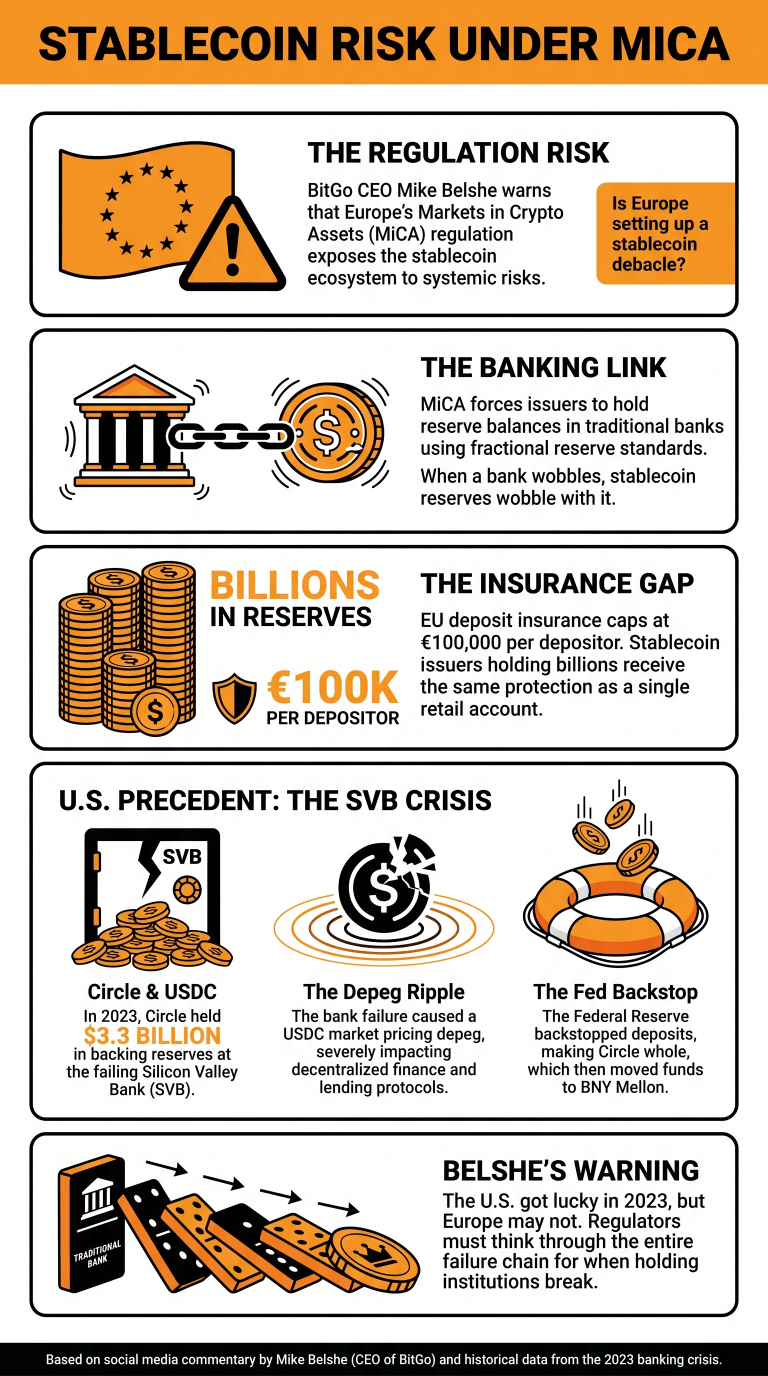
“That creates a direct link between cryptomarkets and traditional banking stress. When a bank wobbles, stablecoin reserves wobble with it,” Belshe stated, clarifying that this was possible as stablecoin issuers would be subject to the same insurance as a retail customer.

“EU deposit insurance caps at €100K per depositor. A stablecoin issuer holding billions in reserves gets the same protection as a retail savings account. That’s not a rounding error — it’s a structural gap,” Belshe stressed.
The U.S. has already experienced a similar episode to the one Belshe described, when a failure of the traditional fiat system bled into crypto. Circle, issuer of the USDC stablecoin, was affected by the closure of Silicon Valley Bank (SVB) in 2023, as the company held $3.3 billion backing its stablecoin in the bank. This caused a depeg in its market pricing, affecting decentralized finance and rippling into lending protocols as well.
Nonetheless, at the time, the Federal Reserve backstopped all the deposits and made all customers whole, including Circle, which moved their funds to BNY Mellon shortly afterwards.
Belshe reinforced the need to get regulation right in this regard, as failing to do so would open the doors for a similar event affecting stablecoin issuers in Europe.
“The U.S. got lucky in 2023. Europe may not. Proper stablecoin regulation means thinking through the entire failure chain — not just who holds the reserves, but what happens when the institution holding them breaks,” he concluded.






Be the first to comment