

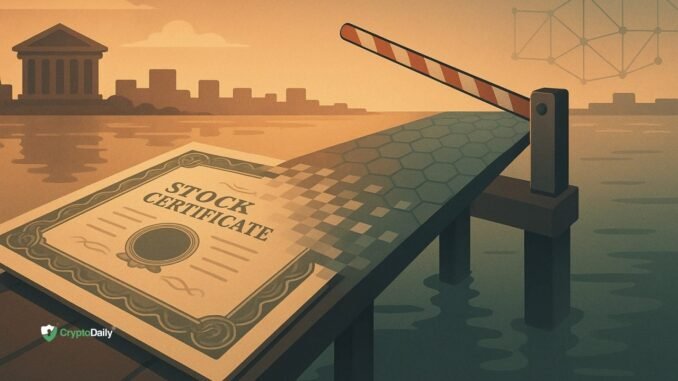

Equities are stepping onto blockchains. Tokenized stocks promise faster settlement, programmable dividends, and 24/7 access—but they also raise hard questions about regulation, custody, and liquidity. If you hold crypto or build in DeFi, understanding this shift is now table stakes.
This guide breaks down what tokenized stocks really are, how they could impact crypto investors, where the early opportunities and pitfalls lie, and what to watch as regulators and institutions move from pilots to production.
Quick Answer
Tokenized stocks are digital tokens on a blockchain that represent exposure to traditional equities. Some are fully backed by actual shares held with a custodian; others are synthetic trackers that mirror prices without conferring ownership. For crypto investors, they could bring equities into wallets and DeFi workflows, but access will be gated by securities laws, and risks—custodial, regulatory, and liquidity—are material.

- Two main models: asset-backed tokens with legal claims vs. synthetic price trackers.
- Expect KYC/AML and geographic restrictions; many offers target institutions or qualified investors.
- Opportunities include fractionalization, 24/7 markets, and DeFi composability.
- Risks span custodianship, oracle accuracy, low liquidity, and regulatory changes.
What exactly are tokenized stocks—and how are they different from synthetics?
At a high level, a tokenized stock is a blockchain-based instrument that gives you economic exposure to an equity like AAPL or TSLA. How that exposure is structured matters. In an asset-backed model, a licensed issuer holds the underlying shares via a broker or special purpose vehicle (SPV) and issues on-chain tokens that represent claims on those shares. In a synthetic model, a protocol or platform creates a token that simply tracks the stock’s price via oracles, without holding the equity.
Asset-backed tokens can, in principle, entitle holders to corporate actions (dividends, splits) subject to the issuer’s terms and local law. They typically require full KYC, may limit transfers to whitelisted addresses, and are often available only to qualified investors in specific jurisdictions. Synthetic tokens are more flexible for on-chain composability but usually do not provide legal ownership, voting rights, or guaranteed dividend passthrough; they rely on collateral and market makers to maintain pegs.
Many early “stock tokens” launched by centralized exchanges in 2021–2022 were discontinued after regulatory reviews. Today, momentum is shifting to regulated digital-securities platforms, tokenized funds, and pilots under frameworks like the European Union’s DLT Pilot Regime. The distinction between regulated security tokens and permissionless synthetics will shape your rights and risks.
Why is interest in tokenized equities rising now?
Three tailwinds are converging. First, the broader real-world asset (RWA) trend has moved from concept to implementation, with tokenized cash, treasuries, funds, and structured products demonstrating on-chain issuance, transfer, and settlement in production environments. This has primed institutional operations and compliance teams for equity tokenization next.
Second, market plumbing is modernizing. The U.S. equity market accelerated to T+1 settlement in 2024, improving capital efficiency while still leaving room for instant-on-chain settlement and atomic delivery-versus-payment. Tokenization offers programmability—dividends, collateralization, and restrictions enforced by smart contracts rather than post-trade batch processes.
Third, regulatory sandboxes and guidance are taking shape. In the EU, the Markets in Crypto-Assets framework (MiCA) and the DLT Pilot Regime provide pathways for compliant issuance and trading of tokenized securities on distributed ledgers. You can read more about MiCA and its scope on the European Commission’s site here, and the European Securities and Markets Authority’s DLT Pilot details here. Other jurisdictions, including Switzerland and Singapore, have also advanced regimes that support tokenized securities.
How do tokenized stocks actually work under the hood?
Under an asset-backed structure, a tokenization issuer forms an SPV that purchases or holds the target stock through a broker or custodian. The SPV’s shares or the underlying stock are then linked to on-chain tokens via a legal wrapper (e.g., depository receipt, fund share, or note). Transfers of the token may be permissioned to maintain compliance, and redemption terms specify how holders can convert tokens back into the underlying or cash proceeds.
Synthetic structures use smart contracts and oracles to mirror the stock price. Tokens are typically overcollateralized by crypto assets, and market makers arbitrage deviations from oracle-tracked prices. Because there is no underlying equity, corporate actions are simulated where possible or ignored, depending on the protocol design.
| Feature | Asset-backed tokenized stock | Synthetic stock token |
|---|---|---|
| Legal ownership | Yes, via issuer/SPV per offering docs | No; exposure only |
| Dividends | Can be passed through per terms | Typically simulated or none |
| KYC/transfer restrictions | Common (whitelists, jurisdictional limits) | Often permissionless, but may be geo-blocked |
| DeFi composability | Possible but usually permissioned | High, if tokens are free-floating |
| Primary risks | Custodian/issuer, legal & redemption | Oracle, collateral, regulatory classification |
Regardless of model, check the smart contracts and legal documentation. If the token is supposed to be redeemable for shares or cash proceeds, the issuer’s terms will define how corporate actions, redemptions, and insolvency scenarios are handled.
Pro tip: If a “stock token” promises dividends but offers no audited proof of share custody or a clear transfer agent, treat it as a synthetic—and price your risk accordingly.
Where can you access tokenized stocks today—and what should you verify first?
Access depends on jurisdiction and investor status. Generally, you’ll encounter three categories of offerings:
- Regulated digital-securities platforms that tokenize equities or fund shares under securities laws. These typically require full KYC/AML, restrict transfers, and publish offering memoranda. Some operate alternative trading systems (ATS) or equivalent venues for secondary trading.
- Tokenization issuers in jurisdictions with dedicated DLT or tokenized-securities laws (for example, Switzerland), which may offer on-chain representations of equities or ETFs to qualified, often non-U.S., investors. Transfers are usually limited to whitelisted addresses.
- DeFi protocols that list synthetic equity trackers using price oracles and crypto collateral. These are accessible with self-custody wallets but come with smart-contract, oracle, and liquidity risks, and they may be geo-restricted by front ends.
Before you touch any tokenized stock, run a due-diligence checklist. Unlike traditional brokerage accounts where investor protections and clearing infrastructures are standardized, tokenized offerings vary widely in legal structure and safeguards.
- Licensing and venue: Is the issuer a regulated entity? Is secondary trading on a registered market/ATS or under a pilot regime?
- Legal claim: Do tokens represent direct share ownership, depository receipts, fund shares, or just price exposure?
- Custody setup: Who holds the underlying shares? Which broker/custodian? Is there an independent transfer agent?
- Redemption terms: Can you redeem for shares or cash? What are the minimums, timelines, and fees?
- Corporate actions policy: How are dividends, splits, and voting handled? Are there cut-off dates?
- Smart-contract assurance: Is there a code audit, upgradeability policy, and on-chain allowlist logic you can review?
- Data and oracles: What price feeds are used? How are off-hours prices handled?
- Compliance scope: Which jurisdictions are excluded? What KYC/AML data is collected and how is it stored?
- Tax documentation: Are withholding and reporting processes clear for your residency?
As a reference point, regulated security token platforms publicly outline these elements on their websites and offering documents. You can explore how a compliant tokenized-security lifecycle works by reviewing materials from established providers; for example, see a U.S.-registered transfer agent’s approach on Securitize, or learn how Swiss issuers structure on-chain claims on sites like Backed Finance. Availability, eligibility, and rights differ by issuer—read the docs closely.

How could tokenized stocks change a crypto investor’s strategy?
For on-chain natives, tokenized equities extend the asset menu your wallet can hold and automate. That opens several practical avenues—if and when compliant access is available in your jurisdiction.
Portfolio construction could get simpler. Imagine a DAO treasury that pairs stablecoins with tokenized equity index exposure, rebalancing via smart contracts instead of manual brokerage wires. Yield strategies may evolve as tokenized blue-chip equities become accepted as collateral in permissioned lending markets, allowing delta-neutral or basis trades across centralized and on-chain venues.
Trading hours and settlement change the game. Equities priced by traditional exchanges run on set hours; tokenized markets run 24/7. This introduces basis risk between on-chain and off-chain venues, but it also allows investors to reposition outside market hours, hedge weekend news, or arbitrage gaps when markets reopen. Crypto traders accustomed to perpetual futures will recognize the opportunity—along with the need for discipline.
Finally, programmability adds nuance. Dividends can be distributed automatically to token holders, vesting can be embedded into tokens for employee equity, and compliance rules can be enforced in-code. For builders, this is fertile ground for compliant, modular financial tooling. For investors, it’s a reminder to verify how those rules are coded and what upgrade rights the issuer reserves.
What happens with dividends, splits, and voting rights?
Handling corporate actions is one of the clearest separators between asset-backed and synthetic models. If a token represents a legal interest in underlying shares or fund units, the issuer can, subject to offering terms and intermediaries, distribute dividends on-chain, reflect stock splits, and, in some cases, pass through voting via proxies. Timelines may lag traditional processing because issuers must reconcile on-chain ledgers with off-chain registries.
In contrast, synthetic tokens typically simulate price effects (e.g., price halving for a 2-for-1 split) but do not entitle holders to dividends or votes. Some protocols may adjust token indexes to account for distributions, but this is economic mimicry, not corporate participation.
Read the documentation for: record dates and eligibility cutoffs; distribution currencies (on-chain stablecoin vs. off-chain cash); withholding tax treatment; and whether your wallet must remain whitelisted during the entire record period. Expect that issuers prioritize compliance over composability—transfers around record dates may be frozen or restricted.
What are the main risks—and how do you manage them?
Tokenized stocks compress traditional market risks with crypto-native ones. Align your risk management accordingly.
- Regulatory treatment: Stock tokens are generally securities. Offers to the public without registration or exemption can be restricted or halted. Stick to compliant venues and beware of services that evade KYC.
- Issuer and custodian risk: Your ultimate exposure may hinge on the solvency of an SPV, broker, or custodian. Look for segregated accounts, audits, and clear priority of claims in offering docs.
- Redemption and liquidity: Secondary liquidity can be thin, spreads wide, and redemptions gated. Stress-test exit scenarios before allocating meaningful capital.
- Oracle and pricing gaps: For synthetics, inaccurate or stale price feeds can trigger liquidations or peg breaks. Off-hours trading can deviate sharply from the next day’s opening auction.
- Smart-contract exploits: Permissioned doesn’t mean risk-free. Review audits, admin key policies, and upgradeability.
- Tax complexity: Dividends may face withholding; token transfers can be taxable events. Consult a qualified tax professional for your jurisdiction.
A practical hedge is position sizing and venue diversification. Keep exposures small until you’ve observed a full cycle of corporate actions, redemptions, and volatile market days. When feasible, prefer tokens with transparent custody chains and established transfer agents.
What should investors watch next as tokenized stocks scale?
Several milestones could accelerate adoption. Results from the EU’s DLT Pilot Regime will signal how secondary trading of tokenized securities can operate at scale within the bloc. Clearer guidance on how stablecoins can be used for settlement under MiCA could also streamline atomic delivery-versus-payment workflows. Outside the EU, ongoing regulator-led initiatives—such as Singapore’s Project Guardian, which explores tokenized financial assets in institutional settings—are worth tracking via the Monetary Authority of Singapore’s updates here.
Interoperability and identity will matter. Expect permissioned pools, on-chain identity standards, and allowlisted bridges between L1s/L2s so that compliant equity tokens can move where liquidity is deepest while preserving KYC constraints. Custody providers integrating direct on-chain corporate action workflows could make or break user experience.
On the product side, watch for tokenized index exposures and sector baskets, as well as hybrid vehicles that wrap tokenized cash or treasuries with equity overlays. Institutional demand will likely start with familiar wrappers—funds and notes—before individual large-cap single stocks become common on-chain.
Common Mistakes
- Assuming all stock tokens give ownership: Many are synthetic. Always verify whether you have legal title or just price exposure.
- Ignoring redemption terms: Long lockups, fees, or minimum sizes can trap you in thin secondary markets. Read the fine print before buying.
- Overlooking corporate action rules: Record dates, whitelists, and freezes can affect eligibility for dividends or splits. Plan transfers accordingly.
- Underestimating oracle/basis risk: Off-hours gaps can whipsaw synthetic positions. Use conservative leverage and monitor feeds.
- Skipping KYC considerations: Access can be revoked if you move jurisdictions or fail periodic checks. Keep compliance docs current.
- Relying on unaudited smart contracts: Permissioned ≠ safe. Seek audited code and transparent admin key policies.
For ongoing analysis of tokenization and crypto markets, you can find in-depth coverage at Crypto Daily.
Frequently Asked Questions
Are tokenized stocks available to U.S. retail investors?
Access for U.S. retail is limited and depends on whether an offering is registered or conducted under an exemption with appropriate transfer restrictions. Many current offerings target institutions or accredited/qualified investors. Always check eligibility and offering status before participating.
Can tokenized stocks trade 24/7—and what happens when the underlying market is closed?
On-chain venues can operate 24/7, but underlying equities trade on set exchange hours. During closures, prices may reflect expectations, not executable off-chain trades. Expect wider spreads and potential gaps when traditional markets reopen.
Do tokenized stocks pay dividends on-chain?
Asset-backed tokens can pass through dividends if the issuer holds underlying shares and the terms permit it. Payments may be in fiat or on-chain stablecoins and could be delayed by reconciliation. Synthetic tokens generally do not pay dividends, though some may simulate them in index adjustments.
Can I use tokenized stocks as DeFi collateral?
Some permissioned lending markets and institutional DeFi platforms may accept regulated tokenized securities as collateral. Availability is venue-specific and often limited to whitelisted addresses. Synthetic tokens are more commonly used in permissionless settings but carry higher oracle and liquidity risks.
How are taxes handled for tokenized equities?
Tax treatment follows the underlying asset and your residency. Dividends may face withholding; capital gains on token transfers can be taxable. Issuers sometimes provide tax documents, but rules vary. Consult a qualified tax advisor.
What happens if the tokenization issuer becomes insolvent?
Outcomes depend on the legal structure. Ideally, underlying shares are held in segregated accounts at a custodian, and token holders have priority claims via the SPV. Review offering documents for insolvency and wind-down procedures—this is a key diligence item.
Are tokenized stocks the same as ADRs or depository receipts?
No. ADRs and similar receipts are established off-chain instruments traded on traditional exchanges under mature frameworks. Tokenized stocks may use analogous structures, but they live on a blockchain and can carry additional operational, smart-contract, and venue-specific risks.
Disclaimer: This article is provided for informational purposes only. It is not offered or intended to be used as legal, tax, investment, financial, or other advice.





Be the first to comment