


Disclaimer: The below article is sponsored, and the views in it do not represent those of ZyCrypto. Readers should conduct independent research before taking any actions related to the project mentioned in this piece. This article should not be regarded as investment advice.
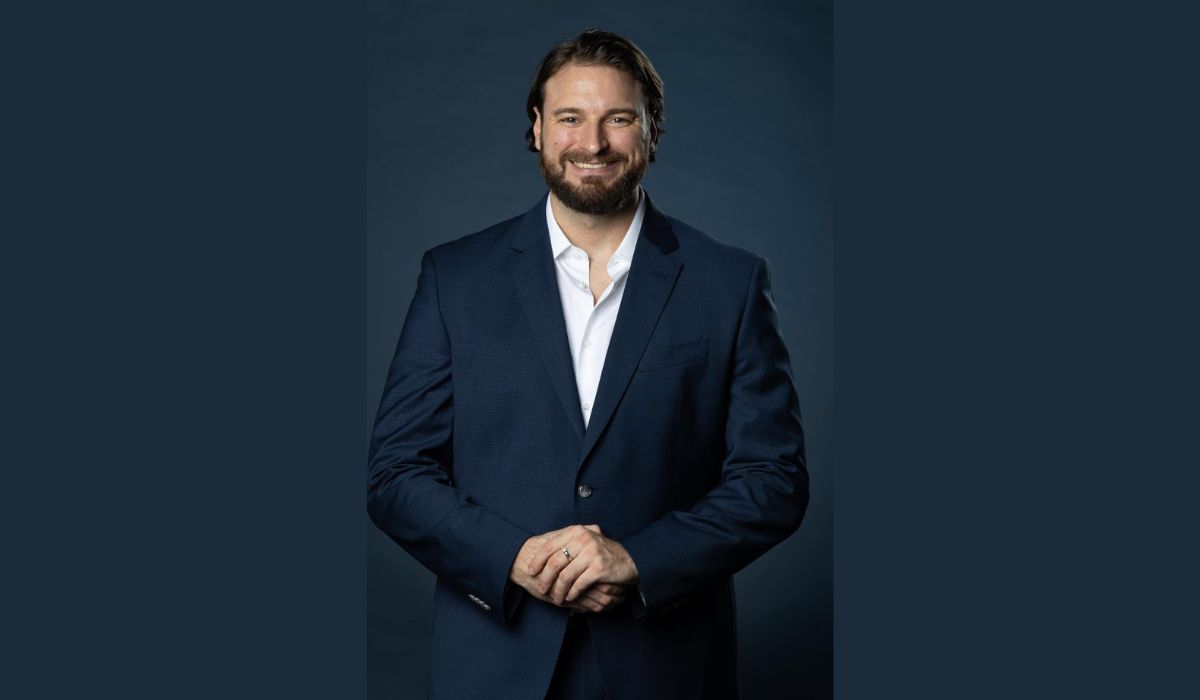
Tech entrepreneur and angel investor Alessio Vinassa has announced an expansion of his investment framework, focusing on the convergence of artificial intelligence and cybersecurity—applying strategic risk-mitigation lessons from managing high-pressure financial turnarounds to emerging enterprise technologies.

But before he began investing across AI, cybersecurity, Web3, and innovative finance, Vinassa faced a financial collapse that fundamentally changed how he understood risk.
A €180,000 Turning Point
Vinassa reached a point where approximately €180,000 was due while only about €2,200 remained in his bank account. Facing the real possibility of bankruptcy, he was forced to confront the consequences of growth pursued without sufficient protection, diversification, or structural discipline.

 
The experience became far more than a difficult chapter in his career. It reshaped how he would later evaluate businesses, support founders, and approach emerging technology.
Today, Vinassa brings more than fifteen years of operating and investment experience, having backed over 40 ventures across cybersecurity, artificial intelligence, Web3, and innovative finance. His current work reflects a reality businesses can no longer ignore: AI and cybersecurity are becoming increasingly intertwined.
Where Innovation Must Meet Discipline
Artificial intelligence is transforming how companies interpret information, automate work, and make decisions. But each capability also introduces a new form of dependence. Systems require access to data. Automated tools influence customer interactions, financial activity, and internal operations. The more authority companies grant these technologies, the more critical security, transparency, and accountability become.
“AI should amplify executive judgment, not replace it,” Vinassa says. Technology can increase speed and capability, but leaders remain responsible for determining how that capability is used, which risks are acceptable, and where human oversight must remain.
Cybersecurity provides part of the foundation for that trust. As AI becomes embedded in critical business processes, security extends beyond protecting networks from external threats — companies must also understand who can access information, how automated actions are monitored, and what happens when a system produces an unexpected result. Businesses that address these questions early are better positioned to earn the confidence of customers, investors, and partners. Those that treat security as an afterthought risk letting operational exposure grow alongside their success.
When Momentum Is Mistaken for Stability
Vinassa’s financial collapse revealed a hard truth: creating value and protecting it require different capabilities. A company can appear successful while becoming increasingly dependent on favorable conditions, concentrated decisions, or systems that haven’t kept pace with its growth.
The same lesson applies to emerging technology. A product can attract attention and investment long before it proves it can operate securely, respond to failure, or sustain customer trust.
That’s why Vinassa evaluates opportunity through more than technical novelty. His approach weighs whether a technology solves a meaningful problem, whether customers can adopt it consistently, and whether the company has the governance to support expansion. In his published investment commentary, he has identified cybersecurity, AI governance, identity solutions, and enterprise automation as areas where technology is addressing essential infrastructure needs.
The leadership behind these products matters just as much. Vinassa values founders who can identify where their businesses are exposed, explain how their systems will respond under pressure, and recognize which evidence would require them to change course.
Governance as an Accelerator, Not a Brake
“Good governance makes companies faster, not slower,” Vinassa says. Governance is often treated as a restriction on innovation. He views it as the structure that allows innovation to scale responsibly — clear decision rights, reliable reporting, and defined accountability that enable companies to move without depending on one person to resolve every issue.
That perspective is especially relevant as businesses adopt AI at increasing speed. Competitive pressure can push companies to deploy tools before they fully understand the information those tools access or the decisions they influence. Vinassa doesn’t argue that innovation should slow by default. His position is that speed becomes commercially valuable only when the systems supporting it can be trusted. The goal isn’t to eliminate every risk — it’s to understand exposure before customers, employees, and operations become dependent on the technology.
From Recovery to Leadership
Vinassa’s progression from financial collapse to emerging-technology investing also informs his broader work on leadership. The lesson was never simply that an entrepreneur can recover after losing money. Recovery became meaningful because it changed the structures and decisions that followed.
He is developing these ideas further in his book, No One Is Coming: The Mental Operating System for Leaders Under Pressure, which examines how founders, executives, and operators make consequential decisions when certainty is unavailable, and responsibility cannot be handed to someone else.
As AI and cybersecurity continue to converge, that responsibility will extend beyond technology teams. Investors will need to examine the security behind innovation. Boards will need to understand the systems their organizations depend on. And founders will need to build trust as deliberately as they build capability.
The €180,000 turning point gave Vinassa’s investment philosophy its personal foundation — teaching him that unmanaged exposure can stay hidden while confidence is high and growth is still visible. His work today applies that lesson to a new technological era: innovation creates lasting value only when the structures protecting it are built to endure.
About Alessio Vinassa
Alessio Vinassa is an entrepreneur, angel investor, technology builder, and author with more than fifteen years of experience across cybersecurity, artificial intelligence, Web3, innovative finance, and business leadership. He has backed more than 40 ventures and works with founders and executives on investment, strategy, organizational development, and leadership under pressure. He operates between the UAE and Europe.






Be the first to comment