



The past 72 hours have brought a fresh wave of macro FUD, but Bitcoin [BTC] hasn’t flinched.
The biggest signal has come from the U.S. 10-year Treasury yield, which has climbed over 1.3% to above 4.55% during the same period. Add in the escalating U.S.-Iran tensions; the macro backdrop has clearly flipped back to risk-off, with capital rotating back into safe-haven assets like U.S. Treasuries.
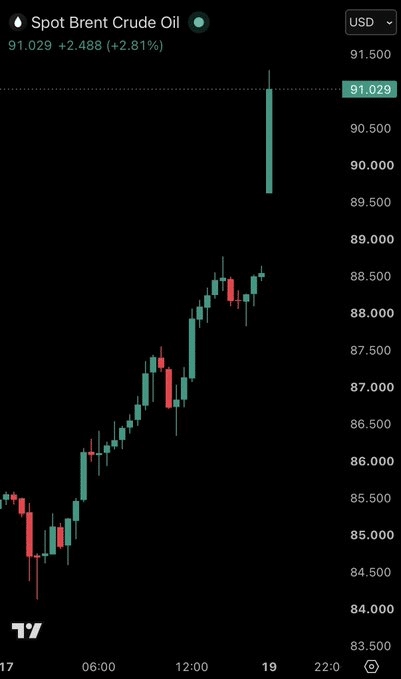
Notably, the move is also evident in the energy markets. As the chart below highlights, Brent crude oil prices surged above $90/barrel after rallying more than 15% over the past week, extending its Q3 gains to over 22%. In previous cycles, a move like this would have sparked a broad sell-off in risk assets, much like Q1. But this time, Bitcoin is breaking away from that pattern, continuing to hold firm.
Naturally, the question becomes: What’s keeping Bitcoin afloat?

From a technical standpoint, this is an important question because BTC’s resilience in the middle of a clear risk-off environment could either be a sign of real underlying strength or the setup for a bull trap. That’s only if buyers fail to follow through.
Moreover, with key macro data and earnings from major U.S. tech companies due this week, the next few days could decide which narrative plays out. Against this backdrop, Michael Saylor’s buy signal couldn’t have come at a better time. With FUD building, equities taking center stage, and bull trap fears rising, is MSTR quietly front-running the next BTC move?
Bitcoin’s resilience faces its biggest test
The timing of MSTR’s latest buy signal isn’t happening in isolation.
As discussed earlier, Bitcoin continues to hold around $64k despite rising macro FUD. More importantly, the resilience is being backed by institutional demand rather than just short-term price action. Notably, Bitcoin ETFs closed the week with $132 million in net inflows. After absorbing heavy outflows earlier in the week, steady buying returned, pushing weekly flows back into the positive territory.
Meanwhile, Bitcoin’s long-term holder supply has hit another all-time high, showing that the conviction remains intact. In essence, the market doesn’t seem to be pricing in a “prolonged” geopolitical conflict, viewing the recent oil price as a short-term shock rather than a structural shift. That’s a key reason why Bitcoin is diverging from the Q1 playbook.
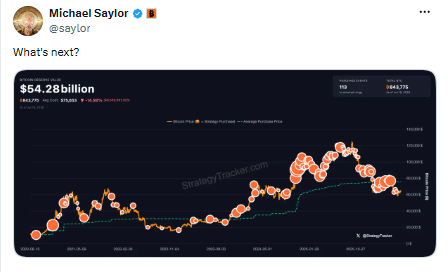
In this context, Michael Saylor’s buy signal looks less like perfect timing and more like strategic positioning.
The logic is simple: Bitcoin’s resilience is supported by real demand. With ETF inflows returning and LTHs continuing to accumulate, the recent pullback looks more like a buying opportunity than a market top. That keeps BTC’s Q3 bullish thesis firmly intact.
Against this backdrop, the upcoming macro week will be a key test. With major earnings, key economic data, and ongoing geopolitical tensions all in play, the market is likely to see another wave of volatility. If Bitcoin continues to hold firm through it, the case for a stronger Q3 rally will only become more convincing.
Final Summary
- Bitcoin is holding strong despite rising macro FUD, backed by ETF inflows and continued long-term accumulation.
- With key U.S. data ahead, this week could decide whether Bitcoin’s Q3 bullish trend stays intact.






Be the first to comment