



Key Takeaways
- September saw 5,419.45 BTC worth $457.23 million move from long-dormant wallets.
- Wallets from 2016 led activity, shifting 1,556.53 BTC across 13 transactions.
- Roughly 57 of 94 transfers involved bitcoin dormant for 12 to 16 years.
Sleeping Bitcoin Stirs Across 93 Transfers
A great deal of so-called sleeping bitcoin stirred during September’s 30-day stretch, with btcparser.com logs showing wallets created between 2010 and 2017 moved roughly 5,401.841 BTC across 94 distinct transfers. Of the bunch, the youngest address was about nine years and two months old, while the two oldest dated back to March 2, 2010, making them 16 years and seven months old.
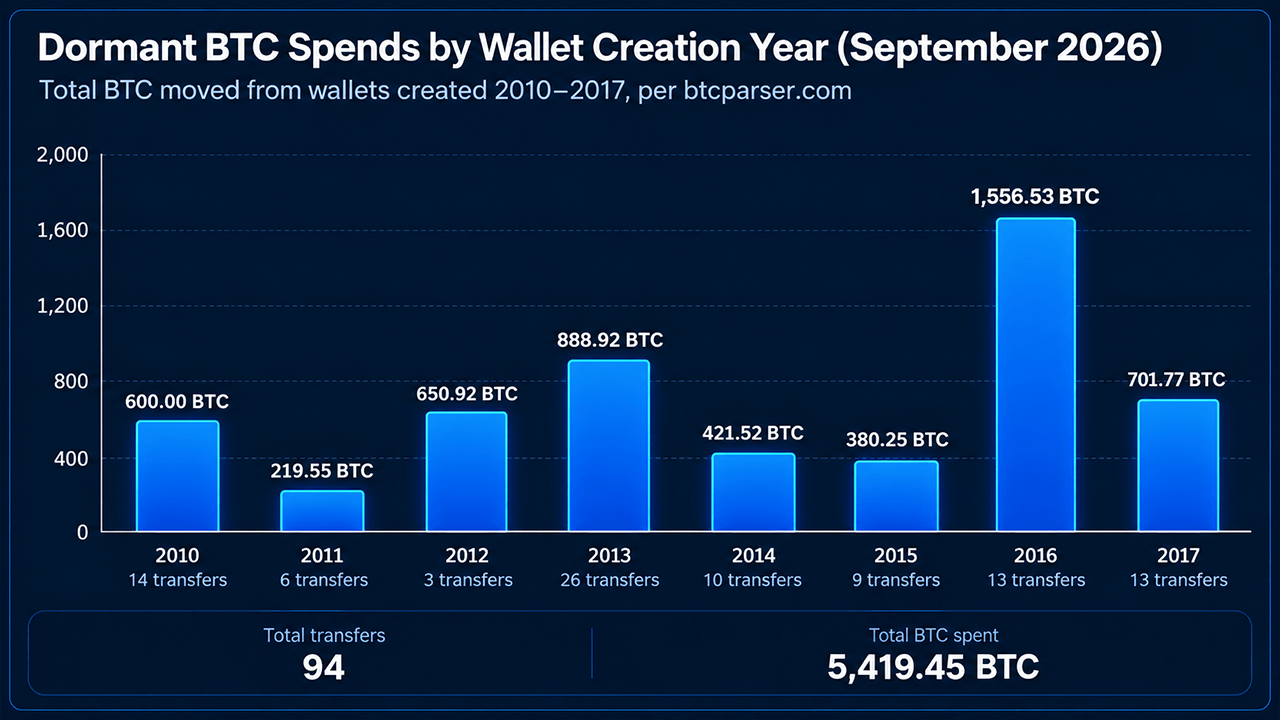
September’s dormant address movements fell short of August’s 6,427.59 BTC, yet activity remained elevated and distinctive across the board, with $457.23 million worth of bitcoin shifting. While September saw fewer spends, there were bigger ones and August’s record 2014 spending collapsed. For example, 2014 wallets represented 51.13% of the BTC moved in August, while September’s sum only amounted to 7.48%.
2016 Wallets Rule the Roost
Wallets created in 2016 ruled the roost last month, moving 1,556.53 BTC, followed by 2013 wallets, which shifted roughly 888.91 BTC.
The larger sum changed hands across 13 transactions, while the 888.91 BTC was dispersed through 26 separate transfers. September also delivered something special, as 14 transfers from wallets created in 2010 moved 600 BTC that had once been exceptionally old block rewards.

Decade-Old Coins Return to the Move
The average spend was 57.65 BTC but the most typical transfer was around 25 BTC, because a few huge spends pulled the average up. Data shows that Sept. 5 saw the busiest day in terms of transfers with around 24, but the following day saw the most BTC spent with 1,620.39 BTC shifted that day. Around 57 of last month’s 93 sleeping bitcoin transfers involved coins between 12 and 16 years old, moving for the first time since their respective wallets were created.
These patterned awakenings of decade-old wallets appear less like random chance and more like deliberate consolidation by a relatively small set of sophisticated holders, including early miners methodically reclaiming old rewards. The orderly lot sizes and clustered wallet creation dates resemble systematic sweeps rather than scattered reactivation, suggesting that at least some supposedly dormant supply may be considerably more organized and responsive than narratives of permanently lost bitcoin imply.







Be the first to comment