



Key Takeaways
- On July 29, bitcoin briefly surged to $64,500 before pulling back 0.6% after Middle East conflict reports.
- Coinglass data showed nearly $310 million in crypto liquidations as crude oil spiked past $90 a barrel.
- Traders await the Federal Reserve meeting, where a rate hold at 3.5% to 3.75% may sustain market headwinds.
Moderate Pullback Limits Liquidations
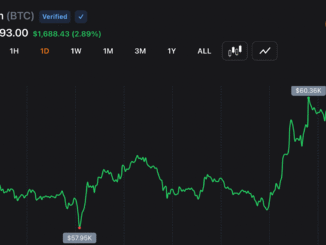
Bitcoin seesawed July 29 as global markets reacted to a surprise Iranian strike on a U.S. military base in Jordan and the Federal Reserve’s decision to hold interest rates. Market data showed that after fluctuating between $63,500 and $64,000 through Tuesday afternoon and into early Wednesday, bitcoin surged to $64,500 by 4 a.m. EST.
Although it retreated slightly shortly afterwards, the top cryptocurrency established support at $64,000 for the following six hours. During that time, it breached the $64,500 threshold twice before descending. By 1:10 a.m. EST, bitcoin had tumbled to just under $63,700, effectively wiping out gains made earlier in the day. However, shortly after, it was reported that the Federal Open Market Committee (FOMC) voted to keep interest rates unchanged, bitcoin jumped to $64,400 before settling around $64,200 (2:20 p.m. EST).
This late surge resulted in a 1% daily drop for bitcoin, lifting its market capitalization to $1.29 trillion. The marginal gain lowered bitcoin’s weekly losses to 2.5% and pushed 30-day gains down to 6.6%. The relatively calm price action significantly reduced the scale of leveraged liquidations over the 24 hours.

Coinglass data showed that over $38 million was liquidated, with short bets accounting for $25 million of the total. Across the broader cryptocurrency market, liquidations totalled nearly $322 million, split between approximately $224 million in long bets and $99 million in short bets.
Much like traditional markets, bitcoin and the crypto economy were initially weighed down by reports of renewed tensions in the Middle East. Reports of joint U.S. and Saudi Arabian strikes on Iraq-based militia reignited fears that the fighting is turning into a regional conflict. As a consequence, crude oil prices, which tumbled after the U.S. and Iran paused strikes, jumped by more than 6%, with Brent crude reclaiming $90 per barrel.
However, U.S. markets shook off early caution as attention shifted from the Middle East conflict to the Federal Reserve, with investors bracing for policy signals from this week’s FOMC meeting. After the Fed delivered a widely anticipated, no‑surprise decision, sentiment snapped back: U.S. equities climbed, and the Nasdaq staged a sharp rebound that nearly wiped out its earlier losses.
Still, despite the Fed’s decision Wednesday, the committee could raise rates before year-end. For bitcoin, that means any price rally will likely rely on internal drivers—like institutional adoption, ETF inflows, or protocol upgrades—rather than broader macroeconomic tailwinds.





Be the first to comment