



The crypto revolution has rapidly gained momentum, capturing the attention of both investors and traders worldwide. Since the launch of Bitcoin in 2009, the market has steadily evolved, challenging traditional financial systems and becoming a constant topic in global media. As innovation continues to reshape the space, Ethereum has also emerged as a powerful force, expanding the use case of blockchain beyond just digital currency.
Today, the crypto ecosystem offers a wide range of investment opportunities, from altcoins to decentralized applications. Yet, despite this growing diversity, many investors still prefer to anchor their portfolios around established assets like Bitcoin and Ethereum. This naturally leads to the ongoing debate of Bitcoin vs Ethereum, two giants that dominate market share, adoption, and investor interest. But when it comes to long term potential and investment value, which one truly stands out?
What is Bitcoin (BTC)?
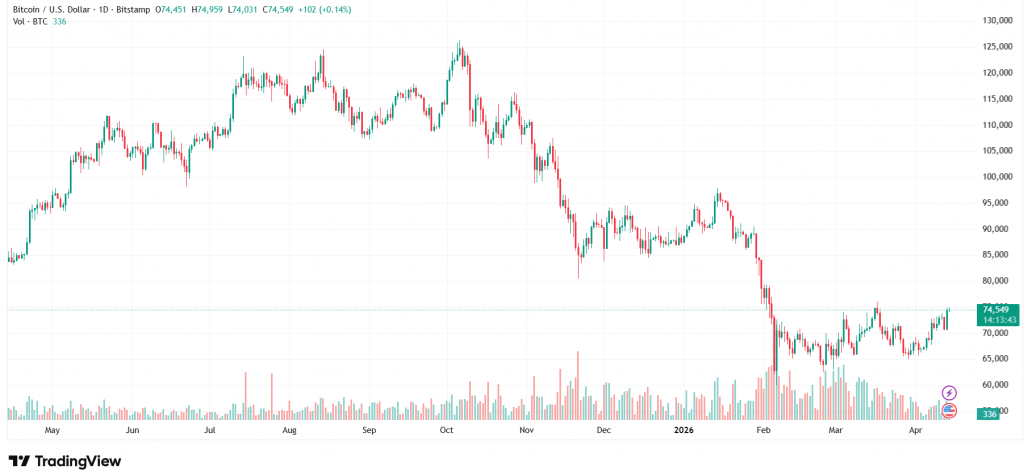
Bitcoin was created to be a digital form of money. It allows for peer-to-peer transactions without a central authority, like a bank. It was launched in 2009 by an unknown person or group called Satoshi Nakamoto.
Bitcoin transactions are recorded on a public ledger called the blockchain, which uses complex cryptography to ensure that the transactions are secure and transparent. Since there is no central authority, transactions must be verified by the blockchain’s users. This process is known as mining, and miners are rewarded with new Bitcoins. The supply of Bitcoin is limited to 21 million, which acts as a deflationary measure on its economy.

Bitcoin is often referred to as a crypto token since it uses cryptography to secure transactions and control the creation of new units. It can be used to buy goods and services from merchants who accept it as payment, and it has also become a popular investment due to its astronomical returns.
Also Read: Bitcoin Price Prediction
What is Ethereum (ETH)?
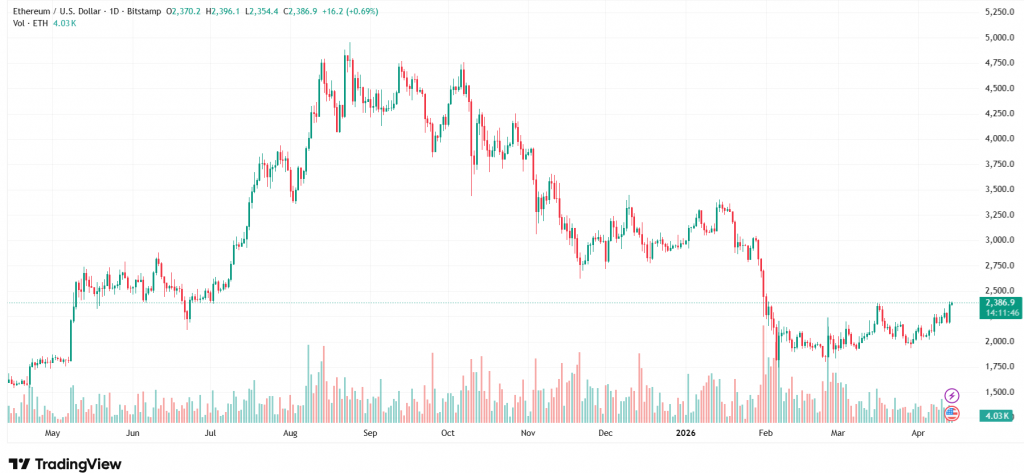
Ethereum is an open-source, decentralized blockchain platform created in 2015 by Vitalik Buterin. It was the first platform to implement smart contracts, which have become the most essential features in the crypto world.
A smart contract is a self-executing program that automatically forms an agreement between parties. This can range from simple transactions, like sending crypto, to more complex use cases like decentralized finance (DeFi), digital identity, and supply chain management.
Ethereum has its native crypto assets, Ether (ETH), which is used to pay for transactions and smart contract execution fees on the Ethereum network. Additionally, Ethereum has its programming language, Solidity, which developers can use to write smart contracts.
One of the key features of Ethereum is its ability to support a wide range of tokens, including stablecoins and alternate crypto tokens that can be used within the Ethereum ecosystem. This has made it a popular platform for DeFi projects, which use smart contracts to create decentralized financial products and services.
Also Read: Ethereum Price Prediction
Bitcoin vs Ethereum: A High-Level Overview
| Parameter | Bitcoin | Ethereum |
| Current Price | $74,675.06 | $2,390.06 |
| Market Capitalization | $1.49 trillion | $288.45 billion |
| 24-Hour Volume | $53.97 billion | $28.18 billion |
| Circulating Supply | 20.01 million | 120.69 million |
| Maximum Supply | 21 million | ∞ |
When comparing Bitcoin and Ethereum, it’s important to understand that both serve different purposes within the crypto ecosystem. Bitcoin is primarily seen as a store of value and digital gold, while Ethereum is designed as a programmable blockchain that enables applications and smart contracts. The debate around Bitcoin vs Ethereum is less about which is better overall and more about which is better suited to a specific use case or investment strategy.
Why Bitcoin and Ethereum Were Created
Bitcoin was created in 2009 as a response to the global financial crisis, aiming to provide a decentralised and trustless form of money that operates without intermediaries. Its core goal was to enable peer to peer transactions securely and transparently.
Ethereum, launched later in 2015, was built to go beyond payments. Its purpose was to create a decentralised platform where developers could build applications and automate agreements using code. This fundamental difference plays a major role in the Bitcoin vs Ethereum comparison.
Bitcoin vs Ethereum: What Are The Similarities?
Bitcoin and Ethereum are both decentralized digital tokens that operate on blockchain technology. Here are some of the similarities between Bitcoin and Ethereum:
- Decentralisation: Bitcoin and Ethereum are decentralised, meaning they are not controlled by any single entity, such as a government or financial institution. Transactions on both networks are processed by a network of computers that validate and record transactions on a distributed ledger called the blockchain.
- Digital Money: Bitcoin and Ethereum are crypto tokens that can be used as a medium of exchange for goods and services. They both use digital wallets to store and send funds and are divisible to many decimal places.
- Volatility: Both Bitcoin and Ethereum are volatile and can experience fluctuations in their price. Their value can be influenced by a wide range of factors, including market demand, regulatory changes, and investor sentiment.
- Investment: BTC and ETH are both very popular investment options, with rapid price movements and high liquidity. You can purchase them on any centralised or decentralised crypto exchange.
Also Read: Bitcoin Ordinals vs Ethereum NFTs
What Are the Differences Between Bitcoin and Ethereum?
While they may both be popular crypto tokens, there are many key differences between Ethereum and Bitcoin:
- Mining vs Staking: Bitcoin uses a process called crypto mining to create more tokens, which involves complex computations and a lot of energy usage. On the other hand, Ethereum uses a process called staking, in which you must only “lock in” your tokens to be able to participate in the validation process.
- Supply: Bitcoin has a finite supply of tokens, with only 21 million BTC that will ever be distributed. Ethereum does not have a cap on the total number of tokens, but it does have a limit on the tokens released in a single year, at 18 million ETH.
- Smart Contract Support: One of the most crucial differences between Bitcoin and Ethereum is that Ethereum offers smart contract support while Bitcoin does not. Today, all applications and experiences built on blockchains function on smart contracts, which makes this the main driver of Ethereum’s growth.
Consensus Mechanism: Proof of Work vs Proof of Stake
Bitcoin uses the Proof of Work mechanism, where miners solve complex mathematical problems to validate transactions and secure the network. This process is energy intensive but highly secure.
Ethereum initially used Proof of Work but transitioned to Proof of Stake, where validators are chosen based on the amount of ETH they stake. This shift improves energy efficiency and scalability, marking a significant evolution in blockchain technology.
Bitcoin vs Ethereum: Transaction Speed and Fees
Bitcoin transactions are generally slower and can become expensive during network congestion, as block space is limited.
Ethereum offers faster transaction processing, but fees can fluctuate significantly depending on network activity. While improvements are ongoing, both networks face scalability challenges in different ways.
Also Read: Lido’s stETH Now Live on Quick Trade: Earn Rewards, Instantly
Bitcoin vs Ethereum: Security and Decentralisation
Bitcoin is often considered the most secure blockchain due to its simplicity, widespread adoption, and robust Proof of Work network. Its decentralisation is one of its strongest features.
Ethereum is also highly secure and decentralised, though its complexity introduces different types of risks. However, its large developer community and continuous upgrades strengthen its ecosystem over time.
Role of Smart Contracts in Bitcoin vs Ethereum
Bitcoin does support basic scripting, but it is not designed for complex smart contracts. This makes Ethereum far more versatile in terms of application development.
Smart contracts are a core feature of Ethereum, allowing automated and trustless execution of agreements. This capability powers entire ecosystems like decentralised finance and NFTs.
Bitcoin vs Ethereum: Adoption and Real-World Applications
Bitcoin has achieved widespread recognition as a digital asset and is increasingly being adopted by institutions and even some governments. It is often seen as a long term store of value.
Ethereum’s adoption is driven by its utility. From decentralised finance platforms to gaming and digital ownership, Ethereum supports a wide range of real world applications, making it a key player in the evolving Web3 landscape.
Risks and Limitations of Bitcoin and Ethereum
Bitcoin faces challenges such as scalability limitations and high energy consumption due to its Proof of Work model. Its development is also relatively conservative, which can slow innovation.
Ethereum, while more flexible, deals with issues like network congestion, variable fees, and technical complexity. Its transition to Proof of Stake addresses some concerns but introduces new dynamics.
Bitcoin vs Ethereum for Beginners: What to Choose
For beginners, choosing between Bitcoin and Ethereum depends on their goals. Bitcoin may be more suitable for those looking for a simpler, long term store of value.
Ethereum may appeal to those interested in innovation, decentralised applications, and broader use cases. In the Bitcoin vs Ethereum discussion, both assets offer unique advantages, and many investors choose to hold a combination of both to balance stability and growth potential.
Bitcoin vs Ethereum: Which One is Better?
There’s no clear-cut answer to whether Bitcoin or Ethereum is the better choice, as they serve different purposes and complement each other in the crypto ecosystem. Bitcoin is widely used for transactions and as a store of value, while Ethereum was designed primarily to power the smart contract and decentralized application (dApp) economy.
Given their unique strengths, the decision depends on your specific needs. If you’re looking for a reliable token for transactions or long-term storage, Bitcoin is a great option. However, if you want to explore the vast range of decentralized applications on the Ethereum network, Ethereum (ETH) is the ideal choice for you.
Also Read: Crypto Investing vs Crypto Trading
Conclusion
Bitcoin and Ethereum are undoubtedly the two most popular crypto assets, each with its own unique strengths. While they share some similarities, they differ in several key aspects. Bitcoin is primarily used for transactions and as a store of value, while Ethereum powers a wide range of decentralized applications (dApps). As such, there’s no one-size-fits-all answer to which is better; it all comes down to how you intend to use your crypto tokens.
Unravel everything that you need for your crypto journey via ZebPay blogs. Get started today and join 6 million+ registered users on ZebPay!
FAQs on Bitcoin vs Ethereum
What is the main difference between Bitcoin and Ethereum?
The main difference between Bitcoin and Ethereum lies in their purpose. Bitcoin is primarily designed as a decentralised digital currency and store of value, while Ethereum is a programmable blockchain that enables smart contracts and decentralised applications.
Is Bitcoin more secure than Ethereum?
Bitcoin is often considered more secure due to its simpler design and robust Proof of Work network. However, Ethereum is also highly secure and continuously evolving. Both networks have strong security, but they approach it in different ways.
How do Bitcoin and Ethereum differ in terms of use cases?
Bitcoin is mainly used for storing value and peer to peer transactions. Ethereum, on the other hand, supports a wide range of use cases including decentralised finance, NFTs, and blockchain based applications, making it more versatile in functionality.
What is the difference between Proof of Work and Proof of Stake?
Proof of Work relies on miners solving complex mathematical problems to validate transactions and secure the network. Proof of Stake selects validators based on the amount of crypto they stake, making it more energy efficient and scalable compared to Proof of Work.
Which is faster for transactions: Bitcoin or Ethereum?
Ethereum generally offers faster transaction processing compared to Bitcoin. However, transaction speed on both networks can vary depending on congestion and network activity.
How do fees compare between Bitcoin and Ethereum?
Bitcoin fees tend to be more predictable but can rise during periods of high demand. Ethereum fees can fluctuate significantly depending on network usage, especially during peak activity on decentralised applications.
Can Ethereum replace Bitcoin in the future?
Ethereum is unlikely to fully replace Bitcoin because both serve different purposes. Bitcoin is widely regarded as digital gold, while Ethereum focuses on utility and programmability. They are more complementary than direct competitors.
Which is better for beginners: Bitcoin or Ethereum?
For beginners, Bitcoin is often easier to understand as a store of value. Ethereum may be better suited for those interested in exploring decentralised applications and broader blockchain use cases.
How do Bitcoin and Ethereum differ in terms of supply and tokenomics?
Bitcoin has a fixed supply of 21 million coins, making it scarce and predictable. Ethereum has a more flexible supply model, with mechanisms like token burning influencing its overall issuance and circulation.
What role do smart contracts play in Ethereum compared to Bitcoin?
Smart contracts are central to Ethereum, enabling automated and trustless execution of agreements. Bitcoin has limited scripting capabilities, so it does not support complex smart contracts in the same way Ethereum does.
Disclaimer:
Crypto products and NFTs are unregulated and can be highly risky. There may be no regulatory recourse for any loss from such transactions. Each investor must do his/her own research or seek independent advice if necessary before initiating any transactions in crypto products and NFTs. The views, thoughts, and opinions expressed in the article belong solely to the author, and not to ZebPay or the author’s employer or other groups or individuals. ZebPay shall not be held liable for any acts or omissions, or losses incurred by the investors. ZebPay has not received any compensation in cash or kind for the above article and the article is provided “as is”, with no guarantee of completeness, accuracy, timeliness or of the results obtained from the use of this information.


Be the first to comment