



Bloomberg has published an investigation examining Tether’s role in negotiations leading up to the passage of the GENIUS Act. It alleged that the stablecoin issuer worked to shape provisions of the landmark U.S. legislation through lobbying, political relationships, and engagement with policymakers.
According to Bloomberg, the investigation draws on interviews with current and former U.S. officials, industry participants, court filings, and other records.
It explores Tether’s interactions with key figures in the Trump administration, discussions around stablecoin regulation, and negotiations over provisions affecting foreign issuers.
Bloomberg details Tether’s Washington campaign
Bloomberg reported that Tether executives and advisers sought to influence negotiations over the GENIUS Act as lawmakers debated the first federal framework for payment stablecoins.

The publication said the company’s efforts focused on issues such as compliance requirements for overseas issuers, reserve rules, and the treatment of foreign-issued stablecoins in the U.S. market.
The report also examined relationships involving Commerce Secretary Howard Lutnick and White House AI and crypto adviser David Sacks. Bloomberg said it reviewed court filings, financial disclosures, and other records, and interviewed people familiar with the negotiations.
Bloomberg further reported that negotiations evolved as lawmakers refined the bill, with debates covering reciprocal regulatory arrangements, anti-money laundering requirements, and compliance timelines for foreign issuers seeking access to the U.S. market.
Investigation focuses on changes to stablecoin legislation
According to Bloomberg, several provisions in the final version of the GENIUS Act differed from earlier legislative proposals. The report said discussions centred on how overseas stablecoin issuers would comply with U.S. requirements.
Also, the transition period before compliance obligations take effect, and the conditions under which foreign-issued stablecoins could continue operating in the country.
Bloomberg noted that the legislation ultimately established the first federal regulatory framework for payment stablecoins in the United States. This came after months of negotiations among lawmakers, regulators, and industry participants.
Ardoino praised GENIUS Act after White House signing
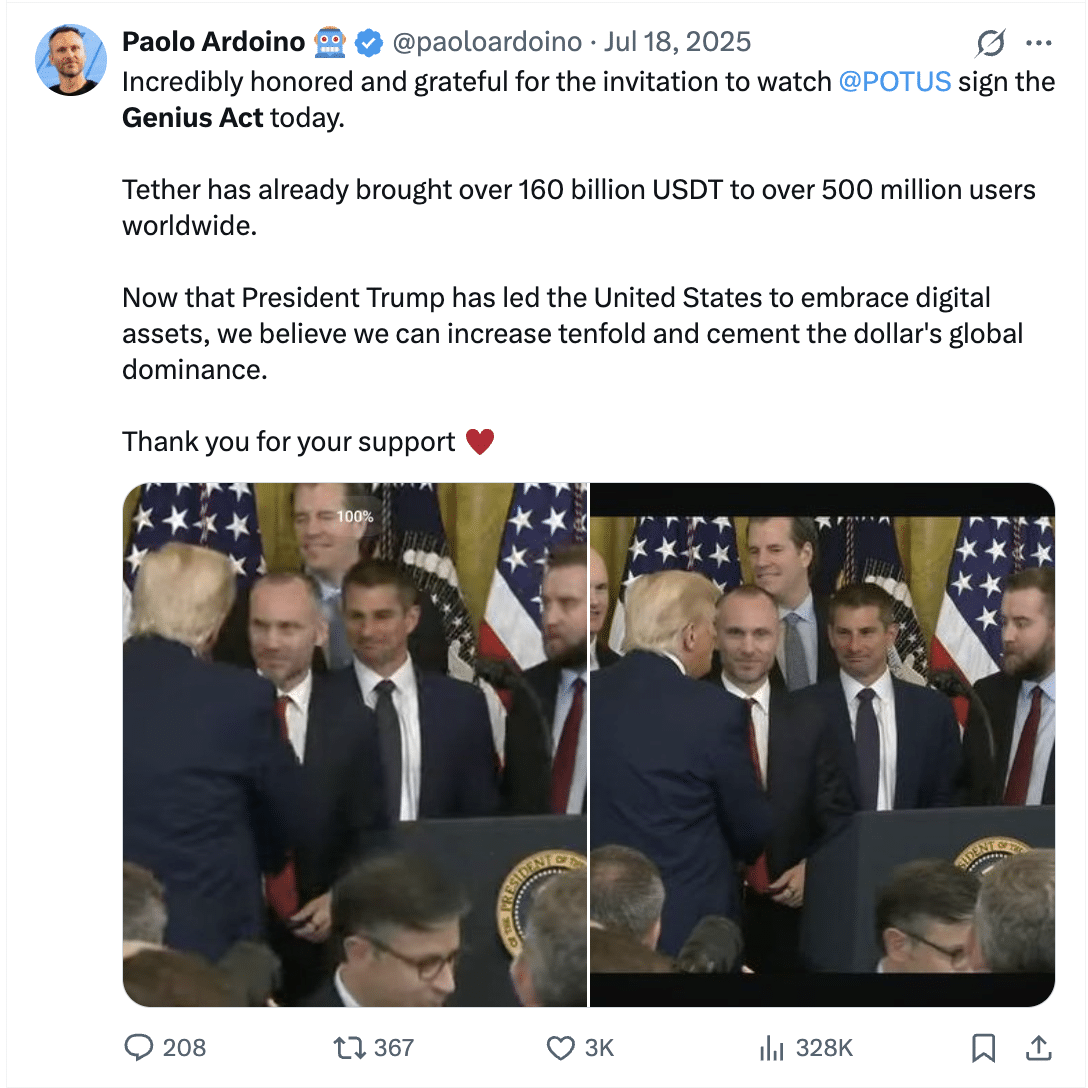
The investigation comes over a year after Tether CEO Paolo Ardoino attended the White House ceremony marking President Donald Trump’s signing of the GENIUS Act.
In a post on X following the event, Ardoino thanked Trump for the invitation and said the administration’s embrace of digital assets could help expand USDT’s global adoption while strengthening the U.S. dollar’s international position.
At the time of writing, neither Ardoino nor Tether had publicly responded to Bloomberg’s investigation.
Final Summary
- Bloomberg published an investigation into Tether’s lobbying efforts and its role in negotiations over the GENIUS Act.
- Tether CEO Paolo Ardoino has not publicly addressed the investigation. However, he previously praised the GENIUS Act after attending its White House signing ceremony.






Be the first to comment