


Apple just dropped its big WWDC reveal, anchoring the next phase of the iPhone story around on-device AI and a smarter Siri. The market’s reaction? Briefly euphoric, then cautious. That wobble tells you exactly where investors are: curious, but waiting for proof.
This piece breaks down what changed, what to track next, and how the iPhone can actually become a catalyst again. No hype — just the moving parts that really decide whether AAPL reclaims the lead after the tech rotation.
Quick Answer
Yes, Apple can reclaim leadership — but it hinges on the iPhone turning AI into daily utility, not just a keynote demo. The WWDC26 package gives Apple a shot: a refreshed Siri, faster core apps, and wide device eligibility. The next 2–3 quarters will tell us if that translates into upgrades, margins, and Services pull-through. Until then, leadership is earned, not declared.
- Apple unveiled “Siri AI” and its next wave of “Apple Intelligence” at WWDC26 (Apple Newsroom).
- iOS 27 eligibility spans iPhone 11 and newer, with Apple touting faster Photos and AirDrop in early tests (TechCrunch).
- AAPL spiked to an intraday record near $317.40 during the keynote, then closed lower; declines extended in the next sessions (MacRumors).
- Post-event, several Wall Street desks lifted price targets into the $350–$360 range (MacRumors).
How real is Apple’s iPhone AI catalyst after WWDC26?
The short version: the ingredients are there. Apple introduced “Siri AI” and a broader “Apple Intelligence” layer designed to live close to the user — context-aware, privacy-forward, and baked into default apps rather than parked in a separate chatbot (Apple Newsroom).
iOS 27 also aims at feel-it-right-away speed. Apple highlighted early results like snappier Photos and faster AirDrop, and said the update will run on devices from the iPhone 11 onward (TechCrunch). That matters because frictionless utility, plus a big addressable base, is the blueprint for adoption — and Services monetization later.
But the real test is mundane: does everyday behavior change? If Siri drafts texts that users don’t rewrite, or if on-device summarization saves time in Mail and Notes, you’ll see stickiness. If it’s demo-only shine, the stock won’t get paid for it.
What does “reclaim market leadership” mean in 2026?
Leadership isn’t just “largest market cap.” In 2026 it looks like three things working together: outperformance versus mega-cap peers, narrative leadership (the name funds have to own), and being the earnings engine that moves the index. Lately, that baton has sat with semis and AI infrastructure, while iPhone cyclicality kept Apple in second gear.
To flip that, Apple needs iPhone to re-enter the must-upgrade zone while Services widens margins. The WWDC26 reveal checked the narrative box, but the tape stayed disciplined. AAPL hit a fresh intraday high during the keynote then faded to close down that day, continuing lower into the next sessions — a classic buy-the-rumor, sell-the-news rhythm (MacRumors).
Pro tip: Event spikes often fade if investors can’t model near-term revenue from the demo. Sticking power shows up when shipment forecasts, carrier promos, and margin commentary actually change. Not financial advice — just market plumbing.
Will iOS 27 drive an upgrade cycle or just incremental?
There’s a push-pull dynamic here. On the push side, iOS 27 is eligible from iPhone 11 onward, which lowers the “forced upgrade” pressure. On the pull side, Apple is selling speed, on-device AI, and a sharper Siri that lives in more places. If users feel that bump daily, you can get a real cycle without alienating those who don’t jump immediately (TechCrunch).
The early tell will be sentiment from carriers and retail: wait times for higher-capacity models, trade-in values, and promotion intensity. If promos soften but units hold, Apple is capturing value. If promos spike to move inventory, you’re in an incremental, not explosive, cycle.
- Checklist for a true upgrade wave:
- Carrier promos normalize while waitlists stretch for flagship SKUs.
- Store staff report fewer returns tied to “AI didn’t help.”
- ASP trends up without a mix-driven margin hit.
- Services ARPU ticks higher as AI features deepen lock-in.
- Management tightens rather than widens revenue guidance ranges.
How does Apple stack up to Android AI phones?
Different playbooks. Android OEMs have sprinted to headline AI features with a heavier cloud assist and broader price bands. Apple is leaning into on-device intelligence, privacy as a default, and tighter vertical integration. That could be slower to roll out cross-region, but deeper once it lands.
| Dimension | Apple (iPhone) | Android Flagships (Samsung/Google, etc.) |
|---|---|---|
| AI approach | On-device first; privacy-forward positioning | Blend of on-device and cloud features; faster iteration |
| Chip + software stack | Tight vertical control; unified OS rollout | Diverse silicon; OS variants with staggered updates |
| Feature rollout pace | Measured, integrated into default apps | Rapid feature drops, sometimes app-level add-ons |
| Monetization | Hardware margin + Services attach | Hardware variety + ecosystem partnerships/subscriptions |
| Marketing edge | Trust, privacy, and ecosystem lock-in | Spec leadership, variety, price segmentation |
In short: Android may keep setting the pace on flashy releases, but Apple’s advantage is turning AI into defaults you stop noticing because they just work. If Siri AI quietly saves minutes per day, Apple wins the long game.
Where will the catalyst appear in financials?
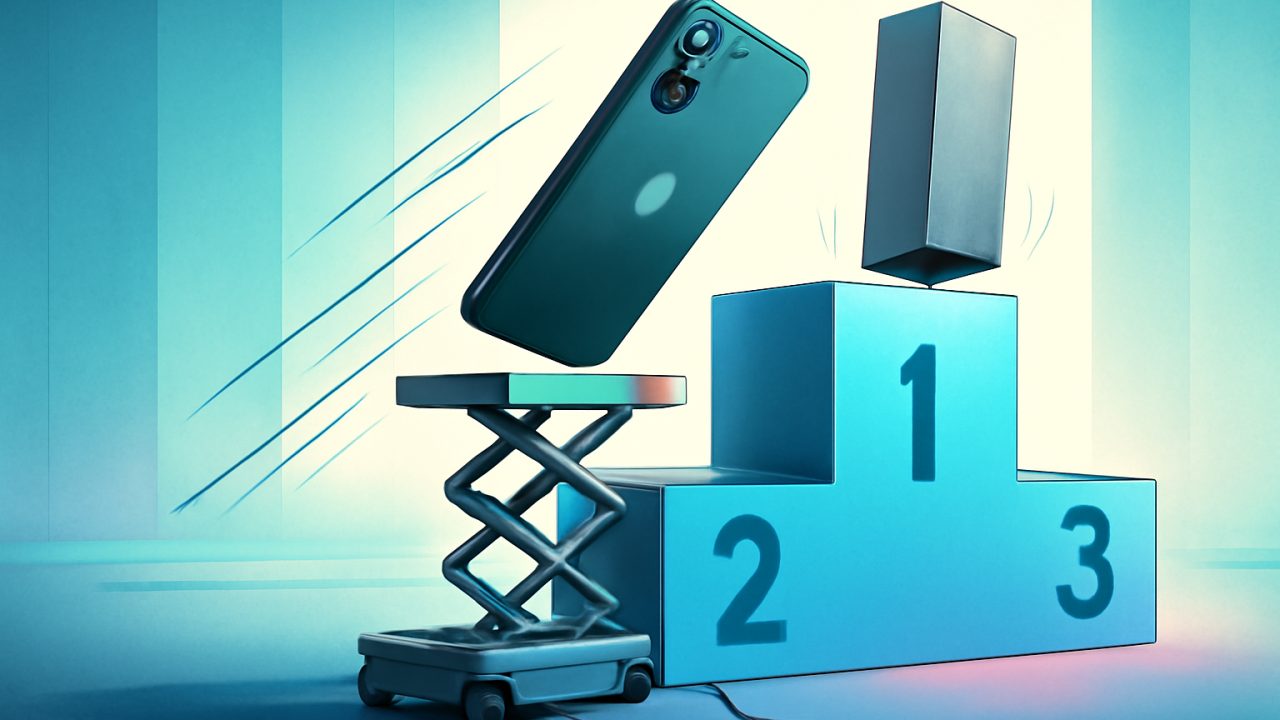
First, in iPhone units and mix. If AI utility resonates, higher-capacity models and Pro tiers should pull forward demand. Next, in gross margin — both hardware efficiency and Services blend. Apple doesn’t need a mega-cycle to move the needle if margins widen while units drift higher.
Services is the stealth lever. If AI hooks make you edit in Photos, summarize in Notes, and share via iCloud more often, that nudges storage, bundles, and app engagement. Accessories could follow if AI-linked workflows push people to upgrade watches or earbuds.
One near-term datapoint to watch: how management frames the ramp on calls post-WWDC26 and as iOS 27 nears public release. Street targets moved up after the event (with some raises into the $350–$360 range), but the stock still slipped in the immediate aftermath — expectations are high, proof is pending (MacRumors).
What could derail AAPL’s comeback?
Plenty. A few big ones: if AI features feel like a demo that adds taps instead of removing them; if rivals leapfrog with must-have tools; or if macro tilts away from premium phones just as Apple asks for higher ASPs. Also, regional demand swings matter — any stumbles in key international markets, and the model loses torque.
Regulatory noise, app-store policies, and antitrust cases can compress multiples even if units hold. And there’s the classic risk: valuation. If the market decides to pay up only for infrastructure names for a while longer, Apple might execute fine and still lag in relative terms.
How does this rotation touch crypto?
Cross-asset flows are messy, but there’s a pattern: when megacap leadership narrows or chops, some risk capital hunts for uncorrelated upside in commodities, AI small caps, or digital assets. If Apple reclaims leadership, broad tech risk may feel steadier, which can either crowd out speculative flows or lift everything together in a risk-on tide.
For crypto traders, the Apple tape is a macro tells game. Strong iPhone preorders and a firmer AAPL can signal a friendlier consumer and healthier risk appetite. Conversely, if the iPhone story stalls, flows can swing back to AI infra names or even back into BTC/ETH on “non-equity beta.” It’s not deterministic — just one more macro domino to watch.
Common Mistakes
- Confusing eligibility with parity: iOS 27 on older phones doesn’t mean feature-for-feature parity. Expect a gradient. Don’t model uniform adoption.
- Overweighting day-one stock moves: WWDC spikes and fades are common. Wait for preorder data, carrier checks, and margin color before redrawing the long-term map.
- Ignoring Services: If you only watch units, you’ll miss the AI flywheel in storage, media, and app engagement that can drive margins.
- Assuming Android parity timelines: Apple’s integration pace is deliberate. Fast Android releases don’t automatically imply Apple is behind where it matters.
- Forgetting regional mix: Strength in one market can hide softness elsewhere. Track promotion intensity and shipment skew by region.
If you want more cross-market takes that connect big-tech catalysts with digital asset flows, we cover it regularly at Crypto Daily.
Frequently Asked Questions
Will all iPhone 11 and newer devices get every iOS 27 AI feature?
Apple said iOS 27 is eligible on devices from iPhone 11 onward. Historically, some advanced features depend on newer hardware, so expect a tiered rollout by device capability.
Does Siri AI require a new subscription?
Apple hasn’t outlined a separate subscription tied strictly to Siri AI. The company often bundles value through existing services, but specifics can change close to public release. Check Apple’s release notes at launch.
When would the iPhone AI push show up in earnings?
Typically, the first signs appear around the fall launch window and the holiday quarter. Look for preorder commentary, ASP trends, and Services growth in the first full quarter after new models ship.
How should traders handle event volatility like WWDC?
Historically, large Apple events can create intraday spikes followed by reversals if monetization is unclear. Position sizing and patience around guidance updates matter more than chasing the first move.
Could antitrust actions or policy shifts mute Apple’s multiple even if iPhone sells well?
Yes. Regulatory overhang can cap valuation expansion regardless of unit strength. It usually affects the multiple, not the near-term demand curve, unless remedies alter core distribution or fees.
Does this change anything for Android users considering a switch?
If Apple’s on-device AI lands as real utility and privacy resonates, switchers may increase at the margin. But ecosystem inertia is strong on both sides; pricing, carrier deals, and habits still dominate decisions.
What would convince skeptics that this is more than a demo cycle?
Three things: preorder strength without heavy promotions, higher-capacity model mix, and Services ARPU edging up. If those show up together, the catalyst is working.
Disclaimer: This article is provided for informational purposes only. It is not offered or intended to be used as legal, tax, investment, financial, or other advice.




Be the first to comment