



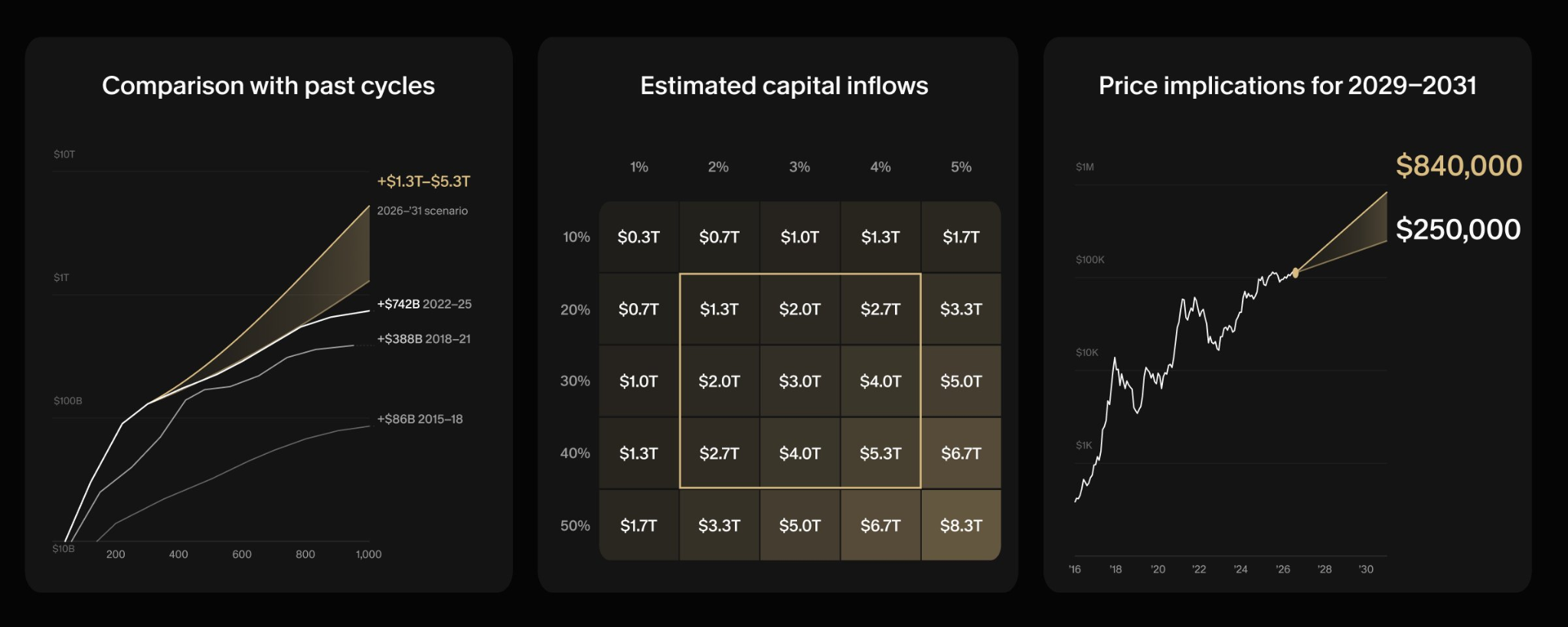
- River’s model puts Bitcoin at $250K-$840K on $1.3T-$5.3T in projected net inflows.
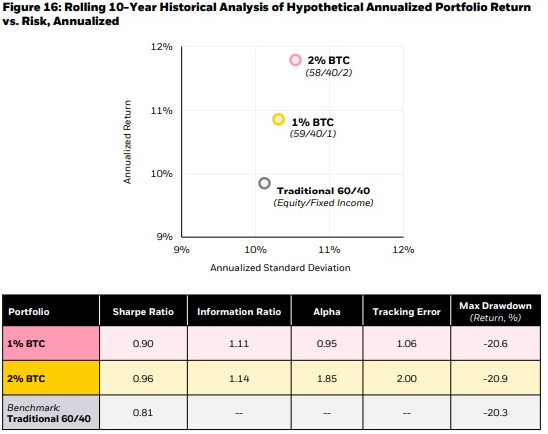
- BlackRock sees 1%-2% Bitcoin exposure as reasonable for volatility-tolerant investors.
- India ranks No. 1 in crypto adoption, yet 30% VDA tax and 1% TDS raise friction.
Bitcoin could reach $840,000 within five years under River’s most aggressive institutional-allocation model, but CoinDCX co-founder Sumit Gupta has challenged key assumptions behind it. River estimates $1.3 trillion to $5.3 trillion in net inflows if 20%–40% of investor portfolios adopt average Bitcoin allocations of 2%–4%.
Source: X
Using a three-times market-cap effect for every dollar entering Bitcoin, River maps those inflows to a $5.5 trillion to $17.5 trillion valuation. That range implies about $250,000 to $840,000 per BTC, although Sumit Gupta questioned both the participation rate and allocation size. His comments make the headline figure an upper-bound scenario, not a personal price forecast.
River’s $840K Bitcoin Case Requires a Major Allocation Shift
The core issue is not whether more investors buy Bitcoin, but whether it becomes a standard portfolio position across professionally managed wealth. BlackRock considers 1%–2% exposure reasonable for investors able to tolerate Bitcoin’s volatility, offering a more conservative institutional benchmark.

Source: BlackRock
Its portfolio analysis shows Bitcoin contributes about 5% of total risk at a 2% weighting in a traditional 60/40 portfolio. At a 4% allocation, that contribution rises to about 14%, illustrating why River’s higher allocation assumptions carry materially greater portfolio risk.
That distinction matters, as trillions in projected demand require repeated allocation across large pools of capital, rather than occasional retail buying. River’s scenario therefore depends on both wider participation and larger position sizes occurring together.
India Leads Adoption but Faces Institutional Allocation Barriers
India already ranks first globally in Chainalysis’ 2025 Crypto Adoption Index across retail, centralized services, DeFi, and its institutional activity measure. However, that institutional metric includes large transfers and does not mean Indian pension funds, banks, insurers, or mutual funds can allocate freely.
Retail investors, meanwhile, can still access Bitcoin through FIU-registered VDA service providers, but the tax structure raises the cost of active allocation. Essentially, VDA gains face a 30% tax plus surcharge and cess, while losses cannot be offset, and qualifying transfers face 1% TDS.
Beyond taxation, regulatory restrictions create an even larger hurdle for institutional participation. Reuters reported in July that the Reserve Bank of India continued supporting restrictions on banks and financial institutions engaging with cryptocurrencies.
As a result, strong retail adoption has not yet translated into equally broad institutional access. Ultimately, India can still participate in Bitcoin price appreciation through retail channels, but it remains less positioned to capture the institutional allocation wave itself.
The gap now lies between strong adoption and the rules governing large, recurring portfolio allocations. Whether India captures more of that capital shift will therefore depend on how those institutional barriers evolve.
Related: India’s Market Setup Has Improved: But Is the Opportunity Already Priced In?
Disclaimer: The information presented in this article is for informational and educational purposes only. The article does not constitute financial advice or advice of any kind. Coin Edition is not responsible for any losses incurred as a result of the utilization of content, products, or services mentioned. Readers are advised to exercise caution before taking any action related to the company.



Be the first to comment